Modular Kitchen Design in Bangladesh: Layout, Storage, Safety, and Everyday Use
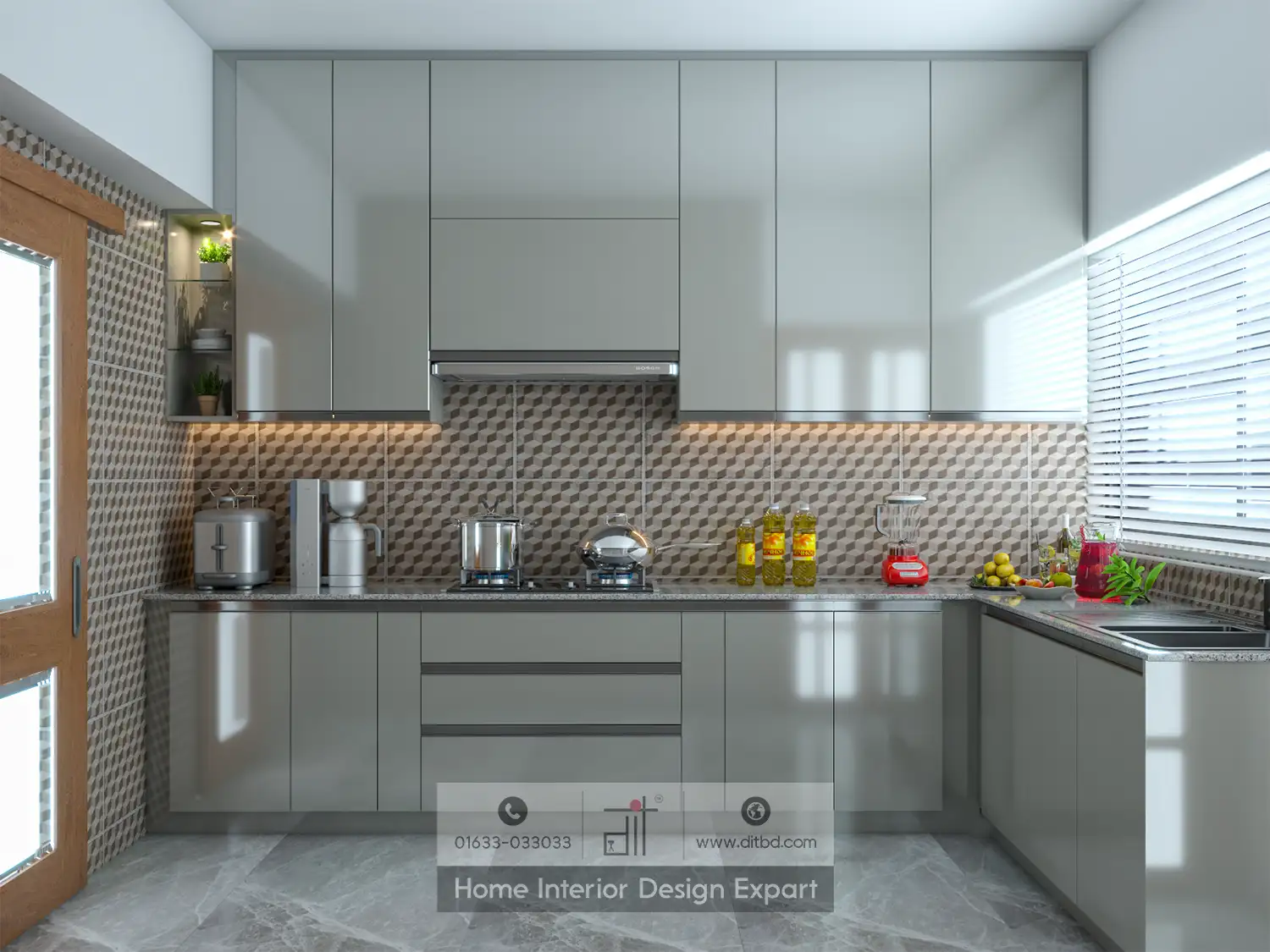
Modular kitchen design in Bangladesh should be judged by how well it works every day – not only by how polished it looks in a photograph. A truly functional kitchen supports cooking habits, storage, ventilation, safety, and family movement in harmony. When these details are overlooked, even the most expensive kitchen quickly becomes a source of daily frustration rather than a space you love to use.
In many Bangladeshi homes, the kitchen is one of the hardest-working rooms in the house. It may be compact, heavily used throughout the day, connected to a dining area, or expected to support both everyday cooking and occasional entertaining. Dhaka’s heat, humidity, and dust add further demands that no showroom finish can paper over. This is precisely why meticulous planning must come before material selection – and why the right partner makes all the difference.
Over more than a decade and across 500+ completed projects, DIT Studio has crafted modular kitchens as part of complete home interior planning. We connect layout, cabinetry, lighting, hardware, appliance placement, and safety into one cohesive, livable space – designed around how your household actually cooks.
Start With How The Kitchen Is Used
A modular kitchen should not begin with cabinet color. It should begin with cooking behavior.
The right questions unlock the right design. How many people cook at once, and is the cooking light or heavy? How often are guests served? Which appliances are on the counter every day, and which are used only occasionally? Does the family need room for dry storage – rice, lentils, flour – bought in bulk as is common across Dhaka households? Would a breakfast counter add genuine value, or simply consume floor space? Is the kitchen open-plan, closed, or semi-open, and how much natural ventilation does it receive?
These answers are not administrative – they directly shape layout decisions, storage allocation, countertop dimensions, and appliance placement. A kitchen designed without them is a kitchen designed for nobody in particular.
Choose The Right Layout
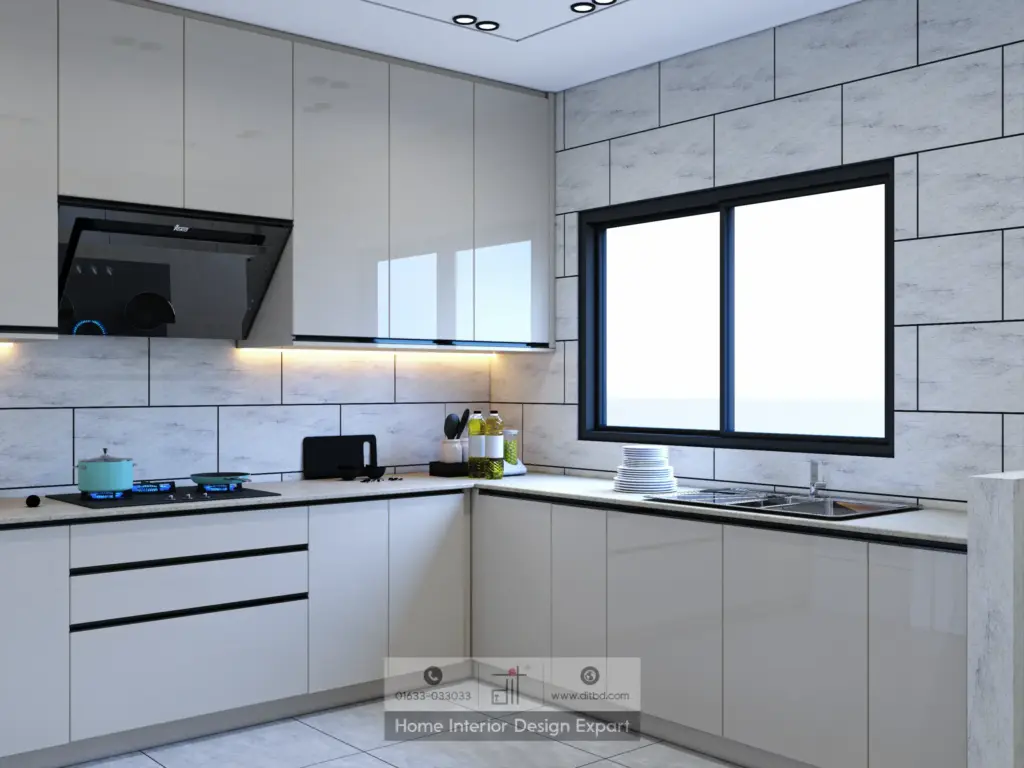
The best kitchen layout depends on room size, plumbing, windows, doors, and family use.
Common modular kitchen layouts include:
| Layout | Best For |
|---|---|
| L-shaped kitchen | Compact homes, corner use, efficient workflow. |
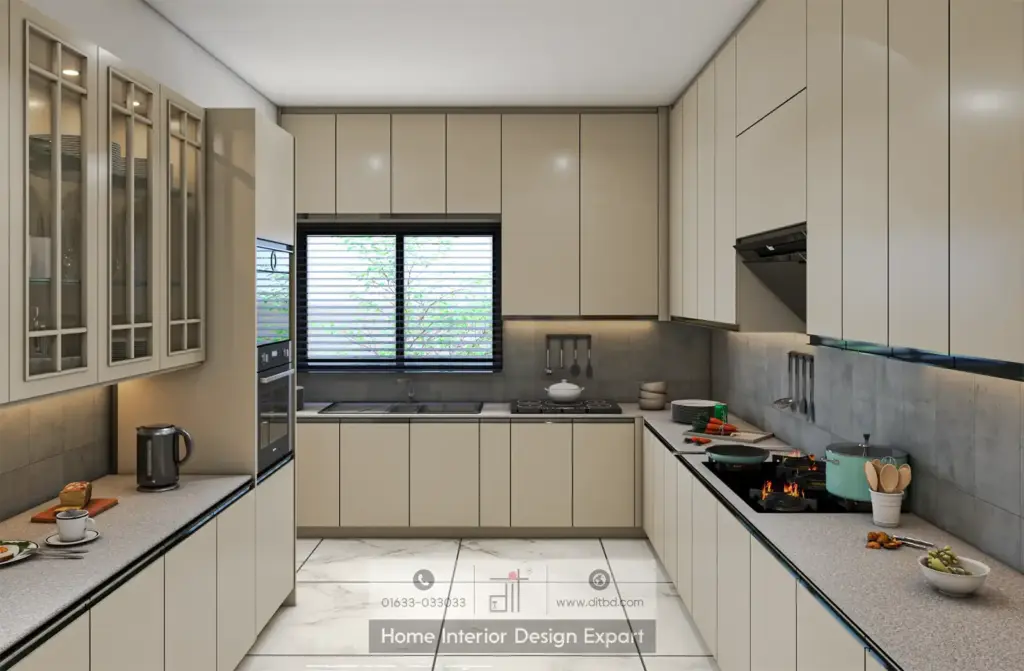
| U-shaped kitchen | More storage and counter space where room width allows. |
| Straight kitchen | Narrow apartments or secondary kitchens. |
| Island kitchen | Larger open spaces with circulation on all sides. |
| Semi-island kitchen | Open kitchen feel with better space control. |
At DIT Studio, we regularly work with L-shaped, U-shaped, and island-style configurations across Dhaka apartments of varying sizes. The right layout is never chosen for aesthetic reasons alone – it emerges from the room’s actual dimensions and the rhythm of how the family moves through the space. A well-proportioned L-shaped kitchen in a compact flat can outperform a sprawling island kitchen in a room that cannot comfortably accommodate it.
Storage Should Be Designed Around Real Items
Many kitchens fail because storage is designed generically rather than purposefully. A truly functional kitchen needs dedicated zones for pots and pans, spice collections, rice and lentils and dry goods, plates and bowls, cleaning supplies, small appliances, cutlery, gas or electrical systems, and any water purifier or dishwasher the household relies on.
Deep drawers, vertical pantry units, intelligent corner solutions, overhead cabinets, and under-counter storage can all contribute to an organized kitchen – but only when each element is selected around what the household actually uses. A cabinet that looks generous in a render but stores nothing you need is wasted investment. We design storage around your real pantry, your real cooking rhythm, and the real volume of items a Dhaka household keeps on hand.
Hardware Affects Daily Comfort
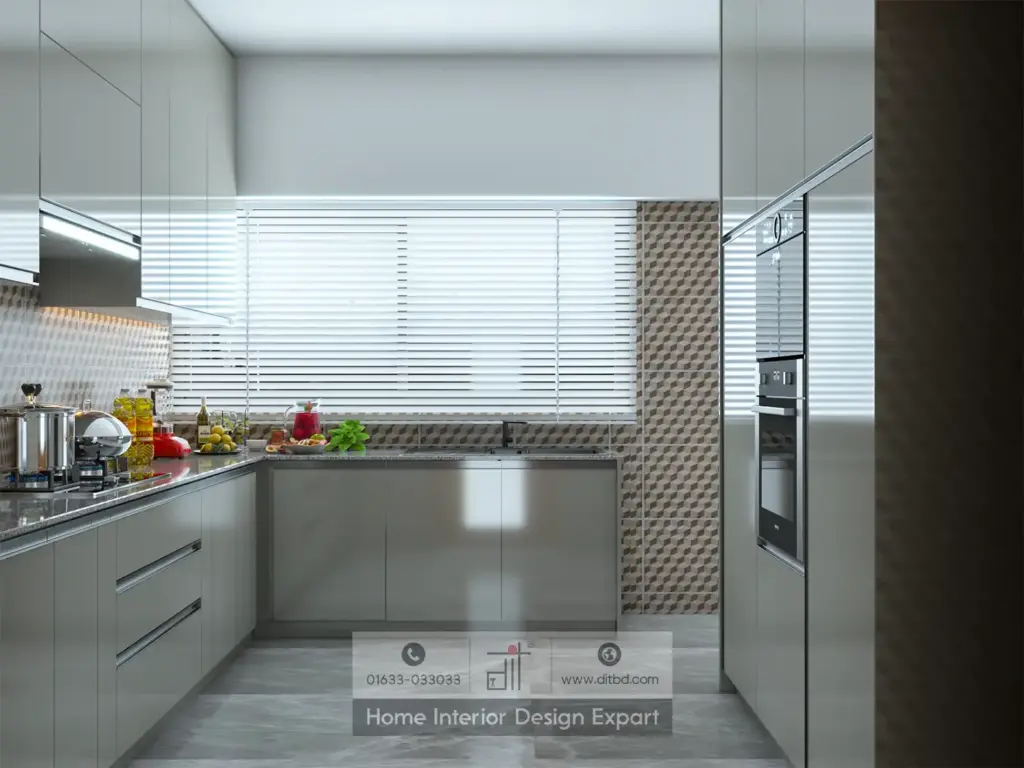
Kitchen hardware is easy to overlook during the design process, yet it shapes the experience of the kitchen every single day. Soft-close drawers and hydraulic hinges eliminate the noise and wear that comes from constant use in a busy household. Lift-up cabinet systems make overhead storage genuinely accessible rather than awkward. Smooth drawer channels, durable handles, and thoughtfully designed corner fittings reduce friction in tight spaces where every centimetre counts.
These are not luxury add-ons – they are functional details that determine whether cabinets remain pleasant to use after months of daily cooking. DIT Studio specifies hydraulic push systems and space-saving cabinet access solutions precisely because compact homes demand hardware that works harder, not just hardware that looks good.
Ventilation And Safety Are Non-Negotiable
In Bangladesh, kitchen safety and ventilation deserve serious attention – and in our experience, they are among the most frequently underestimated aspects of kitchen planning. Dhaka’s heat and humidity intensify cooking odors, accelerate moisture damage, and create conditions where poor ventilation leads to lasting problems.
A strong kitchen plan must address chimney or exhaust placement, window access, safe burner positioning, adequate countertop clearance around heat sources, and electrical outlet planning that keeps cords away from water and flame.
Water source and drainage, cabinet sealing against moisture and pests, easy-clean surface finishes, and proper lighting near both the cooking and washing areas complete the picture. The goal is not beauty alone – it is a kitchen the family can use safely every day and maintain without difficulty over years of heavy use. These details rarely appear in catalog photography, but they are the difference between a kitchen that ages well and one that deteriorates.
Lighting Should Support Cooking
General ceiling lighting alone is not enough for a kitchen where real cooking happens. A thoughtfully designed lighting plan includes bright task lighting directly over preparation zones, under-cabinet lighting that illuminates the countertop without shadows, and ambient ceiling lighting for the overall space. Where a kitchen connects to an island or dining area, pendant lights can harmonize the two zones while adding a layer of warmth. Near a dining connection, warmer lighting tones create a more inviting transition from cooking to eating.
Lighting affects safety, mood, and the perceived cleanliness of the space. Poor lighting makes food preparation harder, increases the chance of accidents, and causes even a premium kitchen to feel flat and uninviting. It is one of the details we are meticulous about at DIT Studio, precisely because it costs relatively little to do well and disproportionately shapes how the kitchen feels to use.
Modular vs Traditional Kitchen: What Changes?
Many homeowners compare modular kitchens with traditional kitchen construction. The better choice depends on budget, usage, finish expectations, and maintenance needs.
| Feature | Modular Kitchen | Traditional Kitchen |
|---|---|---|
| Planning | Usually designed with cabinet modules, storage zones, and hardware systems. | Often built more directly on site with less modular planning. |
| Access | Drawers, pull-outs, lift systems, and corner solutions can improve access. | Access depends on carpenter skill and cabinet design. |
| Finish control | More consistent if materials and fabrication are well managed. | Can vary depending on site execution. |
| Maintenance | Components may be easier to repair or replace if planned well. | Repairs may require more on-site modification. |
| Customization | Can be customized around room size and cooking habits. | Also customizable, but often less systemized. |
The point is not that modular is always the superior choice – it is that kitchen planning must be intentional regardless of approach. In a compact Dhaka apartment, a well-planned modular kitchen can transform storage, movement, and cleaning into genuinely effortless daily experiences. The system works when the planning behind it is honest about how the household lives.
Material And Countertop Decisions
Kitchen materials must be chosen with heat, moisture, daily cleaning, and sustained heavy use in mind. Bangladesh’s climate is unforgiving on surfaces that were selected for looks rather than durability – a finish that photographs beautifully in a showroom may warp, stain, or discolor within a year of real cooking.
Decisions about cabinet board and shutter material, countertop durability, backsplash cleaning ease, edge finishing, water resistance near the sink, and hardware quality all deserve careful conversation. Lighting color and brightness interact with surface choices in ways that only become apparent after installation. Our consistent advice, developed across hundreds of Dhaka kitchen projects: if the kitchen is used heavily, prioritize durability and ease of cleaning over decorative complexity. A simple kitchen with strong storage and honest materials will serve a family far better than a dramatic kitchen that is difficult to maintain.
Example: A Compact Apartment Kitchen
Consider a small Dhaka apartment where the kitchen has limited width and only one window facing a shared corridor. In a project like this, we would typically craft an L-shaped layout that uses corner space efficiently, specify overhead cabinets for dry goods storage, introduce deep drawers for pots and heavy items, install under-cabinet task lighting to compensate for limited natural light, select a durable countertop suited to daily cooking, and position the exhaust or chimney to serve the primary burner zone effectively.
For a family that cooks every day, we would also think carefully about where spices, rice, oil, plates, and cleaning supplies will live after handover – because these are the details that determine whether the kitchen remains organized in real life or descends into clutter within weeks. None of this is glamorous design work. All of it is essential. This is the practical value DIT Studio brings to every modular kitchen project: a space designed for your household’s actual cooking habits and available space, not for a catalog photograph.
Questions To Ask Before Approving A Modular Kitchen
Before signing off on a modular kitchen design, it is worth asking your designer to walk through each of the following. What layout best fits your kitchen’s actual dimensions and plumbing positions? Are the sink, stove, and refrigerator placed in a logical working triangle that minimizes wasted movement? What hardware is included, and what is the quality tier? What countertop material is recommended for your cooking intensity, and why? How will ventilation be handled given your window access and cooking style? Where will daily utensils, spices, and dry goods be stored – specifically? Is under-cabinet lighting included in the plan? And can the cabinet design be cleaned and maintained realistically by a busy household?
These questions are not difficult to ask, but the answers reveal quickly whether a kitchen has been designed with genuine care or assembled from a standard template.
A modular kitchen works well in a Bangladeshi home when layout, storage, ventilation, hardware, and safety details are planned together with the household’s real cooking habits in mind. The best kitchen design is not about glossy cabinets – it should support daily cooking, keep utensils and appliances organized, allow easy cleaning, and reduce wasted movement between the sink, stove, refrigerator, and preparation counter.
DIT Studio’s modular kitchen approach focuses on custom planning for the available space, including L-shaped, U-shaped, island, or semi-island configurations where suitable. Practical details such as soft-close drawers, hydraulic hinges, countertop durability, task lighting, appliance placement, and ventilation make the kitchen easier to use every day. For compact Dhaka apartments, smart cabinetry and honest material selection consistently matter more than decoration.
DIT Studio has delivered 500+ home interior projects across Bangladesh since 2015, with modular kitchen design integrated as part of complete interior planning.
Kitchen Approval Checklist
Before approving a modular kitchen design, check:
- Is the layout practical for daily cooking?
- Is there enough counter space?
- Are storage zones clearly planned?
- Can cabinets open comfortably?
- Is ventilation addressed?
- Is lighting placed where tasks happen?
- Are appliances measured correctly?
- Are hardware and materials specified?
- Is cleaning and maintenance realistic?
The best kitchen is the one that still feels good – and functions without compromise – after months of daily use.
Map Embed with Business Profile Link
Visit the original website: DIT Studio
Open the map: DIT Studio Google Business Profile