Best Native American Sage Plants for Seeds and Gardens
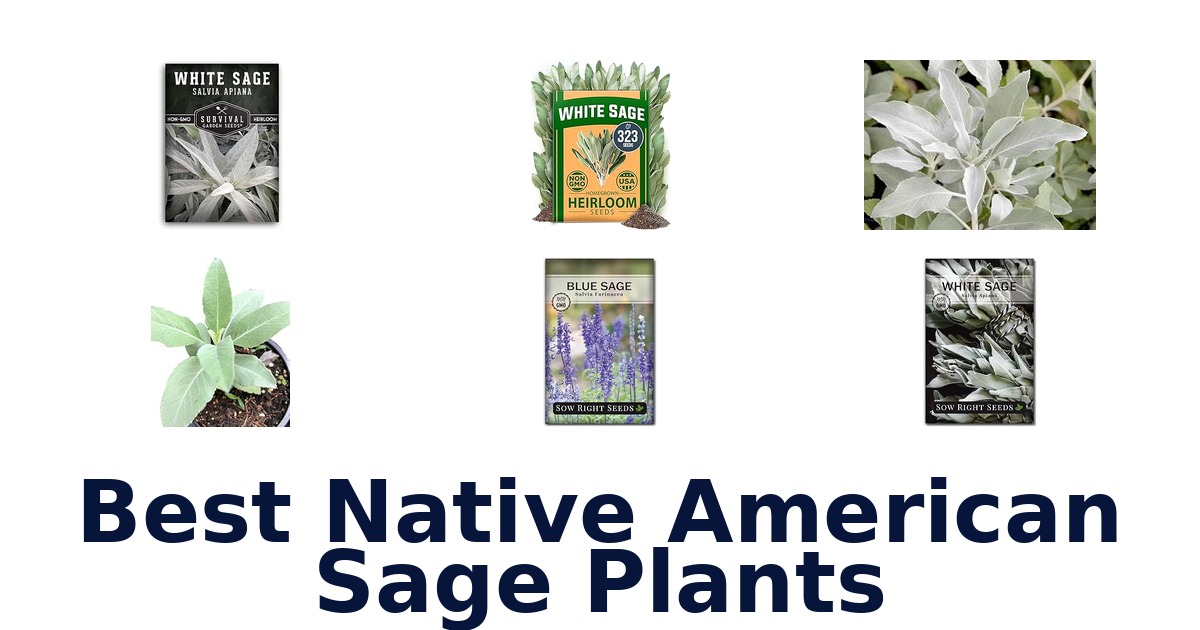
A strong choice for a Native American sage planting is correctly identified white sage, Salvia apiana, offered as seed or a live plant, for gardeners who want this drought-tolerant, fragrant species. This roundup prioritizes white sage because it is the product set’s clearest match for the search, then includes blue sage and Mexican sage as distinct alternatives rather than treating every plant called sage as interchangeable. The options range from a 2.5-inch-pot organic plant to seed packets listing about 75 to 323 seeds, as well as a separate white-sage packet with about 100 seeds.
Check the botanical name and growing format before ordering: the blue and Mexican sages listed here are different species from white sage, and seed growing requires patience and suitable conditions.
The best match is Survival Garden Seeds White Sage, a seed option for Salvia apiana that explicitly connects the species with Native American traditions and offers a homegrown alternative to wild-harvested plants. It is listed as drought tolerant, fragrant, and low maintenance, with spring sowing after two to four weeks of cold stratification. Choose the Smoke Camp Crafts live plant instead if you prefer an established organic white sage start over growing from seed.
Our Top Picks
 Best Overall
Survival Garden Seeds White Sage
Its Salvia apiana listing explicitly notes Native American traditions and a homegrown alternative to wild harvest; it is drought tolerant and fragrant.
View on Amazon Best Live Plant
This is an organic live Salvia apiana plant in a 2.5-inch pot, giving buyers a direct-start option instead of seed propagation.
View on Amazon Largest Specified Packet
The packet lists 75 seeds of native California Salvia apiana, with drought tolerance and suitability for USDA hardiness zones 6–11.
View on Amazon- Most Seeds Listed HOME GROWN White Sage
Compare these sage plants and seeds
| # | Product | Material Feature | Care Instructions | Material Features | Buy |
|---|---|---|---|---|---|
| 1 | 1. Survival Garden Seeds White SageBest Overall | GMO Free, Heirloom | Plant plenty of seeds to compensate for the… | GMO Free, Heirloom | View on Amazon |
| 2 | 2. Smoke Camp Crafts White SageBest Live Plant | Heirloom | — | Heirloom | View on Amazon |
| 3 | 3. Seedville White SageLargest Specified Packet | Drought Tolerant, Evergreen, Fragrant, Native | Water | Drought Tolerant, Evergreen, Fragrant, Native | View on Amazon |
| 4 |  4. HOME GROWN White SageMost Seeds Listed | GMO Free, Heirloom | Plant Seeds In Well-draining Soil, Water… | GMO Free, Heirloom | View on Amazon |
| 5 |  5. Sow Right Seeds White SageFor measured white sage sowing | GMO Free, Heirloom | — | GMO Free, Heirloom | View on Amazon |
| 6 |  6. Sow Right Seeds Blue SageFor pollinator-friendly blue sage | GMO Free, Heirloom | — | GMO Free, Heirloom | View on Amazon |
| 7 |  7. KVITER Blue SageFor high-volume blue salvia sowing | GMO Free, Heirloom | Detailed Step-By-Step Growing Guide on every… | GMO Free, Heirloom | View on Amazon |
| 8 |  8. CitronellaKing Mexican SageFor purple-blooming live sage | GMO Free | Welcoming Your Plants: Carefully unpack your… | GMO Free | View on Amazon |
Detailed Reviews: Best Native American Sage Plants
#1 · Best Overall
1. Survival Garden Seeds White Sage
- Material Feature: GMO Free, Heirloom
- Care Instructions: Plant plenty of seeds to compensate for the…
- Material Features: GMO Free, Heirloom
Best for: For dry-climate white sage gardens.
Why it ranks #1: Its Salvia apiana listing explicitly notes Native American traditions and a homegrown alternative to wild harvest; it is drought tolerant and fragrant.
A drought-tolerant, fragrant white sage with silvery foliage and pale blooms brings both ornamental texture and herb-garden use to sunny, dry spaces. SURVIVAL GARDEN SEEDS supplies Salvia apiana as seed, offering gardeners a way to grow this culturally significant plant at home rather than relying on wild-harvested material.
The heirloom, GMO-free seeds suit gardeners seeking a homegrown source of white sage, while the plant’s drought tolerance and preference for sunny, well-drained conditions make it a fit for xeriscape settings. Start seeds indoors in trays or small pots, or surface-sow in warm, sandy soil kept moist but not soggy. Spring sowing follows a two-to-four-week cold stratification period; the packet advises planting plenty of seeds to compensate for low germination.
- Salvia apiana is identified as white sage, also called Buffalo Sage
- Drought-tolerant plant suits dry garden settings
- Fragrant foliage and pale blooms add garden interest
- Heirloom, GMO-free seeds support home growing
- Low germination is noted; the instructions advise sowing extra seeds.
Skip it if you need an already growing plant or a guaranteed quick display; this listing supplies seeds and advises allowing for low germination.
Choose this seed pack if you want to establish white sage in a sunny, well-drained, dry garden and can manage stratification and sowing. It is not a ready-to-plant specimen, and the listing notes low germination.
Full product details
| Brand | SURVIVAL GARDEN SEEDS |
|---|---|
| Color | White |
| Manufacturer | JD Hardware LLC |
| Part Number | SGSSageWhite-1 |
| Material Feature | GMO Free, Heirloom |
| Material Features | GMO Free, Heirloom |
| Special Features | Deer Resistant, Drought Tolerant, Fragrant, High Germination Rate, Low Maintenance |
| Care Instructions | Plant plenty of seeds to compensate for the low germination rate. Best started indoors in a seeding tray or small pots under full light. Lightly moisten soil only when it begins to dry out. Once established & soil has warmed, transplant hardened seedlings outdoors. Our professionally designed packet |
| Special Feature | Deer Resistant, Drought Tolerant, Fragrant, High Germination Rate, Low Maintenance |
Listed on Amazon as: Survival Garden Seeds White Sage Seeds for Planting, 1 Pack
View on Amazon#2 · Best Live Plant
2. Smoke Camp Crafts White Sage
- Material Feature: Heirloom
- Material Features: Heirloom
Best for: For buyers wanting a live white sage.
Why it ranks #2: This is an organic live Salvia apiana plant in a 2.5-inch pot, giving buyers a direct-start option instead of seed propagation.
A live organic Salvia apiana plant arrives in a small 2.5-inch pot, giving white sage gardeners a head start over sowing seeds. Smoke Camp Crafts presents it as an herb for smudging and purification, while the supplied description identifies it as an heirloom plant from the farm’s seed-and-plant tradition.
Because this is a live potted plant rather than a seed packet, it suits buyers who want to begin with a growing specimen. The listing identifies the plant as organic and heirloom, and specifies a 2.5-inch pot; an additional description also calls it a 3–4-inch pot. Its stated white sage identity makes it relevant to herb gardens, but the supplied information does not specify mature size, growing zone, or care requirements.
- Live Salvia apiana plant rather than seeds
- Identified as organic
- Listed as an heirloom plant
- Presented for herb growing and smudging use
- Small 2.5-inch pot means it arrives as a starter rather than a mature shrub.
Skip it if you want a larger established shrub with listed mature dimensions or growing-zone guidance; this listing specifies a small pot and limited cultivation details.
This is a fit for buyers seeking a live organic white sage starter for an herb garden or smudging use. Expect a small potted plant, and note that detailed care and mature-size information is not supplied.
Full product details
| Brand | Smoke Camp Crafts |
|---|---|
| Color | White |
| Item Weight | 13.6 ounces |
| Manufacturer | Smoke Camp Crafts |
| Material Feature | Heirloom |
| Material Features | Heirloom |
| Special Features | organic |
| Special Feature | organic |
Listed on Amazon as: Organic White Sage (Salvia apiana) Plant in 2.5-inch Pot by Smoke Camp Crafts – Herb for Smudging and Purification – Make Your own Smudge Sticks
View on Amazon#3 · Largest Specified Packet
3. Seedville White Sage
- Material Feature: Drought Tolerant, Evergreen, Fragrant, Native
- Care Instructions: Water
- Material Features: Drought Tolerant, Evergreen, Fragrant, Native
Best for: For mounding silver-foliage shrubs.
Why it ranks #3: The packet lists 75 seeds of native California Salvia apiana, with drought tolerance and suitability for USDA hardiness zones 6–11.
A packet of 75 Salvia apiana seeds gives gardeners a defined starting quantity for growing a native California white sage shrub with mature silvery-white foliage. The evergreen perennial reaches 24–36 inches and forms a neat mound, making it an option for gardeners who want fragrant ornamental structure as well as a white sage planting.
The stated USDA zones 6–11 help gardeners assess regional suitability, while the shrub’s 24–36-inch mature height and mounding habit offer a useful scale for garden placement. Its drought tolerance suits dry conditions, and the supplied description says it grows in gravelly, sandy, or heavy clay soil when drainage is good. The 75-seed packet provides multiple opportunities to start plants, though it does not include a live specimen.
- Packet contains 75 Salvia apiana seeds
- Evergreen shrub is listed for USDA zones 6–11
- Mounding growth reaches 24–36 inches tall
- Tolerates dry conditions and several well-drained soil types
- Seeds require growing time; the listing provides no established plant.
Skip it if you want immediate foliage or blooms; this packet contains seeds rather than a live shrub, so choose a potted plant instead.
This Seedville packet suits gardeners in USDA zones 6–11 who can grow from seed and want a compact, fragrant white sage shrub. Account for its mature 24–36-inch height and provide well-drained soil.
Full product details
| Brand | Seedville |
|---|---|
| Color | White – Pale Lavender Flowers / Silver Foliage |
| Manufacturer | Seedville USA |
| Material Feature | Drought Tolerant, Evergreen, Fragrant, Native |
| Material Features | Drought Tolerant, Evergreen, Fragrant, Native |
| Care Instructions | Water |
Listed on Amazon as: 75 Sacred California White SAGE Salvia Apiana Shrub Silver Folliage Native Smudge Seeds
View on Amazon#4 · Most Seeds Listed
4. HOME GROWN White Sage
- Material Feature: GMO Free, Heirloom
- Care Instructions: Plant Seeds In Well-draining Soil, Water…
- Material Features: GMO Free, Heirloom
Best for: For dramatic tall white sage.
Why it ranks #4: Its 323 Salvia apiana seeds offer a larger stated quantity, and the listing describes silvery foliage and flowering spikes reaching up to six feet.
Flowering spikes that can reach six feet give this HOME GROWN white sage a vertical presence beyond its silvery foliage. The 323-seed Salvia apiana pack is for gardeners who want to raise an evergreen perennial from seed and add both height and pale white-lavender blossoms to a landscape.
The listed 323 seeds provide a substantial sowing quantity for gardeners establishing a planting, while the comprehensive online grow guide offers support through the growing process. Mature flowering spikes can reach up to six feet and bear hundreds of small tubular white-lavender blossoms, creating height and floral detail. Velvety, silver-white leaves add contrasting texture. This is a seed product, so gardeners must raise the plants rather than expect an established shrub on arrival.
- Contains 323 Salvia apiana seeds
- Flowering spikes can reach up to six feet
- Produces tubular white-lavender blossoms
- Includes access to a comprehensive online grow guide
- Supplied as seeds, so it does not provide an established plant for immediate display.
Skip it if you need a mature shrub or instant garden coverage; these seeds require you to raise the plants before enjoying their full height.
Pick this pack if you want to grow white sage from seed and have room for flowering spikes that can reach six feet. The tall eventual form may not suit a small, low-profile planting.
Full product details
| Brand | HOME GROWN |
|---|---|
| Color | Green |
| Container Material | Paper |
| Manufacturer | HOME GROWN |
| Material Feature | GMO Free, Heirloom |
| Material Features | GMO Free, Heirloom |
| Special Features | A practical, garden-themed gift designed for plant lovers of any skill level. Suitable for birthdays, holidays, and everyday giving, making it a perfect gift idea for any occasion., High Germination Rate, Includes a Comprehensive Online Grow Guide Designed to Maximize Yields and Support Confident Gr |
| Care Instructions | Plant Seeds In Well-draining Soil, Water Regularly, And Maintain Proper Sunlight Exposure For Optimal Growth See more |
| Special Feature | A practical, garden-themed gift designed for plant lovers of any skill level. Suitable for birthdays, holidays, and everyday giving, making it a perfect gift idea for any occasion., High Germination Rate, Includes a Comprehensive Online Grow Guide Designed to Maximize Yields and Support Confident Gr |
| Style Name | White Sage |
Listed on Amazon as: HOME GROWN White Sage Seeds, 323 Seeds, Salvia apiana
View on Amazon#5
5. Sow Right Seeds White Sage
- Material Feature: GMO Free, Heirloom
- Material Features: GMO Free, Heirloom
Best for: For measured white sage sowing.
Why it ranks #5: This packet specifies about 100 white sage seeds, germination in 10–20 days at 65–70°F, and planting guidance for USDA Zones 4–10.
Germination guidance of 10–20 days at soil temperatures of 65–70°F gives this Sow Right Seeds white sage packet a practical starting point for planning. It contains about 100 Salvia apiana seeds and lists indoor or outdoor growing, making it a flexible seed option for gardeners who can follow spacing and depth instructions.
The stated 1/4-inch planting depth and 15-inch spacing help translate the packet into a straightforward sowing layout, while the 65–70°F soil-temperature range frames the germination conditions. The listing describes plants growing 1–3 feet tall with a 2–3-foot spread and gives USDA zones 4–10. It also lists partial shade and 75-day maturity, offering several planning details; the product remains seeds, not a live plant.
- About 100 seeds per packet
- Listed germination window is 10–20 days at 65–70°F soil temperature
- Provides planting depth and spacing guidance
- Lists USDA zones 4–10 and 75-day maturity
- Requires sowing and growing from seed rather than planting an established specimen.
Skip it if you want a ready-grown white sage plant or cannot provide the stated sowing depth, spacing, and partial-shade conditions.
Choose this packet if you want white sage seeds with clear planting measurements and a stated zone range. It suits planned indoor or outdoor sowing, but buyers seeking an immediate landscape plant should look elsewhere.
Full product details
| Brand | Sow Right Seeds |
|---|---|
| Color | white |
| Material Feature | GMO Free, Heirloom |
| Material Features | GMO Free, Heirloom |
| Special Features | Fragrant, High Germination Rate |
| Special Feature | Fragrant, High Germination Rate |
Listed on Amazon as: Sow Right Seeds – White Sage Seed for Planting Perennial Medicinal Herb
View on Amazon#6
6. Sow Right Seeds Blue Sage
- Material Feature: GMO Free, Heirloom
- Material Features: GMO Free, Heirloom
Best for: For pollinator-friendly blue sage.
Why it ranks #6: This is Texas-native Salvia farinacea, not white sage; its about 400 seeds and pollinator-attracting violet-blue blooms suit buyers seeking a different native sage.
Deep violet-blue flower spikes and pollinator appeal make this Sow Right Seeds packet an ornamental choice for wildflower gardens. Its Salvia farinacea is described as a Texas native perennial, and the packet contains about 400 seeds, giving gardeners a substantial quantity to sow for colorful meadow-style plantings.
The packet lists germination in 10–35 days at soil temperatures of 65–70°F, giving a temperature range and time window to guide sowing plans. Planting directions specify a shallow 1/16-inch depth and 12–18-inch spacing in partial shade, useful details for laying out a bed. Hummingbirds and honeybees are named among the pollinators attracted by its blooms. This is blue sage, not white sage, so it suits a different planting goal.
- About 400 seeds per packet
- Deep violet-blue flower spikes add ornamental color
- Attracts hummingbirds and honeybees
- Includes germination temperature, sowing depth, and spacing guidance
- This is blue sage, Salvia farinacea, rather than white sage, Salvia apiana.
Skip it if you want white sage for a Salvia apiana planting; this packet grows Texas native blue sage with violet-blue blooms.
This packet fits gardeners establishing a pollinator-friendly wildflower bed with blue sage and who value specific sowing directions. Choose it for Salvia farinacea, not when white sage is the required species.
Full product details
| Brand | Sow Right Seeds |
|---|---|
| Color | blue |
| Material Feature | GMO Free, Heirloom |
| Material Features | GMO Free, Heirloom |
| Special Features | Attracts Pollinators, Fragrant, High Germination Rate |
| Special Feature | Attracts Pollinators, Fragrant, High Germination Rate |
Listed on Amazon as: Sow Right Seeds – Blue Sage Seed for Planting Perennial Wildflower Garden
View on Amazon#7
7. KVITER Blue Sage
- Material Feature: GMO Free, Heirloom
- Care Instructions: Detailed Step-By-Step Growing Guide on every…
- Material Features: GMO Free, Heirloom
Best for: For high-volume blue salvia sowing.
Why it ranks #7: Its 1,250 Salvia farinacea seeds and stated 7–14-day germination suit larger blue-sage plantings, but the species differs from white sage.
A quantity of 1,250 Salvia farinacea seeds makes this KVITER packet suited to gardeners planning broad blue-sage coverage. The plants are described as heat- and drought-tolerant, with upright growth up to 18 inches and blue flower spikes that can add vertical color to borders and flower beds.
The listed 7–14-day germination window at optimal conditions helps gardeners estimate the early sowing stage, and the included step-by-step growing guide provides packet-level planting support. Mature plants reach up to 18 inches, making their upright spikes useful for modest-height borders and beds. Heat and drought tolerance suit warm or dry garden conditions. This is blue sage, not Salvia apiana white sage, so its species identity matters for a white-sage-focused planting.
- Packet contains 1,250 seeds
- Listed germination time is 7–14 days under optimal conditions
- Upright plants grow up to 18 inches
- Heat- and drought-tolerant with a growing guide included
- Blue sage, Salvia farinacea, is not white sage, Salvia apiana.
Skip it if you need Salvia apiana or white sage foliage; these seeds are Salvia farinacea and produce blue blooms instead.
Choose this for large-scale blue-sage sowing in borders or flower beds where compact upright color is wanted. It is not a white sage substitute, so confirm the species fits your garden purpose.
Full product details
| Brand | KVITER |
|---|---|
| Color | Blue |
| Manufacturer | KVITER |
| Material Feature | GMO Free, Heirloom |
| Material Features | GMO Free, Heirloom |
| Special Features | Attracts Pollinators, Deer Resistant, Drought Tolerant, Growing Guide Included, Made in the USA |
| Care Instructions | Detailed Step-By-Step Growing Guide on every seed packet — plant with confidence and watch it thrive. See more |
| Special Feature | Attracts Pollinators, Deer Resistant, Drought Tolerant, Growing Guide Included, Made in the USA |
Listed on Amazon as: 1,250 Blue Sage Heirloom Flower Seeds for Planting, Salvia Farinacea
View on Amazon#8
8. CitronellaKing Mexican Sage
- Material Feature: GMO Free
- Care Instructions: Welcoming Your Plants: Carefully unpack your…
- Material Features: GMO Free
Best for: For purple-blooming live sage.
Why it ranks #8: These two live Salvia leucantha plants offer purple blooms and a compact 2–3-foot height, but Mexican sage is not white sage or Salvia apiana.
Two well-rooted starter plants in 3.5-inch nursery cubes make this a ready-to-grow option for gardeners seeking Santa Barbara Mexican sage rather than white sage. Salvia leucantha ‘Santa Barbara’ brings aromatic foliage and purple summer blooms, with a compact, mounding form suited to pots and garden plantings.
The pair of starter plants gives buyers two specimens to place in a planting or containers, while the stated mature size of 2–3 feet tall by 3–4 feet wide helps with spacing. Its evergreen nature and fragrant foliage contribute interest beyond the soft purple summer blooms. The listing specifies USDA zones 8–11 and a heat-loving habit, so those details help buyers assess climate and placement before planting.
- Includes two well-rooted starter plants
- Plants arrive in 3.5-inch nursery cubes
- Purple summer blooms and aromatic foliage
- Mature dimensions and USDA zones 8–11 are specified
- This is Mexican sage, Salvia leucantha, not white sage, Salvia apiana.
Skip it if you specifically need Native American white sage, Salvia apiana; this product is Santa Barbara Mexican sage, Salvia leucantha.
A fit for gardeners in USDA zones 8–11 who want two live, purple-blooming Mexican sage plants for pots or landscaping. Its species is not white sage, so check that distinction before choosing.
Full product details
| Brand | CitronellaKing |
|---|---|
| Color | Green, Purple, White |
| Item Weight | 16 ounces |
| Manufacturer | NorCalPlants |
| Material Feature | GMO Free |
| Material Features | GMO Free |
| Special Features | Compact Bushy Form, Evergreen Nature, Fragrant Foliage, Pet Friendly, Vibrant Purple Blooms |
| Care Instructions | Welcoming Your Plants: Carefully unpack your new plants. For the first few days, place them outside to receive filtered morning and early afternoon sun, avoiding extreme weather like freezing temperatures. Keep the soil mosit by watering once the top inch is dry. When transplanting, simply bury the |
| Special Feature | Compact Bushy Form, Evergreen Nature, Fragrant Foliage, Pet Friendly, Vibrant Purple Blooms |
White sage is not interchangeable with every sage
Check the botanical name before choosing: white sage is Salvia apiana, while the blue sage listings are Salvia farinacea and the live Mexican sage is Salvia leucantha. Those names identify different plants, so a blue-flowered ornamental or purple-blooming shrub is not a substitute when the goal is specifically white sage. This distinction matters in this set because the blue sage products describe Texas native status and pollinator appeal, while the Mexican sage listing emphasizes purple blooms and a compact form.
White sage is the most direct match to the keyword and is described as a sacred plant in many Native American traditions. That description does not mean every buyer or community uses it in the same way.
For a garden, verify the species and choose a cultivated seed or plant listing rather than assuming a common name signals the same plant or purpose.
Seed packets and live starts have different failure points
White sage seeds require propagation steps that a live plant avoids, while a live start requires successful unpacking and establishment. The Survival Garden Seeds listing advises cold stratifying seeds for two to four weeks, surface sowing them, and keeping warm sandy soil moist but not soggy; it also cautions that germination can be low. Sow Right Seeds gives a different sowing instruction, including a quarter-inch depth and soil temperatures of 65–70°F.
These instructions are product-specific, so do not combine them into one universal recipe. Smoke Camp Crafts offers an organic live plant in a small pot, but buyers still need to adapt it to their own garden conditions.
A practical trade-off follows: seeds offer more plants per packet but add uncertainty and time, whereas a live start skips germination but arrives as a single small plant. Check the exact listing instructions before planting.
How to Choose Native American Sage Plants
Species identity
Look first for the botanical name Salvia apiana if white sage is your goal. The Survival Garden Seeds, Seedville, HOME GROWN, Smoke Camp Crafts, and Sow Right Seeds white sage listings identify that species. By contrast, both blue sage products list Salvia farinacea, and CitronellaKing lists Salvia leucantha ‘Santa Barbara.’ The blue sage listing from Sow Right calls it native to Texas, while Seedville describes white sage as native to Pacific Coast deserts and mountains.
These are not interchangeable choices. Buyers seeking the closest match to white sage should choose one of the Salvia apiana options; buyers prioritizing blue flowers or a purple-blooming shrub may prefer the different species, provided they understand the distinction.
Seed or live plant
Choose a seed packet if you are prepared to follow sowing instructions and wait for germination; choose a live start if you want to skip that stage. Smoke Camp Crafts lists an organic white sage plant in a 2.5-inch pot, while the other white sage options are seeds, including Seedville’s 75 and HOME GROWN’s Survival Garden Seeds advises cold stratifying for two to four weeks and notes low germination, making it a more hands-on choice.
Sow Right Seeds lists germination in 10–20 days under specified soil temperatures. Buyers who want a particular species but can accept propagation work have several seed options; those who want an established start can favor the live white sage plant.
Packet quantity and stated guidance
Compare the stated seed quantity and the growing details that come with it, rather than relying on packet size alone. The listings range from Seedville’s 75 white sage seeds to HOME GROWN’s 323; Sow Right Seeds lists about 100 white sage seeds and germination in 10–20 days at 65–70°F. For blue sage, Sow Right lists about 400 seeds, while KVITER lists 1,250 and a 7–14-day germination range at optimal conditions.
The quantities make larger sowings possible, but they do not change the species identity or guarantee establishment. Buyers who want white sage should prioritize Salvia apiana even if a different sage packet lists more seeds; those planting a broad blue-sage bed may value the larger stated quantity.
Which Native American Sage Plant Should You Choose?
For most buyers seeking white sage, choose Survival Garden Seeds White Sage: it is Salvia apiana, directly addresses respectful cultivation, and lists drought tolerance and fragrance. If you want a live start instead of seed, Smoke Camp Crafts White Sage is the organic potted option. Choose Seedville White Sage for a specified 75-seed packet and stated USDA Zones 6–11, or HOME GROWN White Sage if its listed 323 seeds suit a larger sowing.
Sow Right Seeds White Sage gives about 100 seeds and germination guidance. If your priority is blue flowers and pollinators rather than white sage, consider Sow Right Seeds Blue Sage or KVITER Blue Sage.
CitronellaKing Mexican Sage is the distinct live shrub choice for purple blooms, not a substitute for Salvia apiana.
Frequently Asked Questions
How can I tell white sage apart from blue sage and Mexican sage?
Check the botanical names and listed features: white sage is Salvia apiana, blue sage is Salvia farinacea, and the Mexican sage listed here is Salvia leucantha ‘Santa Barbara.’ The Mexican sage is a live shrub with purple blooms; the blue sage options are flower seeds. They are distinct plants, not interchangeable white sage varieties.
What growing conditions help white sage seeds germinate?
For the Survival Garden Seeds white sage, follow the listed guidance to cold-stratify seeds for two to four weeks, then sow in spring. The product is described as drought tolerant and low maintenance, but those traits do not replace the germination steps. Follow the selected packet’s instructions, since guidance can vary by product.
How can I source white sage respectfully for a garden?
Choose cultivated Salvia apiana seeds or a nursery-grown plant rather than relying on wild-harvested plants. The Survival Garden Seeds option explicitly connects white sage with Native American traditions and presents home cultivation as an alternative to wild harvesting. Grow it for your garden, and approach cultural uses and traditions with respect.
Should I choose white sage seeds or a live plant?
Choose seeds if you want to grow Salvia apiana from the beginning and can follow its sowing guidance. Choose the Smoke Camp Crafts option if you prefer an established organic white sage plant in a pot. Both are white sage choices; the practical difference is starting from seed versus planting a live start.
Which option suits a garden focused on flowers and pollinators?
Consider the blue sage seed options if blue flowers and pollinators are your priority. If you want a live shrub with purple blooms, the CitronellaKing Mexican sage is the distinct choice listed for that purpose. Neither should be treated as a substitute for white sage, Salvia apiana.
Final Words
For most gardeners seeking white sage, choose Survival Garden Seeds White Sage: it is Salvia apiana, offers a homegrown alternative to wild-harvested plants, and includes cold-stratification guidance. Prefer an established start? Choose the organic potted Smoke Camp Crafts plant.
For blue flowers, select a blue sage seed option; for purple blooms in a live shrub, consider Mexican sage. Match the plant to your garden goal, then follow its product-specific growing instructions.