
Best Mexican Desert Bird Of Paradise for Seeds or Planting
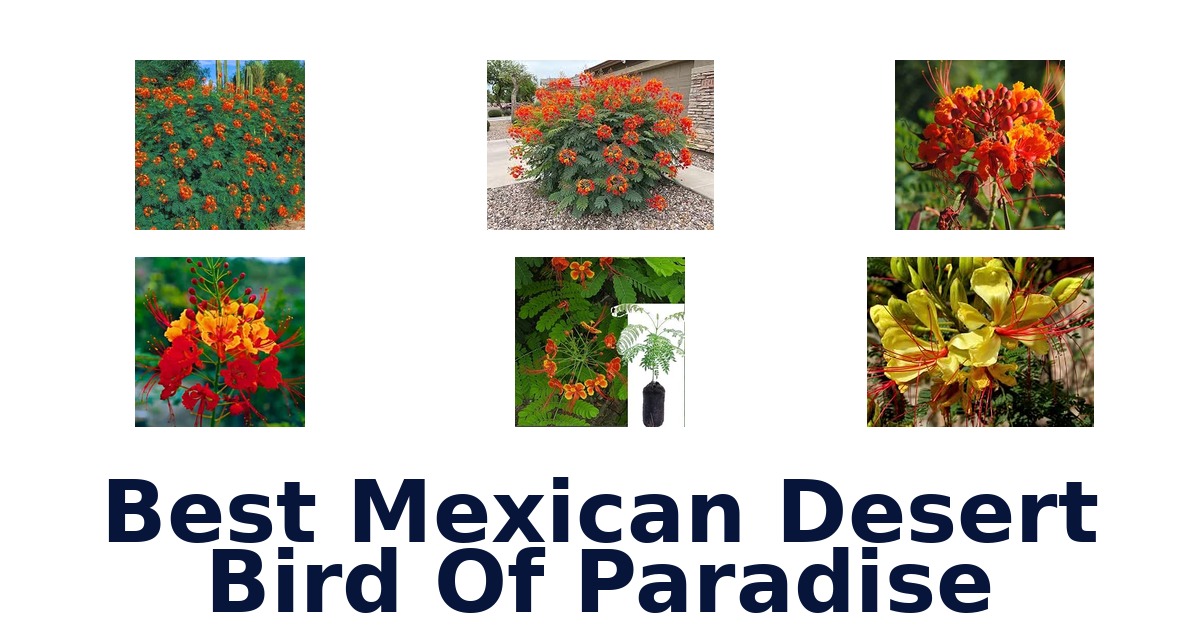
A strong choice for a Mexican desert bird of paradise garden should match the species, flower color, and starting format you want: Seedville’s Caesalpinia gilliesii seeds are the closest match for the yellow flowers and red stamens associated with desert bird of paradise. This roundup also includes red-orange Caesalpinia pulcherrima seeds and live starter plants for shoppers using the broader Mexican bird of paradise name. Check the botanical name before buying, because the listings cover two different species rather than interchangeable varieties.
Seed packets suit gardeners willing to germinate and raise plants, while potted options provide a head start but still need suitable sun, soil, and climate. The picks below prioritize name and species fit, then use details such as flower color, mature size, and included growing guidance to distinguish them.
Seedville Desert Bird of Paradise Seeds is the leading choice for a shopper seeking the desert bird of paradise specifically: its listing identifies Caesalpinia gilliesii and describes yellow flowers with red stamens. It is a five-seed packet, not a live plant, and the listed shrub can reach 8 to 10 feet tall with a 6 to 8 foot spread. If you instead mean the red-orange Mexican bird of paradise, choose a Caesalpinia pulcherrima product, such as one of the seed or live-plant alternatives below.
Our Top Picks
 Best Overall
Identifies Caesalpinia gilliesii, the desert bird of paradise, and specifies yellow flowers with red stamens plus an 8-to-10-foot mature height.
View on Amazon Best Live Shrub
A potted Caesalpinia pulcherrima starter listed at 6 to 12 inches, with full-sun guidance and a stated mature size of 6 to 10 feet.
View on Amazon Best Warm-Zone Plant
A one-year-old, 6-to-10-inch potted Mexican bird of paradise for zones 9–11, with orange, red, and yellow flowers listed.
View on Amazon- Best Growing Guide KVITER Red Bird Seeds
- Best Tricolor Blooms HPGS Mexican Red Seeds
Compare the Bird of Paradise Options
| # | Product | Material Feature | Material Features | Buy |
|---|---|---|---|---|
| 1 | 1. Seedville Desert Bird SeedsBest Overall | GMO Free, Natural | GMO Free, Natural | View on Amazon |
| 2 | 2. Green Bear Mexican Live PlantBest Live Shrub | Drought Tolerant, Heat Resistant | Drought Tolerant, Heat Resistant | View on Amazon |
| 3 | 3. HILROQG Mexican Live PlantBest Warm-Zone Plant | — | — | View on Amazon |
| 4 |  4. KVITER Red Bird SeedsBest Growing Guide | GMO Free, Heirloom | GMO Free, Heirloom | View on Amazon |
| 5 |  5. HPGS Mexican Red SeedsBest Tricolor Blooms | Heirloom | Heirloom | View on Amazon |
| 6 |  6. Generic Orange Starter PlantWell-Rooted Transplant Starter | — | — | View on Amazon |
| 7 |  7. HILROQG Red Live PlantSmall Live Plant for Sunny Containers | — | — | View on Amazon |
| 8 |  8. SVI Mexican Red SeedsSimple Red-and-Yellow Seed Start | Natural | Natural | View on Amazon |
| 9 |  9. Generic Red Bird SeedsPollinator-Focused Seed Bed | GMO Free | GMO Free | View on Amazon |
| 10 |  10. Pride of Barbados SeedsTen-Seed Mexican Bird of Paradise | GMO Free | GMO Free | View on Amazon |
Detailed Reviews: Best Mexican Desert Bird Of Paradise
#1 · Best Overall
1. Seedville Desert Bird Seeds
- Material Feature: GMO Free, Natural
- Material Features: GMO Free, Natural
Best for: Large Yellow-Blooming Landscape Shrub.
Why it ranks #1: Identifies Caesalpinia gilliesii, the desert bird of paradise, and specifies yellow flowers with red stamens plus an 8-to-10-foot mature height.
Yellow flowers with red stamens distinguish Seedville’s Desert Bird of Paradise, Caesalpinia gilliesii, from the red-orange Mexican bird types. Its stated 8–10-foot height and 6–8-foot spread make it a substantial landscape shrub, with blooms described from mid-summer through fall in cooler climates and year-round in warmer regions.
The large mature dimensions make this seed-grown shrub suited to a spacious landscape focal point rather than a tight planting spot. Planting flexibility helps with timing: the directions allow outdoor sowing after the last frost or indoor starts several weeks earlier. The listing calls for sun to part shade and moderate watering, with average to dry soil preferred. Its drought-tolerant feature supports a lower-water garden approach, while the bloom season varies with climate.
- Yellow flowers with striking red stamens
- Stated mature size of 8–10 feet tall and 6–8 feet wide
- Can start indoors before the last frost or sow outdoors afterward
- Drought tolerant; long blooming period
- Seeds need a spacious site for the stated 6–8-foot spread.
Skip it if you want red-orange blooms instead of yellow flowers with red stamens; KVITER’s Caesalpinia pulcherrima seeds are listed for red-orange blooms.
Best suited to gardeners seeking a large Caesalpinia gilliesii shrub with yellow-and-red flowers and room to spread. Its seed format and frost-timed sowing guidance suit growers willing to plan a planting schedule.
Full product details
| Brand | Seedville |
|---|---|
| Color | Yellow With Red Stamens |
| Item Weight | 1.6 ounces |
| Manufacturer | Seedville USA |
| Material Feature | GMO Free, Natural |
| Material Features | GMO Free, Natural |
| Special Features | Attractive Flowers, Drought Tolerant, Long Blooming Period |
| Care Instructions | Plant Outdoors After Frost Or Indoors Weeks Before Last Frost. Requires Sun To Part Shade Exposure. Water Moderately, Prefers Average To Dry Soil Conditions. Suitable For Usda Hardiness Zones 7-11. |
| Special Feature | Attractive Flowers, Drought Tolerant, Long Blooming Period |
| Style Name | Tropical |
Listed on Amazon as: 5 Desert Bird of Paradise Shrub Caesalpinia Gilliesii Poinciana Red & Yellow Flower Seeds
View on Amazon#2 · Best Live Shrub
2. Green Bear Mexican Live Plant
- Material Feature: Drought Tolerant, Heat Resistant
- Material Features: Drought Tolerant, Heat Resistant
Best for: Potted Warm-Climate Focal Shrub.
Why it ranks #2: A potted Caesalpinia pulcherrima starter listed at 6 to 12 inches, with full-sun guidance and a stated mature size of 6 to 10 feet.
A live Caesalpinia pulcherrima in a nursery pot, listed at 6–12 inches tall, lets buyers start with a growing plant rather than seeds. GREEN BEAR describes red-orange and yellow blooms and a mature compact-shrub form, making it a potential focal point or border plant in warm-climate landscapes.
Full-sun guidance and well-draining soil give the planting location a practical starting point, while regular watering until established addresses the plant’s early care. Once established, the listing describes it as drought tolerant, which can reduce water needs later. Its stated mature size of 6–10 feet tall and wide calls for room in a border or focal planting. The supplied nursery pot makes this a live-plant option, not a seed-growing project.
- Live plant listed at 6–12 inches tall in a nursery pot
- Red-orange and yellow flowers
- Full sun and well-draining soil guidance
- Drought tolerant once established; attracts butterflies
- Its stated mature size reaches 6–10 feet tall and wide.
Skip it if you have limited room for a large shrub; HPGS Mexican Red Bird of Paradise seeds are listed for an 8–12-foot thornless shrub.
A fit for warm-climate gardeners who want a potted start for a sunny border or focal point and can accommodate a shrub reaching 6–10 feet in both height and width.
Full product details
| Brand | GREEN BEAR |
|---|---|
| Color | Dwarf red, orange, and yellow Caesalpinia pulcherrima |
| Container Material | Plastic Nursery Pot |
| Item Weight | 8 ounces |
| Manufacturer | Green Bear |
| Material Feature | Drought Tolerant, Heat Resistant |
| Material Features | Drought Tolerant, Heat Resistant |
| Special Features | Butterfly Attracting, Drought Tolerant, Fast Growing, Heat Tolerant |
| Care Instructions | Plant In Full Sun, Water Regularly Until Established, Then Reduce Watering. Tolerates Heat And Drought Conditions. Prune As Needed To Maintain Shape. |
| Special Feature | Butterfly Attracting, Drought Tolerant, Fast Growing, Heat Tolerant |
| Style Name | Tropical |
Listed on Amazon as: Mexican Red Bird of Paradise Plant, Caesalpinia, Barbados Pride Flowering Shrub, Dwarf Poinciana Tree (Dwarf red, Orange, and Yellow Caesalpinia pulcherrima, Grower Traders Pot 6-12" Tall)
View on Amazon#3 · Best Warm-Zone Plant
3. HILROQG Mexican Live Plant
Best for: One-Year-Old Warm-Climate Plant.
Why it ranks #3: A one-year-old, 6-to-10-inch potted Mexican bird of paradise for zones 9–11, with orange, red, and yellow flowers listed.
A one-year-old live plant listed at 6–10 inches tall gives this HILROQG Mexican Bird of Paradise a head start over seeds. Its described orange, red, and yellow flowers and Zone 9–11 suitability point to warm, sunny gardens, while the product is supplied in a pot and may be dormant in winter.
The listed Zone 9–11 range helps buyers assess whether their climate fits, and the recommendation for hot, sunny environments further narrows suitable sites. As a live potted plant, it avoids the seed-starting stage; its 6–10-inch height describes the supplied plant rather than its mature size. The listing calls care low maintenance, with minimal watering and pruning, and notes winter dormancy. Buyers should account for that seasonal appearance when choosing a plant for year-round display.
- One-year-old live plant supplied in a pot
- Listed height of 6–10 inches
- Zone 9–11 and hot, sunny environments specified
- Low maintenance; winter dormancy noted
- The plant is listed as dormant in winter.
Skip it if you need flowers or active growth through winter; Seedville’s Desert Bird of Paradise is listed for year-round blooms in warmer regions.
A suitable option for a Zone 9–11 gardener seeking a small live plant for a hot, sunny garden and minimal watering or pruning. Its stated winter dormancy is a relevant boundary for year-round displays.
Full product details
| Brand | HILROQG |
|---|---|
| Color | Red |
| Manufacturer | HILROQG |
Listed on Amazon as: 1 Year Old Mexican Bird Paradise Tree Live Plant, 6-10" in Tall Pot
View on Amazon#4 · Best Growing Guide
4. KVITER Red Bird Seeds
- Material Feature: GMO Free, Heirloom
- Material Features: GMO Free, Heirloom
Best for: Heat-Tolerant Privacy Screen Starter.
Why it ranks #4: Ten Caesalpinia pulcherrima seeds include a step-by-step growing guide and are described as heat tolerant and suited to USDA zones 8–11.
Red-orange blooms and heat tolerance give KVITER’s ten Caesalpinia pulcherrima seeds a clear role in warm outdoor gardens: grow a flowering shrub for beds, patios, or a privacy screen. The listing identifies the plant as perennial in USDA zones 8–11 and notes tolerance of temperatures down to 30°F.
The stated fast growth makes these seeds relevant when the goal is a developing privacy screen, while the listed compact habit also suits patio gardens and flower beds. Drought tolerance can reduce watering demands once plants are established, and pollinator attraction adds another garden benefit. A step-by-step growing guide is included with each seed packet, giving seed growers written planting support. These are seeds, however, so they require growing rather than providing an established shrub on arrival.
- Ten Caesalpinia pulcherrima seeds
- Red-orange blooms
- Listed for USDA zones 8–11 and tolerance of 30°F+
- Growing guide included; drought tolerant and attracts pollinators
- Seeds require growing before they become flowering shrubs.
Skip it if you need a ready-to-plant shrub rather than seeds; GREEN BEAR’s Mexican Red Bird of Paradise arrives as a potted plant.
A good match for gardeners in warm climates who want to raise red-orange flowering shrubs for beds, patios, or a privacy screen. Choose another format if you need an established plant instead of seeds.
Full product details
| Brand | KVITER |
|---|---|
| Color | Red |
| Material Feature | GMO Free, Heirloom |
| Material Features | GMO Free, Heirloom |
| Special Features | Attracts Pollinators, Compact, Drought Tolerant, Growing Guide Included, Made in the USA |
| Care Instructions | Detailed Step-By-Step Growing Guide on every seed packet — plant with confidence and watch it thrive. See more |
| Special Feature | Attracts Pollinators, Compact, Drought Tolerant, Growing Guide Included, Made in the USA |
#5 · Best Tricolor Blooms
5. HPGS Mexican Red Seeds
- Material Feature: Heirloom
- Material Features: Heirloom
Best for: Thornless Tricolor Shrub from Seed.
Why it ranks #5: Five Caesalpinia pulcherrima seeds promise red-orange-yellow flowers and list a thornless 8-to-12-foot shrub with sun and drought tolerance.
Thornless growth and red-orange-yellow flowers define HPGS’s five Mexican Red Bird of Paradise seeds, offering a specific combination for gardeners planning a colorful shrub. The listing gives an 8–12-foot shrub size, summer-through-frost flowering, and a scarify-or-soak method to support seed preparation.
The stated 8–12-foot size makes room planning important, while the thornless description can be useful when choosing a spot near garden activity. Flowers are described as continuing from summer through frost and attracting hummingbirds and butterflies, giving the shrub both seasonal color and pollinator appeal. Heat and drought tolerance support warm, lower-water settings. Scarifying or soaking is the listed germination approach, so buyers should be prepared to handle seed preparation before planting.
- Five Caesalpinia pulcherrima seeds
- Thornless shrub listed at 8–12 feet
- Red-orange-yellow blooms described from summer through frost
- Heat and drought tolerant; attracts hummingbirds and butterflies
- Seed preparation by scarifying or soaking is part of the listed method.
Skip it if you prefer a live plant that skips seed preparation; GREEN BEAR’s Mexican Red Bird of Paradise arrives in a nursery pot.
Choose these seeds if you want a thornless, tricolor shrub for a warm garden and can accommodate its stated 8–12-foot size. The scarify-or-soak germination method makes seed preparation part of the process.
Full product details
| Brand | HPGS |
|---|---|
| Color | Gold, Green, Multicolor, Orange, Red, White, Yellow |
| Manufacturer | Happy Gardener |
| Material Feature | Heirloom |
| Material Features | Heirloom |
| Special Features | Disease Resistant |
| Special Feature | Disease Resistant |
Listed on Amazon as: 5 Mexican Red Bird of Paradise Seeds (Caesalpinia pulcherrima) – Dwarf Poinciana Flower Shrub
View on Amazon#6
6. Generic Orange Starter Plant
Best for: Well-Rooted Transplant Starter.
Why it ranks #6: A well-rooted live seedling measuring 6 to 10 inches arrives potted and is described for outdoor growing in warm climates.
A well-rooted seedling shipped in a pot gives this live Mexican Bird of Paradise a transplant-ready starting point. The plant is listed at approximately 6–10 inches tall and is intended for outdoor growing in warm climates, with full sun to partial sun stated as its light range.
Because the listing describes a well-rooted seedling in a pot, buyers can move toward transplanting rather than beginning with seed germination. Its 6–10-inch stated height gives a sense of the starter plant’s scale, and the full-sun-to-partial-sun range allows more light flexibility than a full-sun-only listing. The intended setting is outdoors in warm climates. The listing does not provide mature dimensions or a detailed watering schedule, so site planning remains limited by the supplied information.
- Live, well-rooted seedling shipped in a pot
- Approximately 6–10 inches tall
- Suitable for outdoor growing in warm climates
- Full sun to partial sun listed
- The listing does not provide mature dimensions or a watering schedule.
Skip it if you want detailed care directions or mature-size guidance; GREEN BEAR’s Mexican Red Bird of Paradise listing gives full-sun and soil guidance.
A reasonable choice for a warm-climate gardener who wants a potted, well-rooted starter and has an outdoor spot with full or partial sun. Plan around the limited supplied information on mature size and care.
Full product details
| Brand | Generic |
|---|---|
| Color | Orange |
| Manufacturer | Generic |
Listed on Amazon as: Orange Bird Plant Live, Well-Rooted Starter Plant, 6-10 Inch Tall
View on Amazon#7
7. HILROQG Red Live Plant
Best for: Small Live Plant for Sunny Containers.
Why it ranks #7: A 4-to-8-inch live plant in a 4-inch pot offers a ready-to-plant option for sunny gardens and warm climates.
This HILROQG listing supplies a live Red Bird of Paradise in a 4-inch pot, at a stated height of 4–8 inches, so buyers can begin with a small plant rather than seed. Its red tropical flowers and container-planting suitability point to patios, sunny gardens, and outdoor pots.
The compact supplied height and 4-inch pot offer a manageable starting point for planting in a garden or moving into a larger container. Full sun and well-drained soil are the stated growing conditions, so the planting spot should meet both. Spring or summer planting is recommended, and the listing describes the plant as suited to warm climates and sunny locations. The mature size is not provided, so this listing does not establish how much eventual space it will need.
- Live plant supplied in a 4-inch pot
- Stated height of 4–8 inches
- Suitable for outdoor gardens, patios, or containers
- Full sun and well-drained soil guidance
- The listing does not state the plant’s mature size.
Skip it if you need a stated mature-size estimate before choosing a site; Seedville’s Desert Bird of Paradise listing gives height and spread dimensions.
A practical option for a warm-climate gardener wanting a small live plant for a sunny patio container or garden. Check that full sun and well-drained soil suit the location; mature dimensions are not specified.
Full product details
| Brand | HILROQG |
|---|---|
| Color | Red |
| Manufacturer | HILROQG |
Listed on Amazon as: Red Bird of Paradise Live Plant, 4 Inch Pot, 4-8 Inches High
View on Amazon#8
8. SVI Mexican Red Seeds
- Material Feature: Natural
- Material Features: Natural
Best for: Simple Red-and-Yellow Seed Start.
Why it ranks #8: A 25-seed packet is explicitly labeled Mexican red bird of paradise and lists red and yellow blooms, though growing details are limited.
Red and yellow blooms are the defining feature of SVI’s Mexican Red Bird of Paradise seeds, making this a straightforward seed option for gardeners seeking those two flower colors. The listing identifies the contents as 25 seeds and gives the concise care direction to water.
The 25-seed quantity gives growers multiple seeds to plant, while the red-and-yellow bloom description helps set expectations for the flowers. The product is listed as natural and is identified as Mexican Bird of Paradise seed. Its care information is brief: water. That makes the available guidance limited compared with seed packets that specify planting steps or growing conditions, so buyers should be comfortable sourcing any additional cultivation information they need.
- 25 Mexican Bird of Paradise seeds
- Red and yellow blooms listed
- Natural material feature
- Watering named in care instructions
- The listing provides little growing guidance beyond watering.
Skip it if you want a live plant or detailed planting directions; HILROQG’s 4-inch-pot Red Bird of Paradise is supplied as a plant.
Consider these seeds if you want to grow Mexican Bird of Paradise and value the stated red-and-yellow blooms and 25-seed quantity. The brief care details make them a less supported choice for growers seeking full instructions.
Full product details
| Brand | SVI |
|---|---|
| Color | Red,Yellow |
| Part Number | SVI24235 |
| Material Feature | Natural |
| Material Features | Natural |
| Care Instructions | Water |
Listed on Amazon as: MEXICAN RED BIRD OF PARADISE PLANT 25 SEEDS BEST BUY
View on Amazon#9
9. Generic Red Bird Seeds
- Material Feature: GMO Free
- Material Features: GMO Free
Best for: Pollinator-Focused Seed Bed.
Why it ranks #9: Twenty seeds are offered for red bird of paradise and the listing advises soaking for 24 hours, but it does not identify the botanical species.
A 20-seed quantity and listed pollinator appeal make this Generic Red Bird of Paradise packet relevant for gardeners planning a hedge, border, or focal planting from seed. Its description highlights hummingbirds and butterflies, while the planting directions specify sowing after the last spring frost or preparing seeds with a warm-water soak.
The directions offer two practical ways to begin: sow outdoors after the last spring frost, or soak seeds in warm water for 24 hours to soften the seed coat. Shallow sowing in well-draining soil and keeping it slightly moist provide further planting guidance. The listed hedge, border, and standalone uses help frame the landscape role, while pollinator attraction adds a reason to group the flowering plants. These are seeds, so the finished planting requires growing time.
- 20 seeds listed
- Directions include a 24-hour warm-water soak option
- Shallow sowing and well-draining soil guidance
- Listed for hedges, borders, focal points, and pollinator attraction
- Seeds require germination and growing before a landscape planting develops.
Skip it if you want an established shrub now rather than a seed-growing project; HILROQG’s 4-inch-pot Red Bird of Paradise is a live plant.
A fit for seed growers planning a pollinator-attracting hedge, border, or focal planting who appreciate explicit sowing steps. The frost timing and seed-growing process are important considerations for a ready-made landscape.
Full product details
| Brand | Generic |
|---|---|
| Manufacturer | Generic |
| Material Feature | GMO Free |
| Material Features | GMO Free |
| Special Features | Attracts Pollinators |
| Special Feature | Attracts Pollinators |
Listed on Amazon as: 20Pcs Exotic Red Bird of Paradise Seeds for Planting – Tropical Ornamental Flowering Shrub, Drought-Tolerant Landscape Plant, Attracts Hummingbirds & Butterflies
View on Amazon#10
10. Pride of Barbados Seeds
- Material Feature: GMO Free
- Material Features: GMO Free
Best for: Ten-Seed Mexican Bird of Paradise.
Why it ranks #10: Ten seeds are associated with Mexican bird of paradise and red bird of paradise, but the listing gives little species-specific growing or flower detail.
Ten seeds and several familiar names—Peacock Flower, Dwarf Poinciana, and Bird of Paradise—identify this Pride of Barbados listing as a seed option for gardeners seeking Mexican Bird of Paradise. The listing names the plant as red bird of paradise and specifies a GMO-free material feature.
The ten-seed quantity makes this a seed-growing choice rather than an established landscape plant, so buyers should expect to raise plants from seed. Its naming provides several common terms associated with the listing, including Pride of Barbados and Peacock Flower, which help identify the intended plant. The supplied details do not give planting instructions, bloom timing, mature dimensions, or site requirements, limiting what can be planned from the listing alone.
- Ten seeds listed
- Identified as Mexican Bird of Paradise and Red Bird of Paradise
- Also listed as Peacock Flower and Dwarf Poinciana
- GMO-free material feature
- The listing supplies no planting directions or site requirements.
Skip it if you need clear planting steps and site guidance; Seedville’s Desert Bird of Paradise listing provides sowing timing and light conditions.
Consider this packet if you want ten seeds identified with the familiar Mexican Bird of Paradise and Peacock Flower names. It is less suited to buyers who need planting directions, bloom timing, or mature-size details upfront.
Full product details
| Brand | Pride of Barbados |
|---|---|
| Color | Red |
| Material Feature | GMO Free |
| Material Features | GMO Free |
Listed on Amazon as: Peacock Flower,Dwarf Poinciana,Bird of Paradise 10 Seeds
View on AmazonAvoid confusing the two bird of paradise species
Check the botanical name because these listings use overlapping common names for two different plants. Seedville’s desert bird of paradise is Caesalpinia gilliesii, also described as yellow bird of paradise, and its flowers are yellow with red stamens. Most of the other relevant listings name Caesalpinia pulcherrima, including products called Mexican red bird of paradise, Pride of Barbados, and dwarf poinciana.
Those listings describe red, orange, and sometimes yellow blooms, but that does not make them the same species as C. gilliesii.
This naming overlap is the main selection trap: choosing by the words Mexican bird of paradise alone may lead to a different flower display than intended. If exact species matters, prioritize a listing that supplies the botanical name, and treat common names as supporting clues rather than proof.
Plan for mature shrub width, not just the starter size
Allow space for the mature plant, because a small packet or starter plant can become a substantial landscape shrub. Seedville gives a mature size of 8 to 10 feet tall and 6 to 8 feet wide for its C. gilliesii, while Green Bear lists 6 to 10 feet tall and wide for its C.
pulcherrima. HPGS describes its Mexican red bird as a thornless 8-to-12-foot shrub.
Those dimensions are not directly interchangeable because they refer to different listings and species, but they show why a young plant’s container size is a poor guide to its eventual footprint. For a narrow bed or patio, consider whether pruning or container growing is practical for your conditions; the product details do not establish a guaranteed compact mature form. Choose a planting position with the stated potential spread in mind.
How to Choose a Mexican Desert Bird of Paradise
Species and flower color
Look for the botanical name first if you want the desert bird of paradise rather than a red Mexican bird of paradise. Seedville lists Caesalpinia gilliesii with yellow flowers and red stamens, while Green Bear, KVITER, and HPGS identify Caesalpinia pulcherrima and describe red-orange or tricolor blooms. Several listings use overlapping common names, so flower color alone is not a dependable species identifier.
Buyers specifically seeking the desert species should favor the named C. gilliesii packet; gardeners seeking a tropical red-orange display can choose among the C.
pulcherrima options. If the listing omits a botanical name, treat its common-name identification as less specific.
Seeds or a live starter
Choose seeds if you are prepared to germinate and raise the plant; choose a live starter if you want to begin with an established young plant. Seedville offers five C. gilliesii seeds, while KVITER lists ten red bird of paradise seeds and SVI lists 25 Mexican red seeds.
Live options include Green Bear’s potted 6-to-12-inch plant, HILROQG’s 4-to-8-inch plant in a 4-inch pot, and a Generic 6-to-10-inch well-rooted seedling. Seed packets provide more units but require germination; the live plants arrive potted but are still small and need transplant care.
Buyers prioritizing the exact desert species should note that the listed live-plant choices are described as Mexican or red bird of paradise, not C. gilliesii.
Climate, sun, and mature dimensions
Compare the growing conditions and eventual footprint with your planting site before choosing. KVITER states that its red bird of paradise is suited to USDA zones 8–11 and tolerates 30°F or warmer; HILROQG specifies zones 9–11 for its Mexican plant. Green Bear recommends full sun and well-draining soil, while its stated mature size is 6 to 10 feet tall and wide.
Seedville lists its desert species at 8 to 10 feet tall and 6 to 8 feet wide, with sun to part shade in its care details. Those specifications favor different situations: KVITER gives a broader stated zone range, while the live plants offer a head start for warm-climate gardeners.
Match the listing’s conditions to your own site rather than assuming all plants share the same tolerance.
Which bird of paradise should you choose?
For the desert bird of paradise specifically, choose Seedville Desert Bird Seeds: it names Caesalpinia gilliesii and gives the yellow-flower, red-stamen description. If you mean the red-orange Mexican bird of paradise and want a live plant, Green Bear Mexican Live Plant provides a potted 6-to-12-inch starter, while HILROQG Mexican Live Plant is listed for zones 9–For seeds with an included growing guide and a stated USDA zone range, KVITER Red Bird Seeds is a useful alternative.
Choose HPGS Mexican Red Seeds if tricolor flowers and a stated 8-to-12-foot shrub are priorities. Before ordering any live plant, confirm that the species and growing conditions fit your garden; the common names in these listings overlap.
Related Buying Guides
Frequently Asked Questions
How can I tell Caesalpinia gilliesii apart from Caesalpinia pulcherrima before planting?
Check the botanical name on the listing or seed packet. Caesalpinia gilliesii is the desert bird of paradise, described here with yellow flowers and red stamens. Caesalpinia pulcherrima is the red-orange Mexican bird of paradise.
Common names overlap, so confirm the scientific name rather than relying on the common name alone.
When should I sow or transplant bird of paradise outdoors in my climate?
Use local frost timing and the product’s growing guidance to choose a safe outdoor planting window; the supplied listings do not give a sowing calendar. Before planting, confirm the species and its climate needs for your location. For a live plant, check conditions before ordering, since the listings may describe different species.
How much space should I leave for a mature desert bird of paradise shrub?
Allow for a mature shrub that can reach 8 to 10 feet tall with a 6 to 8 foot spread, according to the desert bird of paradise listing. Leave enough room for that spread and avoid placing it where its mature size would crowd a path, structure, or neighboring planting.
Should I choose seeds or a live bird of paradise plant?
Choose seeds if you want to start from a packet and are prepared to grow the plant; choose a live listing if you want a starter plant. These products vary: the desert option is a five-seed packet, while listed live alternatives include potted starters. Confirm the species before ordering.
What should I check before ordering a live Mexican bird of paradise?
Confirm the botanical species, the listed plant size, and whether its stated growing conditions suit your garden. The names overlap across listings: Green Bear is described as a potted 6-to-12-inch starter, while HILROQG is listed for zones 9–Check the listing carefully before choosing.
Final Words
For the desert bird of paradise specifically, choose Seedville Desert Bird Seeds: the listing names Caesalpinia gilliesii and describes yellow flowers with red stamens. It is a five-seed packet, not a live plant, and its mature size calls for room to spread. If you mean the red-orange Mexican bird of paradise, select a Caesalpinia pulcherrima seed or live-plant listing instead, and verify species and growing conditions before ordering.