
Best Little Rose Of Sharon for Narrow Spaces and Small Starts
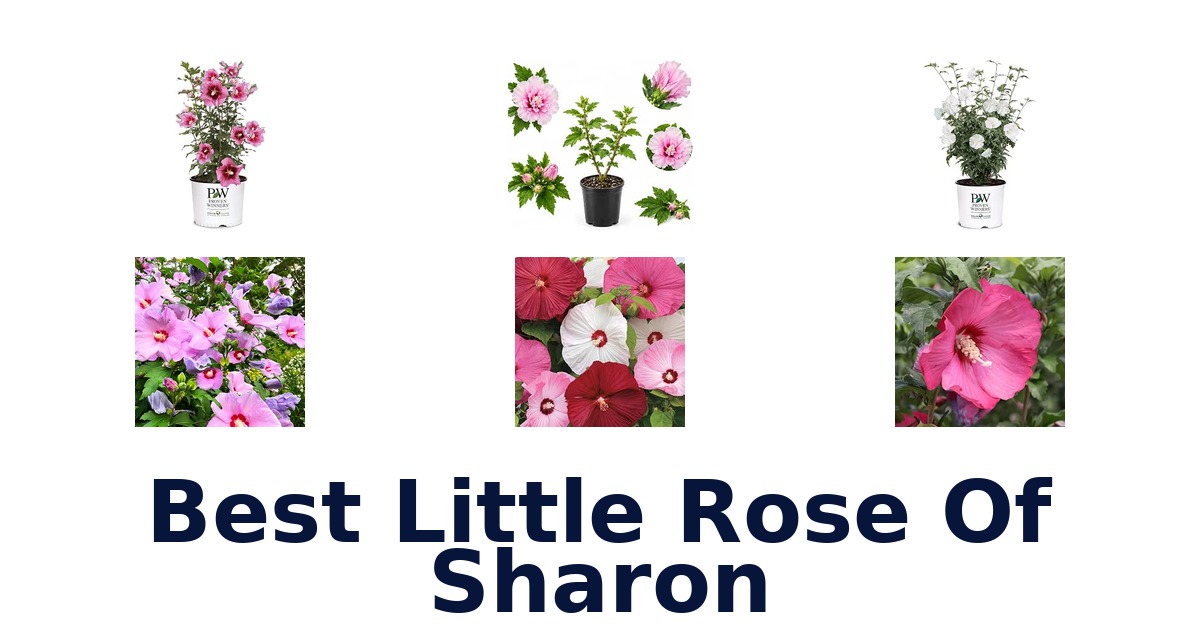
A strong little Rose of Sharon choice gives you the flower color you want without taking more garden space than you can spare. White Pillar Hibiscus is a standout for narrow beds because its listing describes a naturally columnar habit and a 24–36-inch width; starter plants and seeds suit different timelines and planting plans. This roundup compares ten options, from 4-inch pots to 2-gallon shrubs, including upright varieties, pink and red flowering plants, and seed packets.
Check mature dimensions before buying: a young plant’s small shipping size does not mean it will stay small. The listings also vary in bloom color, hardiness details, and whether you receive a live plant or seeds, so match the product format and eventual footprint to your space.
White Pillar Hibiscus is the leading choice for a little Rose of Sharon because its naturally narrow columnar growth is listed at 24–36 inches wide, with a mature height of 120–192 inches. It suits gardeners who want a tall flowering accent without the broader footprint of a conventional shrub. Its pure white, semi-double blooms add a defined color choice.
If you want red flowers in a columnar form instead, Red Pillar Hibiscus is a close alternative, but its listed width is 48–60 inches.
Our Top Picks
 Best Overall
Its naturally narrow habit and listed 24–36-inch width suit limited space, while pure white semi-double blooms provide a clear ornamental feature.
View on Amazon Best Red Column
The naturally narrow columnar habit helps in tight spaces, and its listed 48–60-inch width and red blooms offer a strong upright alternative.
View on Amazon Best Red Blooms
This live shrub reaches 6–10 feet tall and 5 feet wide, with dark pinky-red summer flowers and listed drought-tolerant, low-maintenance features.
View on Amazon- Best Violet Flowers Paraplu Violet Hibiscus
- Best White Flowers White Chiffon Hibiscus
Compare These Rose of Sharon Picks by Form and Flower
| # | Product | Buy |
|---|---|---|
| 1 | 1. White Pillar HibiscusBest Overall | View on Amazon |
| 2 | 2. Red Pillar HibiscusBest Red Column | View on Amazon |
| 3 | 3. Paraplu Red Rose of SharonBest Red Blooms | View on Amazon |
| 4 |  4. Paraplu Violet HibiscusBest Violet Flowers | View on Amazon |
| 5 |  5. White Chiffon HibiscusBest White Flowers | View on Amazon |
| 6 |  6. GINGERGLOW Pink Rose of SharonDormant-plant beginners | View on Amazon |
| 7 |  7. AKTRD Pink Rose of SharonPink hedge and screen starters | View on Amazon |
| 8 |  8. AKTRD Red Rose of SharonRed-flower screen starters | View on Amazon |
| 9 |  9. TomorrowSeeds Rose of SharonSeed-growing cottage gardeners | View on Amazon |
| 10 |  10. SPROUTARAQ Hibiscus SeedsMixed-color seed starters | View on Amazon |
Detailed Reviews: Best Little Rose Of Sharon
#1 · Best Overall
1. White Pillar Hibiscus
Best for: Narrow-space white-flower growers.
Why it ranks #1: Its naturally narrow habit and listed 24–36-inch width suit limited space, while pure white semi-double blooms provide a clear ornamental feature.
White Pillar’s naturally narrow columnar habit uses less lateral space than conventional Rose of Sharon, making it a useful choice where a broad shrub would crowd a planting. Its pure white, semi-double flowers add a formal accent, while the listed mature dimensions reach 10–16 feet tall and 4–5 feet wide.
The columnar form and 4–5-foot mature width make this shrub easier to place along a landscape edge than a broadly spreading Rose of Sharon, though it still grows tall. Pure white semi-double blooms provide a clear focal point, and the stated full-sun-to-partial-shade range gives some flexibility when choosing a site. It is listed for USDA zones 5–9 and containers, landscapes, or accents; allow for its mature height when selecting a container or planting position.
- Naturally narrow columnar growth habit
- Pure white semi-double blooms
- Listed for full sun to partial shade
- Suitable for containers, landscapes, or accents
- Its listed mature height of 10–16 feet may exceed low-profile planting plans.
Skip it if you need a short shrub; White Pillar is listed to reach 10–16 feet tall.
White Pillar suits gardeners seeking a white-flowering vertical accent in a narrower footprint, with sun to partial shade available. Its tall mature growth still requires overhead room and a site suited to a large shrub.
Full product details
| Brand | Proven Winner |
|---|---|
| Color | Lush Green Foliage with Pure White Blooms |
| Manufacturer | Proven Winners |
| Part Number | White Pillar |
| Material Feature | Organic |
| Material Features | Organic |
| Model Number | White Pillar |
| Care Instructions | Water before planting• Plant in Full Sun• Dig hole 3X the width of pot• Back-fill and plant 1′′-2′′ above soil level• Water and add more soil if needed• Mulch plants• Fertilize in early spring See more |
Listed on Amazon as: Proven Winners 2 Gal. Hibiscus White Pillar Shrub
View on Amazon#2 · Best Red Column
2. Red Pillar Hibiscus
Best for: Narrow red privacy plantings.
Why it ranks #2: The naturally narrow columnar habit helps in tight spaces, and its listed 48–60-inch width and red blooms offer a strong upright alternative.
Red Pillar’s naturally narrow columnar growth makes it useful where a spreading Rose of Sharon would take too much room, while its red bullseye blooms add color. The listing gives mature dimensions of 10–16 feet tall and 4–5 feet wide, providing a clear footprint for planning.
The narrow 4–5-foot mature width and suggested 48-inch spacing help when planning a row or placing the shrub in a confined landscape area; its height can reach 10–16 feet, so overhead room remains important. Full sun to part shade is listed, and the plant is suitable for containers, landscapes, and accents. It is deciduous, losing foliage in winter and producing new growth in spring, which affects seasonal privacy and appearance.
- Naturally narrow columnar growth
- Red bullseye blooms
- Listed for full sun to part shade
- Suitable for containers, landscapes, and accents
- Its deciduous foliage drops in winter, reducing seasonal screening.
Skip it if you need year-round leafy privacy; this deciduous shrub loses foliage in winter.
Red Pillar fits gardeners seeking a tall, narrow red-flowering accent or seasonal privacy planting with limited width. Its winter foliage loss and 10–16-foot height matter when year-round screening or a low profile is required.
Full product details
| Brand | Proven Winner |
|---|---|
| Color | Red |
| Item Weight | 8.8 pounds |
| Manufacturer | Proven Winner |
| Material Feature | Organic |
| Material Features | Organic |
| Special Features | Low Maintenance |
| Care Instructions | Water before planting• Plant in Full Sun• Dig hole 3X the width of pot• Back-fill and plant 1′′-2′′ above soil level• Water and add more soil if needed• Mulch plants• Fertilize in early spring |
| Special Feature | Low Maintenance |
Listed on Amazon as: Proven Winners 2 Gal. Hibiscus Red Pillar Shrub
View on Amazon#3 · Best Red Blooms
3. Paraplu Red Rose of Sharon
Best for: Red summer hedge planters.
Why it ranks #3: This live shrub reaches 6–10 feet tall and 5 feet wide, with dark pinky-red summer flowers and listed drought-tolerant, low-maintenance features.
Dark pinky-red summer flowers give Proven Winners Paraplu Red its color focus, while its listed 6–10-foot height and 5-foot width suit a substantial border or hedge. It is rated for zones 5–9 and blooms on new wood, giving gardeners useful guidance for siting and seasonal growth expectations.
The five-foot spacing recommendation helps plan a hedge or screening row, while the 6–10-foot mature height provides an idea of its eventual vertical presence. Full sun, defined as six or more hours daily, is the listed planting requirement, and the plant blooms on new wood. Its green foliage is listed from spring to fall; shipments from November through April arrive dormant, while April through October shipments arrive green, so season affects its arrival appearance.
- Dark pinky-red summer flowers
- Listed mature size of 6–10 feet tall and 5 feet wide
- Blooms on new wood
- Suitable for borders, containers, foundation plantings, and hedges
- It requires full sun, listed as at least six hours daily.
Skip it if you lack a site with six or more hours of daily sun; full sun is specified for this shrub.
Paraplu Red suits a sunny border or hedge plan where its five-foot spacing and substantial mature height can be accommodated. Expect a dormant arrival from November through April, rather than green foliage.
Full product details
| Brand | Proven Winners |
|---|---|
| Color | Dark Pinky-Red |
| Item Weight | 2.5 pounds |
| Manufacturer | Proven Winners |
| Part Number | HIBPRC3057800 |
| Material Feature | Drought Tolerant, Long Blooming, Low Maintenance |
| Material Features | Drought Tolerant, Long Blooming, Low Maintenance |
| Model Number | HIBPRC3057800 |
| Special Features | Drought Tolerant, Extended Bloom Time, Low Maintenance |
| Care Instructions | Fertilize with Proven Winners Continuous Release Plant Food in spring and mid-summer. Requires well-draining soil. Regular pruning is not necessary. If any shaping is desired, do so in early spring. Note that Rose of Sharon is quite late to leaf out in spring, so be patient with it. |
| Special Feature | Drought Tolerant, Extended Bloom Time, Low Maintenance |
Listed on Amazon as: Proven Winners Paraplu Red Rose of Sharon (Hibiscus syriacus) Live Plant, 4.5" Qt
View on Amazon#4 · Best Violet Flowers
4. Paraplu Violet Hibiscus
Best for: Purple-flower patio gardeners.
Why it ranks #4: The 4-inch pot offers a small starting format, while its listed 6–10-foot mature height and summer purple flowers suit a colorful shrub planting.
Summer purple flowers are the defining feature of Proven Winners’ Paraplu Violet, giving a sunny garden or patio a vivid hibiscus display. This plant is supplied in a 4-inch pot, while its listed mature height of 6–10 feet makes it a choice for gardeners planning for a substantial shrub rather than a permanently small container plant.
The full-sun requirement helps identify a suitable planting spot: choose a location with direct sun for this summer-blooming hibiscus. Its purple flowers bring a concentrated color accent, while the listed 6–10-foot mature height means you should allow room for substantial upward growth in a bed or patio setting. The 4-inch pot is the supplied starting size, not the plant’s eventual scale, so plan the site around the mature shrub rather than its arrival size.
- Summer-blooming purple flowers
- Listed for full sun
- Supplied in a 4-inch pot
- Mature height listed as 6–10 feet
- Its 6–10-foot mature height is not suited to a permanently compact planting.
Skip it if you need a shrub that stays small; its listed mature height is 6–10 feet, so it needs room to grow.
Choose Paraplu Violet if you want purple summer flowers and have a sunny garden or patio spot with room for a tall shrub. Its 6–10-foot mature height is the key boundary for small-space plans.
Full product details
| Brand | Proven Winners |
|---|---|
| Color | Green |
| Item Weight | 3.1 pounds |
| Manufacturer | Proven Winners |
Listed on Amazon as: Paraplu® Violet – Rose of Sharon – Hibiscus – 4" Pot – Proven Winners
View on Amazon#5 · Best White Flowers
5. White Chiffon Hibiscus
Best for: White anemone-like bloom collectors.
Why it ranks #5: This 4-inch-pot Rose of Sharon has large single white flowers with a lacy center and is listed as hardy in zones 5–9.
Large single white flowers with a lacy center give White Chiffon its distinctive anemone-like appearance, making bloom form the key reason to choose this Rose of Sharon. The listing identifies the cultivar as Hibiscus syriacus ‘Notwoodtwo’ and states that it is hardy in zones 5–9.
The large single flowers and lacy centers create a more detailed white bloom than a simple solid flower, offering a focal point in a landscape planting. Its stated hardiness in zones 5–9 helps gardeners judge regional suitability before choosing a location. The listing also notes strong growth, so this 4-inch-pot plant is best approached as a shrub to establish and grow, rather than a finished compact accent at arrival.
- Large single white flowers
- Lacy centers create an anemone-like bloom
- Listed hardy in zones 5–9
- Supplied in a 4-inch pot
- The listing gives no mature dimensions, so it does not establish a compact final size.
Skip it if you need confirmed mature dimensions before planting; this listing does not provide them.
White Chiffon fits gardeners drawn to large, intricately centered white blooms and whose region falls within zones 5–9. Since mature dimensions are not listed, it is less suited to plans requiring a verified final footprint.
Full product details
| Brand | Hirt's Gardens |
|---|---|
| Item Weight | 3.1 pounds |
| Manufacturer | Hirt's Gardens |
Listed on Amazon as: White ChiffonTM Hibiscus syriacus 'Notwoodtwo' – Rose of Sharon – Proven Winner – 4" Pot
View on Amazon#6
6. GINGERGLOW Pink Rose of Sharon
Best for: Dormant-plant beginners.
Why it ranks #6: The live plant arrives 8–12 inches tall in a quart pot; its listing notes pink flowers and explains that it may ship dormant.
This pink Rose of Sharon arrives as a dormant plant in a quart pot, a useful distinction for buyers who understand that a plant may not show active growth on arrival. The listing says dormancy is a normal seasonal phase and that new growth may emerge when suitable growing conditions return.
The 8–12-inch listed size gives a starting scale for a garden bed, while the dormant-plant notice helps set expectations: growth slows temporarily and may resume when conditions are suitable. The product describes the shrub as low-maintenance once established, which can suit gardeners seeking routine rather than intensive care after it settles in. Because the plant may arrive without active growth, its dormant state should be considered when choosing arrival timing and judging its initial appearance.
- Pink Rose of Sharon live plant
- Listed at 8–12 inches tall
- Quart pot format
- Described as low-maintenance once established
- It may arrive dormant, with growth slowed until suitable conditions return.
Skip it if you want visible active growth on arrival; this plant may be dormant when delivered.
Choose this pink starter if you can accommodate a dormant plant and want a low-maintenance shrub once established. Its seasonal appearance on arrival may not show active growth, so it suits patient planting plans.
Full product details
| Brand | GINGERGLOW |
|---|---|
| Color | Pink |
| Manufacturer | GINGERGLOW |
| Style Name | Pink Althea |
Listed on Amazon as: Pink Rose of Sharon Plant Live, 8-12" Tall Quart Pot Flowering Trees, Hibiscus Shrubs for Outdoor Planting, Landscaping & Garden Bed (DORMANT Plant)
View on Amazon#7
7. AKTRD Pink Rose of Sharon
Best for: Pink hedge and screen starters.
Why it ranks #7: This 6–10-inch live plant offers pink flowers and an upright habit, but its listing does not provide a mature width for small-space planning.
An upright growth habit gives this pink Rose of Sharon a practical role in hedges, borders, and privacy screens, while its hibiscus-like flowers provide summer-to-fall color. The plant is listed at 6–10 inches tall, offering a small live starting plant for gardeners prepared to establish it in the landscape.
The upright habit supports use in a border or screen, and the extended summer-to-fall flowering period keeps color going after many shrubs finish blooming. Its listed 6–10-inch height describes the plant offered, while the product also characterizes it as cold-hardy across a wide range of climates and low-maintenance once established. That combination suits gardeners who can give a young plant time to establish before relying on it for screening or a mature display.
- Pink hibiscus-like flowers
- Blooms from summer into fall
- Upright habit suits hedges, borders, and screens
- Low-maintenance once established
- The 6–10-inch plant is a small starting size, not an immediate privacy screen.
Skip it if you need an immediate tall screen; this plant is listed at only 6–10 inches tall.
This is a fit for gardeners starting a pink flowering hedge, border, or privacy planting and willing to wait for establishment. Its 6–10-inch listed height means it will not provide instant screening.
Full product details
| Brand | AKTRD |
|---|---|
| Color | Pink |
| Manufacturer | AKTRD |
Listed on Amazon as: Pink Rose of Sharon Plant, Vibrant Flower Shrub, 6-10 Inch Tall
View on Amazon#8
8. AKTRD Red Rose of Sharon
Best for: Red-flower screen starters.
Why it ranks #8: The 6–10-inch live plant offers red flowers and an upright habit, though the listing gives no mature dimensions to confirm a compact footprint.
Red hibiscus-like flowers that continue from summer into fall give this Rose of Sharon a clear role in a flowering screen or border. The plant is listed at 6–10 inches tall and has an upright growth habit, so it offers a small starting plant for gardeners planning a future landscape feature.
Its upright habit is specifically suited to hedges, borders, and privacy screens, while the long summer-to-fall bloom period supplies color when many shrubs have finished flowering. The 6–10-inch listed height means it starts small and needs establishment before it can serve as a screen. The listing describes it as cold-hardy across a wide range of climates and low-maintenance once established, supporting a planting plan centered on a dependable flowering shrub.
- Red hibiscus-like flowers
- Blooms from summer into fall
- Upright habit fits hedges, borders, and screens
- Low-maintenance once established
- At 6–10 inches tall, it will not provide immediate privacy screening.
Skip it if you need privacy screening right away; this shrub is listed at only 6–10 inches tall.
This red-flowering starter suits gardeners planning a future hedge, border, or screen with summer-to-fall color. Its small listed height calls for patience before it can serve as a meaningful privacy barrier.
Full product details
| Brand | AKTRD |
|---|---|
| Color | Red |
| Manufacturer | AKTRD |
Listed on Amazon as: Red Rose of Sharon Plant, Flowering Shrub, 6-10 Inch Tall, Quart Pot
View on Amazon#9
9. TomorrowSeeds Rose of Sharon
Best for: Seed-growing cottage gardeners.
Why it ranks #9: This product supplies seeds rather than a starter shrub, and its description gives a typical mature size of 8–12 feet tall and 4–10 feet wide.
A packet listing of 100-plus Rose of Sharon seeds makes this an option for gardeners who want to start a flowering shrub from seed rather than buy an established plant. The description gives a range of bloom colors—pink, white, purple, or blue—and describes a mature shrub typically 8–12 feet tall.
The seed format puts the work at the beginning: the supplied growing guidance calls for sowing 1/4 inch deep in well-drained, fertile soil, with compost suggested to enrich the bed. The description’s broad color range can support a varied cottage-style display, while the stated mature size of 8–12 feet tall and 4–10 feet wide calls for generous planting room. Heat, humidity, and drought tolerance are listed, but seeds still require a suitable sowing and growing process.
- More than 100 seeds listed
- Description includes pink, white, purple, and blue bloom colors
- Growing guidance specifies sowing depth and soil preparation
- Described as tolerant of heat, humidity, and drought
- Seed starting requires sowing and growing the plants before they become flowering shrubs.
Skip it if you want a ready-to-plant flowering shrub; this listing is for seeds that require growing.
Choose these seeds if you enjoy starting plants and want a multicolor Rose of Sharon display. Make room for the described 8–12-foot height and 4–10-foot spread, and account for the sowing work before flowering.
Full product details
| Brand | TomorrowSeeds |
|---|---|
| Manufacturer | TomorrowSeeds |
Listed on Amazon as: Rose of Sharon Seeds – 100+ Count – for 2026 Planting Hibiscus Syriacus Perennial Shrub Mallow Althea Korean Roses Bush Hollyhock Flower Grow Your Own Home Farm Patio Healthy
View on Amazon#10
10. SPROUTARAQ Hibiscus Seeds
Best for: Mixed-color seed starters.
Why it ranks #10: These mixed hibiscus seeds are a less direct fit for someone seeking a little live Rose of Sharon plant, with no mature dimensions listed.
More than 100 mixed hibiscus seeds offer gardeners a seed-starting route to a varied Rose of Sharon display, rather than a single established shrub. The listing calls the seeds a rare heirloom variety and says they are non-GMO; its growing instructions specify early spring or late fall as planting times.
The mixed-color description suits a gardener seeking variety, while the instructions give a concrete sowing workflow: use well-drained, fertile soil, sow seeds 1/4 inch deep, and space plants 12–18 inches apart. Compost is suggested for soil enrichment. Those steps make this better suited to someone willing to prepare a bed and raise plants from seed than to a buyer expecting an already growing shrub or immediate garden color.
- More than 100 seeds listed
- Mixed colors for a varied display
- Non-GMO according to the listing
- Instructions specify planting time, depth, soil, and spacing
- Seeds require sowing and growing; the listing is not a live established shrub.
Skip it if you need an established shrub now; these seeds require sowing and time to grow.
This packet fits gardeners who want to raise mixed-color Rose of Sharon from seed and can follow the listed spacing and soil guidance. Skip the seed-starting workflow if you need an established plant for immediate placement.
Full product details
| Brand | SPROUTARAQ |
|---|---|
| Color | mix |
| Manufacturer | GraceBee |
Listed on Amazon as: 100+ Mixed Hibiscus Seeds Rose of Sharon Shrub Flowers Garden Planting
View on AmazonAvoid confusing shipping size with mature size
A small pot or short starter plant does not guarantee a small mature Rose of Sharon. White Pillar Hibiscus is listed at 24–36 inches wide and 120–192 inches tall, while Red Pillar Hibiscus is listed at 48–60 inches wide at a similar height range. Paraplu Red Rose of Sharon is described as 6–10 feet tall and 5 feet wide.
Those figures show why checking mature width matters more than the plant’s height at delivery when you are filling a narrow bed. Also note a listing discrepancy for White Pillar Hibiscus: its supplied description gives a verified mature size of 4–5 feet wide by 10–16 feet tall, while the feature list gives 24–36 inches wide by 120–192 inches high.
Confirm the expected dimensions with the seller before relying on a precise clearance. For the narrowest planting space, compare the columnar forms and leave room for their eventual height.
Seeds and dormant shrubs need different expectations
Seeds and dormant shrubs are not ready-to-plant substitutes for a leafy flowering plant. TomorrowSeeds Rose of Sharon and SPROUTARAQ Hibiscus Seeds require sowing and growing; the supplied information does not establish a germination timeline or guarantee when blooms will appear. A dormant shrub, such as GINGERGLOW Pink Rose of Sharon or Red Pillar Hibiscus shipped in winter through early spring, may arrive without visible growth.
That dormancy is described as a normal seasonal state, not necessarily evidence of a dead plant. White Pillar Hibiscus also ships dormant in winter through early spring.
Choose a live, green-season plant if you want to assess foliage on arrival, and choose seeds only if you are willing to start from seed. For dormant stock, allow for seasonal growth to resume rather than judging it by its appearance immediately after delivery.
How to Choose a Little Rose of Sharon
Mature width and growth habit
Look at mature width and habit first if the planting spot is tight. White Pillar Hibiscus is listed at 24–36 inches wide in its features, though another supplied size detail says 4–5 feet wide; check that discrepancy before purchase. Red Pillar Hibiscus is listed at 48–60 inches wide, while Paraplu Red Rose of Sharon is about 5 feet wide.
White Pillar Hibiscus suits a particularly narrow space if its narrower figure is confirmed; Red Pillar Hibiscus works better when you can allow a broader column. For a starter shrub without a listed mature width, such as the AKTRD plants, avoid assuming its small shipping height means it will remain compact.
Plant format and starting size
Choose between seeds, a small pot, and a larger shrub according to how soon you want a planted specimen. Paraplu Violet Hibiscus and White Chiffon Hibiscus come in 4-inch pots; GINGERGLOW Pink Rose of Sharon is listed as 8–12 inches tall in a quart pot. White Pillar Hibiscus and Red Pillar Hibiscus are 2-gallon shrubs, while the seed options provide 100 or more seeds rather than a live shrub.
A 2-gallon shrub favors buyers seeking a more established plant, while seeds suit patient gardeners who want to grow from the beginning. The listings do not promise a time to mature, so do not treat pot size as a guaranteed bloom schedule.
Flower color and seasonal display
Select a flower color that fits the planting scheme, and distinguish stated bloom details from broad color labels. Paraplu Violet Hibiscus lists purple summer flowers; Paraplu Red Rose of Sharon lists dark pinky-red summer blooms; and White Chiffon Hibiscus has large single white flowers with a lacy center. The AKTRD pink and red plants are described as flowering from summer into fall, while Red Pillar Hibiscus is listed as blooming spring through fall.
If you want a specific color and defined flower form, favor the named Proven Winners varieties with those details. If a longer stated display is more important, compare the listings that specifically mention summer-to-fall or spring-to-fall bloom periods.
Which Little Rose of Sharon Should You Choose?
Choose White Pillar Hibiscus if your priority is a tall, naturally columnar plant for a narrow space, but verify its conflicting listed mature widths before ordering. For a red-flowering columnar option and a broader 48–60-inch footprint, choose Red Pillar Hibiscus. If summer color matters more than the narrowest form, Paraplu Red Rose of Sharon offers dark pinky-red blooms and a listed 5-foot width; Paraplu Violet Hibiscus brings purple summer flowers in a 4-inch pot.
White Chiffon Hibiscus is the pick for large white, lacy-centered flowers. For a small live pink starter, consider GINGERGLOW Pink Rose of Sharon, noting its possible dormant arrival.
Choose either seed listing only if you want to grow from seed rather than receive a live shrub.
Frequently Asked Questions
How much sun does Rose of Sharon need to flower well?
Full sun is the best choice for abundant flowering; aim for at least six hours of direct sunlight daily. Rose of Sharon can tolerate some partial shade, but flowering may be reduced. Choose a planting spot with room for the shrub’s mature size and good drainage.
When should a dormant Rose of Sharon be planted?
Plant a dormant Rose of Sharon in spring after the ground is workable and before hot summer weather arrives. Water it thoroughly after planting and keep the soil evenly moist while it establishes. A dormant plant may not leaf out immediately, so allow time for growth to resume.
How should Rose of Sharon be pruned to control its size?
Prune in late winter or early spring, before new growth begins. Remove dead or crossing branches first, then shorten healthy stems to the size and shape you want. Avoid cutting excessively at once; regular, modest pruning helps control size while preserving the plant’s natural form.
Can Rose of Sharon be grown from seed instead of a live plant?
Yes. The listings include both Rose of Sharon and mixed hibiscus seed options for gardeners who want to grow plants from seed. Seeds require germination and growing time before they become shrubs, unlike a live plant listing.
Check the listing carefully to confirm whether it offers seeds or a live plant.
What should I expect if a Rose of Sharon arrives dormant?
A dormant Rose of Sharon may arrive without leaves or visible active growth; that alone does not mean it is dead. The pink plant listing specifically notes possible dormant arrival. Follow the seller’s planting instructions, keep the plant watered appropriately, and allow time for it to resume growth.
Final Words
For a tall accent in a narrow space, White Pillar is the leading choice, but verify its conflicting listed mature widths before ordering. Red Pillar offers a columnar alternative with red flowers and a broader listed width. Choose Paraplu Red or Violet for summer color, White Chiffon for lacy-centered white flowers, or a pink live plant for a starter.
Select either seed listing only if you want to grow from seed.