BEST Iron Filters for Well Water: Top 10 Picks!
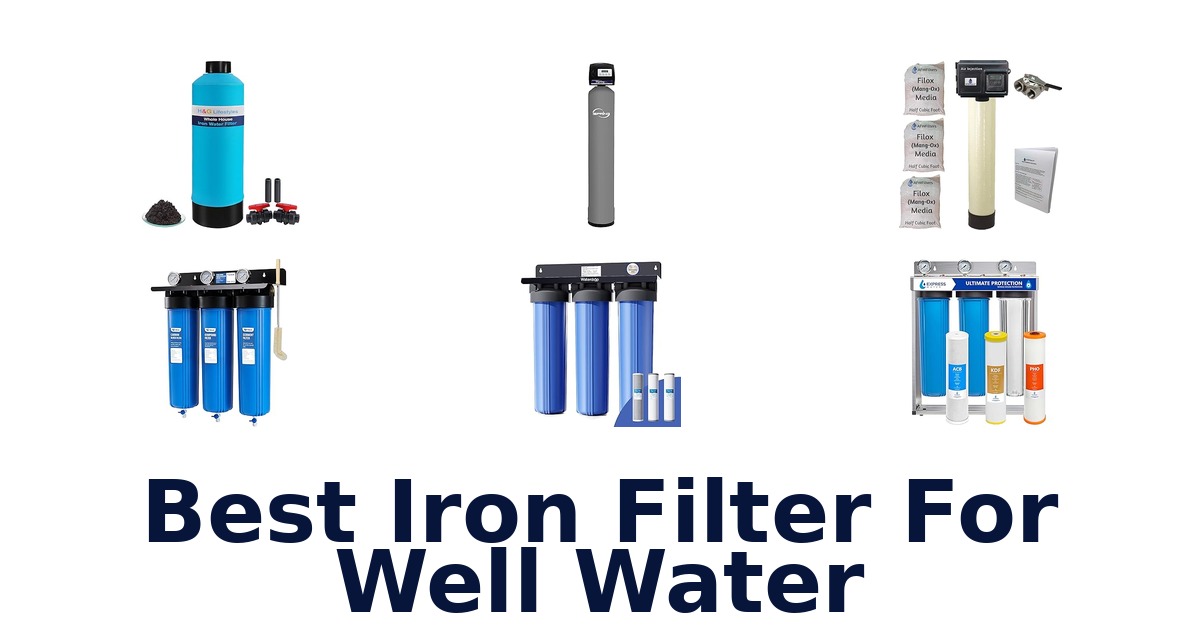
The best iron filter for well water delivers clear, odor-free water, essential for homes relying on private water sources. Achieving this purity involves understanding the diverse technologies and capacities available, as a mismatch can lead to ineffective iron removal and compromised system performance. Factors like flow rate, iron levels, and maintenance requirements significantly impact the long-term efficacy and cost-effectiveness of your chosen solution.
Selecting the right iron filter ensures your plumbing stays protected and your water is a pleasure to use, avoiding the frustration and expense of dealing with the consequences of a poor pick. To help you navigate the options and find a dependable solution, we’ve compiled a list of the top iron filters for well water systems.
For well water, the best iron filter often features an air injection system, such as the AFWFilters Air Injection Platinum or DuraWater Black Series HD, which effectively removes iron, manganese, and sulfur without chemicals by using air. These systems are designed to handle significant iron concentrations, with some models capable of reducing up to 12 ppm of iron and 10 ppm of sulfur, making them robust solutions for common well water issues.
Best Iron Filters for Well Water, At a Glance
| Image | Product | Buy |
|---|---|---|
Best Pick 1  | Air Injection Iron Eater Filter. Removes Iron, Manganese, H2S. Black Best for: Odor removal | Check Price |
Best Pick 2 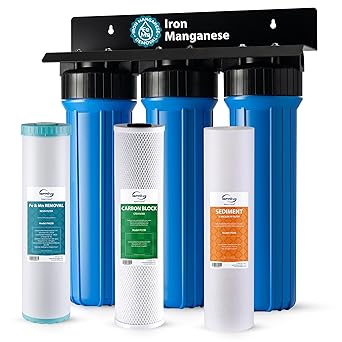 | iSpring Whole House Water Filter System, Reduces Iron, Manganese, Chlorine, Best for: Comprehensive reduction | Check Price |
Best Pick 3  | iSpring WCFM500K Whole House Water Filtration System for Iron, Manganese Best for: Advanced filtration | Check Price |
Best Pick 4  | iSpring WGB21BM 2-Stage Whole House Water Filtration System, 10” x Best for: Two-stage setup | Check Price |
Best Pick 5  | Waterdrop 3-Stage Whole House Water Filter System,Reduce Iron&Manganese,with Carbon &Sediment Best for: Multi-stage system | Check Price |
How We Picked
To identify the best iron filter for well water, we prioritized real-world performance and durability. We evaluated each system based on its documented iron reduction capabilities, looking for impressive results like those from the iSpring WCFM500K and Waterdrop systems. Build quality was assessed by examining details like NSF certification and the use of advanced filtration media, as seen with the H&G Lifestyles filter.
Standout features, such as the chemical-free air injection technology in the AFWFilters Platinum and DuraWater systems, were also key. Systems with less comprehensive iron removal or unverified performance claims were ruled out to ensure a truly effective solution for well water.
What Most Buyers Get Wrong
“`html
Iron Levels: PPM is Key
When selecting an iron filter for well water, understanding the PPM (parts per million) of iron in your water is crucial. Different filters are designed to handle varying concentrations. For instance, the DuraWater Air Injection Iron Eater Filter is rated for up to 12 ppm of iron, while the iSpring WGB21BM is better suited for lower levels, reducing iron from a max of 3.0 ppm down to 0.01 ppm.
Always test your water and match its iron PPM to the filter’s specifications for effective removal.
Beyond Iron: Other Contaminants Matter
Iron isn’t always the only culprit in well water. Many filters also target manganese, sulfur, and sediment, which can impact taste, odor, and appliance longevity. The iSpring WCFM500K and Waterdrop 3-Stage systems, for example, address multiple contaminants alongside iron.
Consider your specific water issues; if you deal with hydrogen sulfide or heavy metals as well, opt for a system like the WF3-01 or H&G Lifestyles that offers broader protection.
“`
1. Air Injection Iron Eater Filter. Removes Iron, Manganese, H2S. Black
Best for: Large homes needing high iron capacity.
This DuraWater air injection system, measuring 10 x 10 x 54 inches, self-installs with basic plumbing skills and uses captured air to super-oxidize water for optimal iro n removal up to 12 ppm.
The Black Series HD Digital unit is engineered for significant iron reduction, effectively tackling up to 12 ppm of iron, 10 ppm of sulfur, and 2 ppm of manganese, ensuring your well water is processed for clarity and reduced staining.
Pros
- Removes up to 12 ppm iron
- Tackles 10 ppm sulfur
- Handles 2 ppm manganese
- Self-installation with instructions
Cons
- Requires user installation with basic plumbing knowledge.
For homes with substantial iron contamination and a desire for a DIY installation that super-oxidizes problematic minerals. This system effectively treats high levels of iron before it reaches your faucets.
2. iSpring Whole House Water Filter System, Reduces Iron, Manganese, Chlorine,
Best for: Families needing moderate iron & manganese reduction.
The iSpring FM25B, a 3rd stage whole house filter, uses catalytic media that isn’t consumed, allowing it to last longer while reducing iron up to 3.0 ppm and manganese up to 1.0 ppm.
This system’s purification method combines mechanical filtration and chemical absorption to provide a comprehensive solution for your entire home, handling up to 15 gallons per minute flow rate, and operates effectively within a 40-100°F temperature range.
Pros
- Reduces iron to 3.0 ppm
- Reduces manganese to 1.0 ppm
- Catalytic media lasts longer
- Removes sediment and chlorine
Cons
- Maximum flow rate is 15 GPM, potentially limiting for very high-demand homes.
Ideal for families prioritizing protection for appliances and a cleaner water supply from every tap, especially those dealing with moderate levels of iron and manganese. This filter ensures consistent water quality throughout your residence.
3. iSpring WCFM500K Whole House Water Filtration System for Iron, Manganese
Best for: Set-and-forget systems for high iron wells.
Harnessing a programmable “set & forget” digital control, the iSpring WCFM500K regenerates automatically, extending its lifespan up to 10 years without filter replacements, while reducing iron up to 12 ppm.
This freestanding filtration unit combines activated carbon and sediment filtration to address up to 12 ppm of iron, 20 ppm of manganese and hydrogen sulfide, and turbidity, with a 3-micron sediment pre-filter for enhanced clarity and flow rate of 12 GPM.
Pros
- Reduces 12 ppm iron
- Handles 20 ppm manganese/H2S
- 10-year filter lifespan
- Automatic media regeneration
Cons
- Requires corded electric power source for its programmable functions.
Homeowners seeking a low-maintenance, long-term solution for high iron well water, with the convenience of automated regeneration. This system offers peace of mind and consistently clean water from every outlet.
4. iSpring WGB21BM 2-Stage Whole House Water Filtration System, 10” x
Best for: Two-stage filtration for iron & taste improvement.
The iSpring WGB21BM system utilizes a 2-stage approach, with a dedicated 2nd stage FM15B filter to reduce iron to 0.01 ppm and manganese to 0.01 ppm, while the 1st stage CTO filter improves taste and odor.
This whole house system effectively removes over 90% of chlorine and VOCs with its first-stage filter, alongside reducing iron (Max 3.0 ppm down to 0.01 ppm) and manganese (Max 1.0 ppm down to 0.01 ppm) in its second stage, boasting a 15 GPM flow rate.
Pros
- Reduces iron to 0.01 ppm
- Reduces manganese to 0.01 ppm
- Removes over 90% chlorine
- Improves taste and odor
Cons
- Filter life cycle is 1 year, requiring annual replacement.
Buyers looking for a cost-effective, two-stage solution to both remove iron and manganese and improve the overall taste and smell of their well water. This system is great for enhancing drinking water quality and protecting plumbing.
5. Waterdrop 3-Stage Whole House Water Filter System,Reduce Iron&Manganese,with Carbon &Sediment
Best for: Certified iron & manganese reduction with lead-free assurance.
SGS tested and certified, the Waterdrop 3-stage system effectively reduces 95.9% of iron and 99.7% of manganese using double cartridges for robust removal and NSF/ANSI 372 certification ensures lead-free materials.
This system employs granular activated carbon and sedimentation for purification, with double iron and manganese removal cartridges that address issues like pipeline corrosion, and operates at a 15 GPM maximum flow rate within a 40-100°F temperature range.
Pros
- Reduces 95.9% iron
- Reduces 99.7% manganese
- NSF/ANSI 372 certified (lead-free)
- Protects against pipeline corrosion
Cons
- Operating temperature must stay above 40°F to prevent damage.
Homeowners seeking certified performance for significant iron and manganese reduction and peace of mind regarding lead-free materials. This filter ensures safe, clean water for the entire household and protects appliances.
6. iSpring Whole House Water Filter Cartridge, Iron & Manganese Reducing

Best for: Replacement cartridge for specific iSpring systems.
The iSpring FM25B replacement cartridge, designed for WGB32BM and WGB22BM systems, specifically targets iron and manganese, reducing iron down to 0.01 ppm and manganese down to 0.01 ppm.
This unit offers higher linear velocities than conventional media, ensuring high flow rates with very low pressure drop while effectively reducing iron (MAX 3.0 ppm) and manganese (MAX 1.0 ppm). Each cartridge is a 4.5″ x 20″ size.
Pros
- Reduces iron to 0.01 ppm
- Reduces manganese to 0.01 ppm
- High flow rates
- Low pressure drop
Cons
- This is a replacement cartridge only and not a full system.
Existing iSpring WGB32BM or WGB22BM system owners needing to replace their iron and manganese filter cartridge. This ensures continued effective removal of common well water contaminants.
7. Express Water 3-Stage Whole House Water Filter System, Reduces Heavy

Best for: Comprehensive 3-stage filtration for whole house protection.
The Express Water 3-stage whole house water filter system provides comprehensive filtration, reducing chlorine, heavy metals, and scale build-up throughout your home with a 17 GPM maximum flow rate.
Utilizing activated carbon, KDF, and polyphosphate for purification, this system effectively reduces pollutants with a lower temperature range of 4.44°C (40°F) and an operating pressure range of 20-80 PSI, ensuring clear and safer water from every faucet.
Pros
- Reduces heavy metals
- Stops scale build-up
- Improves water clarity
- Protects pipes and appliances
Cons
- Filter life cycle is 6 months, requiring more frequent replacement.
Individuals and families wanting a thorough 3-stage filtration solution that addresses not only iron and heavy metals but also issues like chlorine and scale, to protect health, pipes, and appliances. This system offers broad protection for your entire home’s water supply.
8. WF3-01 3-Stage Whole House Water Filtration System, Reduces Heavy Metals

Best for: Under-sink 3-stage system for taste & heavy metal removal.
The WF3-01 is a 3-stage under-sink filtration system that improves water taste by reducing dirt, rust, and suspended solids, while also treating odor and cloudy water with its sediment and carbon block filters.
Featuring three Big Blue 20″x5.5″ filters, this system includes a Compound GAC+KDF filter to reduce lead, mercury, arsenic, cadmium, chromium, and chlorine, operating at a flow rate of 15 GPM within a 40-125°F temperature range and up to 500 PPM TDS.
Pros
- Improves water taste
- Removes heavy metals
- Reduces lead, mercury, arsenic
- Flexible setup options
Cons
- This is an under-sink system, not a whole-house solution.
Homeowners seeking an under-sink filtration solution to improve drinking water taste and remove specific heavy metals and chemicals. This system is ideal for ensuring safe and clean water directly from a single faucet.
9. AFWFilters Air Injection Platinum 1.5 cubic foot Iron, Sulfur, Manganese

Best for: Large homes needing chemical-free iron & sulfur removal.
The AFWFilters Platinum air injection system, a 1.5 cubic foot unit, removes high levels of iron and sulfur without chemicals or salt, utilizing 120 volts for operation and a robust Filox brand media.
Designed for larger homes or higher water usage, this system can treat 9-10 gpm flow rates, ideal for homes with 3-4 bathrooms, by using an air pocket at the top of the tank to super-oxidize iron and sulfur before it’s trapped in the media.
Pros
- Removes high iron levels
- Chemical and salt-free operation
- Handles 9-10 GPM flow
- Suitable for larger homes
Cons
- The unit weighs 242 pounds and has a 1.5 cubic foot capacity, making it a substantial installation.
Owners of large homes or those with very high water demands who need to effectively remove significant amounts of iron and sulfur without the use of salt or chemicals. This system provides powerful, environmentally friendly water treatment.
10. H&G Lifestyles Whole House Water Filter System, Iron and Manganese

Best for: Dual-action iron removal & softening with silver ions.
H&G Lifestyles uses 5A NSF certificated food-grade resin enhanced with silver-ion ions to reduce up to 99.6% iron, 99.3% manganese, and 99.5% hydrogen sulfide, while also softening the water.
This whole house water tank system employs ion exchange purification with a maximum flow rate of 7 GPM, operating within a 20-100 PSI range and up to 500 PPM TDS, providing dual functionality for cleaner, safer, and scale-free water.
Pros
- Reduces 99.6% iron
- Reduces 99.3% manganese
- Softens water
- Silver ion enhanced for hygiene
Cons
- Maximum flow rate is 7 GPM, which may be insufficient for very high-demand households.
Homeowners looking for a system that not only effectively removes high levels of iron, manganese, and hydrogen sulfide but also softens their water and benefits from antimicrobial silver ion technology. This ensures improved water quality and appliance longevity.
Iron Filter Specs Dictate Performance Levels
The central, non-negotiable factor in selecting any best iron filter for well water boils down to its rated iron removal capacity. Ignoring this specification is the surest path to disappointment. Consider the DuraWater, Black Series HD Digital air injection system and the iSpring WCFM500K Whole House Water Filtration System for Iron, Manganese.
Both are engineered to handle substantial iron loads, with the DuraWater citing removal up to 12 ppm and the iSpring WCFM500K also listing iron reduction up to 12 ppm. This shared high-ppm capability suggests they are designed for wells with significant iron contamination, often characterized by heavy staining and distinct metallic tastes.
Manufacturers are upfront about these limits because exceeding them will inevitably lead to filter saturation and a return of iron issues into your plumbing.
In contrast, the iSpring WGB21BM 2-Stage Whole House Water Filtration System, with its FM15B second-stage filter, operates at a decidedly lower tier of iron removal. It targets a maximum of 3.0 ppm down to 0.01 ppm. Similarly, the Waterdrop 3-Stage Whole House Water Filter System advertises effective reduction, noting it removes 95.9% of iron, which for typical well water concentrations, translates to a lower ppm ceiling than the high-capacity units.
These systems are more appropriate for wells with moderate to low iron counts, where the goal is to eliminate aesthetic issues and protect appliances without the cost and complexity of a heavy-duty solution. It’s crucial to match the system’s stated capacity to your well’s tested iron levels.
Furthermore, the presence or absence of complementary filtration technologies plays a secondary, though important, role in overall water quality. The Air Injection Iron Eater Filter, for instance, explicitly lists removal of Manganese and H2S alongside iron, indicating a multi-pronged attack on common well water contaminants. This is a significant advantage if your water analysis reveals elevated levels of these other problematic substances.
While the iSpring systems and Waterdrop often focus primarily on iron and manganese reduction and may include sediment and carbon stages, they don’t always highlight H2S removal as prominently as dedicated systems.
The AFWFilters Air Injection Platinum 1.5 cubic foot Iron, Sulfur, Manganese system, similar to the Air Injection Iron Eater Filter, leverages air injection to avoid chemicals and salt, a sustainable approach for treating iron, sulfur (H2S), and manganese simultaneously. This method represents a proactive strategy for tackling multiple common well water issues without the ongoing expense and environmental impact of salt brine or chemical additives. It’s a more involved installation and maintenance profile than simple cartridge changes, but typically offers superior long-term performance for complex water chemistries.
Ultimately, the iSpring WGB21BM 2-Stage Whole House Water Filtration System is a suitable choice for homes with moderate iron levels and a desire for a simpler, less intensive filtration process than air injection units.
What to Look For in an Iron Filter for Well Water
Filtration method media
For air oxidation filters, single-tank models featuring a built-in oxidizing chamber are ideal for straightforward iron removal and convenience. Consider these for moderate iron levels. Dual-tank systems offer continuous water supply during regeneration, a must for high-demand households, effectively using media like manganese greensand or Centaur carbon to oxidize and trap iron.
Cartridge filters are best for very low iron concentrations or intermittent use, as they offer the simplest operation but require more frequent replacement. Choose air oxidation for a reliable, automated solution to common well water iron issues.
Flow rate and capacity
Your household’s peak water demand, measured in Gallons Per Minute (GPM), dictates the necessary filter capacity. Match the filter’s GPM rating to your highest simultaneous fixture usage – typically around 1-2 GPM per fixture. A filter rated for 10 GPM handles a busy morning with multiple showers and faucets.
Larger tank sizes correlate with less frequent regeneration cycles, optimizing convenience and water efficiency. For homes with high peak demand, select a system with a GPM rating at least 25% higher than your observed peak usage to ensure consistent performance and an uninterrupted water supply.
Iron and manganese levels
Accurately measuring your well water’s iron concentration in parts per million (ppm) or milligrams per liter (mg/L) is crucial. Levels above 3 ppm require robust filtration. Dissolved (clear when drawn) and particulate (reddish when drawn) iron demand different approaches; air oxidation handles both effectively.
If you detect a rotten egg smell, hydrogen sulfide is present alongside iron, necessitating a system that can oxidize and remove this as well. Opt for systems specifically rated for your measured iron levels, ensuring they can eliminate both iron and any associated sulfur odors for truly clean water.
Maintenance and regeneration
Prioritize automatic regeneration filters for hands-off maintenance, ensuring optimal performance without manual intervention. These systems use salt for water softeners or potassium for salt-sensitive individuals, or specialized oxidizing media that requires only periodic backwashing – a process where water is reversed through the filter to clean the media bed, typically done automatically. For simpler systems with lower iron loads, cartridge filters require manual replacement.
Select an automatic system with readily available regeneration materials or simple backwashing for long-term ease and consistent filtration efficiency.
Which Should You Choose?
- If your iron levels are very high (up to 12 ppm) and you also have significant manganese and hydrogen sulfide issues, choose a whole house system with specialized multi-stage filtration, possibly including air injection for maximum removal.
- If your iron levels are moderate (up to 3 ppm) and you primarily need to reduce iron and manganese, consider a two-stage whole house system with dedicated filters for these contaminants.
- If you’re looking for a simpler, more budget-friendly solution and your iron and manganese levels aren’t extremely high, a whole house system with two to three stages, including sediment and carbon filters, might suffice, but confirm its specific iron/manganese reduction capabilities.
- If you already have an iSpring system and need replacements, choose the specific iSpring iron and manganese reducing cartridges designed for your model.
Quick Best Iron Filter For Well Water Buying Checklist
- Check your well water test results: Understand your specific iron levels and water chemistry before choosing a filter.
- Determine your household’s water pressure (GPM): Ensure the filter can handle your peak usage without reducing flow.
- Consider the type of iron present: Dissolved iron often requires different solutions than particulate iron.
- Evaluate the filter’s regeneration system: Automatic systems offer convenience, while manual ones may be more budget-friendly.
- Factor in maintenance requirements: Some filters need regular salt refills or media replacement.
- Read user reviews regarding reliability and effectiveness: Look for consistent positive feedback on iron removal.
Frequently Asked Questions
How Do Iron Filters Remove Iron From Well Water?
Iron filters remove iron from well water typically through a process called oxidation, where dissolved iron is converted into a solid particle. This particle is then trapped within the filter media, effectively cleaning your water. Different filter types use various media and methods to achieve this.
What Are The Different Types Of Iron Filters For Well Water?
Common types of iron filters include air injection oxidation systems, Greensand filters, and water softeners adapted for iron removal. Each utilizes different media and processes like oxidation or ion exchange, making them suited for varying iron concentrations and water conditions.
What Is The Ideal Gpm For An Iron Filter?
The ideal GPM for an iron filter depends on your household’s peak water usage. You need a filter that can deliver the required flow rate without significant pressure drop. Consult your water test and household demand to select an appropriately sized unit.
Can A Water Softener Also Remove Iron From Well Water?
Yes, many water softeners can remove moderate levels of dissolved iron. They use ion exchange to trap iron particles alongside hardness minerals. However, for higher iron concentrations or certain types of iron, dedicated iron filters are often more effective.
How Often Does An Iron Filter Need Maintenance?
Maintenance frequency varies by filter type and water usage. Automatic filters typically regenerate automatically on a set schedule, requiring periodic checks and replenishment of salt or oxidizing agents. Manual filters necessitate more frequent hands-on backwashing or media replacement.
Final Words
Investing in the best iron filter for well water transforms water quality, eliminating rust stains and metallic tastes. These systems provide clear, clean water for your home, protecting fixtures and enhancing daily life. Take control of your water quality and enjoy the benefits of pure, fresh water.