Best Gardening In A Changing World: Books for Resilient Gardens
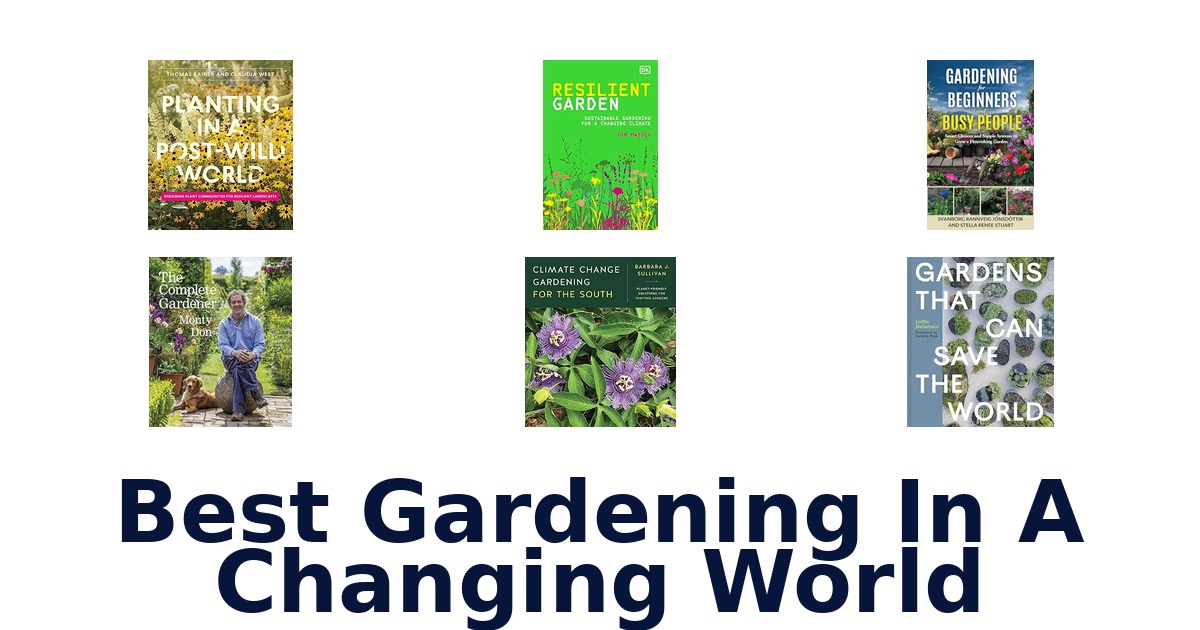
A strong choice for gardening in a changing world offers practical guidance matched to your climate, whether you want to grow vegetables through dry conditions or build a more resilient landscape. This roundup compares ten books with distinct approaches, including climate-resilient vegetable gardening, low-water organic methods, conservation in the home yard, and broad gardening advice. The closest match for growers adapting food gardens to climate change is Kim Stoddart Vegetable Garden, while Maureen Gilmer Drought Gardening focuses on dry times.
Other titles address the South, resilient garden design, plant communities, wildlife conservation, pest control, and beginner-friendly systems. Check each book’s focus before choosing: a regional or specialized guide may suit your needs better than a general gardening reference, while a broad guide may offer more varied subject matter.
Kim Stoddart Vegetable Garden is the leading choice for someone seeking gardening guidance explicitly focused on climate change: its title is The Climate Change–Resilient Vegetable Garden: How to Grow Food in a Changing Climate. It is a paperback, and its verified description also frames the garden around broader resilience, nature, carbon capture, and reducing plastic. Choose it for a climate-adaptation focus in a food garden; for a more specifically low-water approach, Maureen Gilmer Drought Gardening is the closest alternative.
Our Top Picks
 Best Overall
Its title directly addresses growing food in a changing climate, and its description connects garden resilience with nature, carbon capture, and reducing plastic.
View on Amazon Best Low-Water Focus
Maureen Gilmer Drought Gardening
The subtitle promises sustainable low-water organic gardening in a changing climate, with specific attention to drought, desert, and dry times.
View on Amazon Best Resilient Design
Its title explicitly focuses on sustainable gardening for a changing climate, making it a direct fit for readers seeking broad resilience guidance.
View on Amazon- Best Regional Focus Barbara Sullivan Southern Gardening
- Best Yard Conservation Douglas Tallamy Nature's Best Hope
Compare these gardening guides by your goals and conditions
| # | Product | Buy |
|---|---|---|
| 1 | 1. Kim Stoddart Vegetable GardenBest Overall | View on Amazon |
| 2 | 2. Maureen Gilmer Drought GardeningBest Low-Water Focus | View on Amazon |
| 3 | 3. Tom Massey Resilient GardenBest Resilient Design | View on Amazon |
| 4 |  4. Barbara Sullivan Southern GardeningBest Regional Focus | View on Amazon |
| 5 |  5. Douglas Tallamy Nature's Best HopeBest Yard Conservation | View on Amazon |
| 6 |  6. Thomas Rainer Planting in a Post-Wild WorldResilient landscape planners | View on Amazon |
| 7 |  7. Lottie Delamain Gardens That Can Save the WorldDry-garden design browsers | View on Amazon |
| 8 |  8. Svanborg Rannveig Beginner GardeningBusy beginner gardeners | View on Amazon |
| 9 |  9. Fern Bradley Natural Pest ControlOrganic pest-control gardeners | View on Amazon |
| 10 |  10. Monty Don Complete GardenerAll-around garden readers | View on Amazon |
Detailed Reviews: Best Gardening In A Changing World
#1 · Best Overall
1. Kim Stoddart Vegetable Garden
Best for: Climate-resilient food gardeners.
Why it ranks #1: Its title directly addresses growing food in a changing climate, and its description connects garden resilience with nature, carbon capture, and reducing plastic.
Growing food in a changing climate is the clear focus of Kim Stoddart’s paperback, which positions resilience as more than what happens above ground. The supplied description also connects a resilient vegetable garden with nurturing the gardener, carbon capture, reducing plastic, and responding to nature’s decline.
The book’s vegetable-garden focus gives climate adaptation a practical home-food context, while its attention to what happens below ground broadens resilience beyond visible plant growth. The description also links gardening with carbon capture, plastic reduction, and nature’s decline, giving readers several environmental themes to consider alongside food growing. This makes it relevant to gardeners looking for a wider view of resilience, though it is specifically about a vegetable garden rather than a general landscape-design handbook.
- Focuses on vegetable gardening in a changing climate
- Raises below-ground resilience
- Connects gardening with carbon capture
- Addresses reducing plastic and nature’s decline
- Its stated focus is vegetable gardens rather than landscape-wide design.
Skip it if you want a dry-garden design guide with real-life examples; Gardens That Can Save the World features 17 real-life dry gardens.
A fitting option for food gardeners who want to think about climate resilience alongside soil, environmental impact, and personal connection. Its vegetable focus may not match readers planning an ornamental or landscape-wide design.
Listed on Amazon as: The Climate Change–Resilient Vegetable Garden: How to Grow Food in a Changing Climate
View on Amazon#2 · Best Low-Water Focus
2. Maureen Gilmer Drought Gardening
Best for: Low-water vegetable growers.
Why it ranks #2: The subtitle promises sustainable low-water organic gardening in a changing climate, with specific attention to drought, desert, and dry times.
Low-water organic vegetable gardening is the defining focus of this tenth-anniversary edition, making it especially relevant to growers facing drought, desert conditions, or dry times. Maureen Gilmer’s guide connects food gardening with a changing climate, while its stated coverage of more than 100 flowers and vibrant plants extends its subject beyond vegetables.
The combination of drought, desert, and dry-times guidance with an organic, low-water approach speaks directly to gardeners managing scarce water while still wanting to grow food. Its climate-change framing makes that constraint central rather than incidental. The stated coverage of more than 100 flowers and vibrant plants also gives readers plant options beyond vegetables, although the book’s title and main promise remain focused on vegetable gardening in dry conditions.
- Addresses drought, desert, and dry conditions
- Focuses on low-water gardening
- Covers sustainable organic vegetable growing
- Includes more than 100 flowers and vibrant plants
- Its central focus is dry-climate gardening, not a general garden overview.
Skip it if you need a broad introduction to gardening across subjects; The Complete Gardener covers every aspect of gardening in its title.
A relevant pick for vegetable growers dealing with dry conditions who want an explicitly low-water, organic approach. Its specialized climate and water focus is less appropriate if your priority is a general guide to gardening.
Listed on Amazon as: Growing Vegetables in Drought, Desert, and Dry Times, 10th Anniversary Edition: The Complete Guide to Sustainable Low-Water Organic Gardening in a Changing Climate
View on Amazon#3 · Best Resilient Design
3. Tom Massey Resilient Garden
Best for: Sustainable climate gardeners.
Why it ranks #3: Its title explicitly focuses on sustainable gardening for a changing climate, making it a direct fit for readers seeking broad resilience guidance.
Sustainable gardening in a changing climate is the core subject of Tom Massey’s hardcover, making it a direct match for readers seeking a climate-aware approach without a title limited to vegetables or the South. The supplied facts identify it as a resilient-garden guide, clearly signaling its broad climate theme.
The title joins resilience, sustainability, and a changing climate, giving readers a broad framework for considering how gardening relates to environmental conditions. Unlike titles that name a specific region or vegetable growing, its wording presents the subject as resilient gardening more generally. That makes it relevant to readers exploring climate-aware garden practice across garden types, while the supplied information does not specify particular techniques, plant lists, or regional recommendations to guide a more specialized choice.
- Addresses gardening in a changing climate
- Centers resilient gardening
- Emphasizes sustainability
- Presented as a hardcover
- The supplied description gives no specific garden type or technique to narrow its broad focus.
Skip it if you need explicit low-water vegetable guidance; Maureen Gilmer’s Growing Vegetables in Drought, Desert, and Dry Times names that specialty.
A suitable broad-topic choice for readers interested in sustainable gardening and resilience as climate conditions change. If you need a specific region, crop, or named technique, choose a guide whose title identifies that focus.
Listed on Amazon as: Resilient Garden: Sustainable Gardening for a Changing Climate
View on Amazon#4 · Best Regional Focus
4. Barbara Sullivan Southern Gardening
Best for: Southern climate-conscious gardeners.
Why it ranks #4: This guide specifically addresses climate change gardening for the South and promises planet-friendly solutions for thriving gardens.
The South is the geographic focus of this paperback on climate-change gardening, giving regionally minded gardeners a book explicitly framed around their part of the country. Its promise of planet-friendly solutions for thriving gardens makes it relevant to readers seeking to connect garden success with environmental considerations.
By naming both climate change and the South, the book sets a clear regional and environmental context for its gardening subject. The phrase “planet-friendly solutions” signals an emphasis on approaches that consider environmental impact while aiming for thriving gardens. That pairing may help Southern gardeners choose a guide aligned with both place and climate concerns. The supplied information does not identify a narrower garden type, so readers wanting an explicitly vegetable-focused or low-water manual may prefer a title that names that specialty.
- Specifically focuses on gardening in the South
- Addresses climate change
- Emphasizes planet-friendly solutions
- Aims at thriving gardens
- Its regional focus may not suit gardeners outside the South.
Skip it if you need a general guide to plant communities and landscape design; Thomas Rainer and Claudia West’s Planting in a Post-Wild World centers those subjects.
A regionally focused option for Southern gardeners seeking planet-friendly approaches in a changing climate. Its geographic framing is the key fit consideration, especially for readers gardening outside the South or seeking a narrower specialty.
Listed on Amazon as: Climate Change Gardening for the South: Planet-Friendly Solutions for Thriving Gardens
View on Amazon#5 · Best Yard Conservation
5. Douglas Tallamy Nature's Best Hope
Best for: Backyard wildlife supporters.
Why it ranks #5: It focuses on turning homeowners’ yards into conservation corridors that provide wildlife habitat, a clear ecological dimension of climate-aware gardening.
Turning home yards into conservation corridors is the defining proposal of Nature’s Best Hope, giving homeowners a way to connect their own outdoor spaces with wildlife habitat. Douglas W. Tallamy frames the book as a new approach to conservation that starts in the backyard, with particular attention to helping struggling insect populations.
The conservation-corridor idea links individual yards to habitat for wildlife, helping readers see home gardening as part of a larger conservation effort. The supplied description also identifies seven things readers can do to help struggling insect populations, providing a stated action-oriented element alongside the broader approach. Because the premise relies on initiatives by homeowners everywhere, the book is especially relevant to readers interested in yard-level participation, rather than a guide focused on vegetable production or garden design alone.
- Centers conservation actions in the backyard
- Explains the idea of yards as wildlife habitats
- Presents a conservation-corridor approach
- Includes seven actions to help struggling insect populations
- Its conservation focus is not a general vegetable-gardening manual.
Skip it if you mainly want advice on growing vegetables through changing weather; Kim Stoddart’s The Climate Change–Resilient Vegetable Garden focuses on that.
A good thematic fit for homeowners who want to consider wildlife habitat and insect populations in their yards. Readers primarily seeking vegetable-growing techniques or dry-garden design should look to a more focused guide.
Listed on Amazon as: Nature's Best Hope: A New Approach to Conservation That Starts in Your Yard
View on Amazon#6
6. Thomas Rainer Planting in a Post-Wild World
Best for: Resilient landscape planners.
Why it ranks #6: This book covers designing plant communities for resilient landscapes, offering a landscape-design approach rather than a food-growing focus.
Plant communities are the organizing idea in this landscape-design book, which focuses on designing resilient landscapes rather than treating planting as a collection of isolated choices. Thomas Rainer and Claudia West address readers interested in how plants work together, making the subject relevant to gardeners planning a cohesive landscape with resilience in mind.
The title’s emphasis on plant communities gives landscape planners a framework for thinking about relationships among plantings, while its resilient-landscape focus connects those decisions to a larger design goal. Together, those themes make the book a fit for readers shaping whole garden areas rather than choosing plants one at a time. It is a hardcover by Timber Press, a publisher identified in the supplied facts with gardening, horticulture, and natural-history books; the subject is landscape design, not vegetable growing.
- Focuses on designing plant communities
- Centers resilient landscapes
- Written by Thomas Rainer and Claudia West
- Published by a gardening-focused publisher
- Its landscape-design focus is not a vegetable-growing guide.
Skip it if you need a beginner’s guide to managing limited gardening time; Gardening for Beginners and Busy People addresses that audience directly.
A strong subject match for gardeners planning landscape-scale plantings around community and resilience. Readers focused mainly on growing vegetables or learning basic garden routines should choose a book centered on those needs instead.
Listed on Amazon as: Planting in a Post-Wild World: Designing Plant Communities for Resilient Landscapes
View on Amazon#7
7. Lottie Delamain Gardens That Can Save the World
Best for: Dry-garden design browsers.
Why it ranks #7: The world-focused title and verified description of dry-garden design make it relevant, though the supplied details offer less explicit climate guidance.
Seventeen real-life dry gardens provide visual inspiration in this hardcover, connecting garden design ideas to examples readers can examine. Gardens That Can Save the World also features gravel gardens, stone placement, and planting design, making it a fit for homeowners or professionals exploring dry-garden possibilities and seeking varied design references.
The supplied description presents the book as a guide to dry-garden design that can be customized to a homeowner’s or professional’s vision. Its 17 real-life garden examples offer concrete visual references, while the mention of gravel gardens, stone placement, and planting design points to multiple elements readers can consider in shaping a space. The book’s emphasis is design inspiration and adaptable dry gardens, rather than a stated step-by-step guide to growing vegetables or managing pests.
- Includes images of 17 real-life dry gardens
- Covers gravel-garden ideas
- Discusses stone placement
- Addresses planting design for customizable dry gardens
- Its dry-garden design emphasis is narrower than an all-purpose gardening guide.
Skip it if you want low-water vegetable-growing instructions; Maureen Gilmer’s Growing Vegetables in Drought, Desert, and Dry Times centers that subject.
Well matched to homeowners and professionals collecting visual ideas for a dry garden they can shape to their own vision. Choose a different focus if you need detailed vegetable-growing or pest-management guidance.
Listed on Amazon as: Gardens That Can Save the World
View on Amazon#8
8. Svanborg Rannveig Beginner Gardening
Best for: Busy beginner gardeners.
Why it ranks #8: It offers smart choices and simple systems for beginners and busy people, but the listed title does not specifically address climate resilience.
Simple systems for busy people are the central promise of this beginner gardening book, giving readers a starting point for growing a garden without making the subject sound like a full-time undertaking. Its focus on smart choices and everyday sustainability suits newcomers looking for practical ways to begin and maintain a flourishing garden.
The title pairs beginner guidance with simple systems, a combination that can help a new gardener think beyond one-off tasks and establish a repeatable approach. Its focus on smart choices speaks to readers who need to make gardening manageable alongside other commitments, while the living-gently and everyday-sustainability framing keeps the subject connected to home-scale habits. The book is specifically aimed at beginners and busy people, so experienced gardeners seeking a narrow technical manual may want a more specialized subject.
- Aimed specifically at gardening beginners
- Addresses time-conscious readers
- Emphasizes simple systems
- Connects gardening with everyday sustainability
- Its beginner-and-busy-reader focus is narrower than a specialist reference.
Skip it if you want detailed guidance on drought gardening; Maureen Gilmer’s Growing Vegetables in Drought, Desert, and Dry Times focuses on low-water growing.
A practical match for a newcomer balancing gardening with a busy routine, especially one drawn to sustainable home habits. Its broad beginner focus is less suited to readers seeking specialized advice on a particular climate or garden challenge.
Listed on Amazon as: Gardening for Beginners and Busy People: Smart Choices and Simple Systems to Grow a Flourishing Garden (The Living Gently Series: Modern Homesteading, DIY & Everyday Sustainability)
View on Amazon#9
9. Fern Bradley Natural Pest Control
Best for: Organic pest-control gardeners.
Why it ranks #9: Its earth-friendly handbook focuses on natural pest and disease control, a useful garden-management topic but not specifically climate adaptation.
Natural pest and disease control is the specific subject of this organic gardening handbook, aimed at maintaining a healthy garden and yard in an earth-friendly way. Its focused scope can help readers looking for a dedicated reference on garden health issues rather than a broad introduction to gardening or climate-resilient design.
The handbook connects pest control and disease control with maintaining a healthy garden and yard, making its subject relevant to readers working through both kinds of garden-health concern. Its earth-friendly approach also makes organic methods central to the book’s stated purpose, rather than an incidental topic. The title calls it a complete guide, but its subject remains natural pest and disease control; gardeners seeking a wider treatment of water, climate, or planting design will need a different emphasis.
- Focuses on natural pest control
- Covers disease control as well as pests
- Addresses garden and yard health
- Takes an earth-friendly organic approach
- Its subject is pest and disease management, not whole-garden design.
Skip it if you need a climate-focused vegetable-growing guide; Kim Stoddart’s The Climate Change–Resilient Vegetable Garden addresses that subject.
A targeted choice for organic gardeners looking for guidance centered on pests, disease, and garden health. It is less suitable when the main need is climate adaptation, low-water vegetables, or a wide-ranging garden overview.
Listed on Amazon as: The Organic Gardener's Handbook of Natural Pest and Disease Control: A Complete Guide to Maintaining a Healthy Garden and Yard the Earth-Friendly Way (Rodale Organic Gardening)
View on Amazon#10
10. Monty Don Complete Gardener
Best for: All-around garden readers.
Why it ranks #10: This practical, imaginative guide covers every aspect of gardening, but the supplied information does not identify a changing-climate or resilience focus.
A practical and imaginative guide to every aspect of gardening is the central proposition of Monty Don’s hardcover, making it a broad choice for readers who want one book spanning multiple gardening interests. Its general scope distinguishes it from titles centered specifically on dry climates, vegetable resilience, or landscape plant communities.
The title’s promise of practical guidance connects with readers seeking useful gardening direction, while its imaginative approach suggests an interest in ideas as well as tasks. Most notably, the stated scope covers every aspect of gardening, offering a broader subject than books focused on a single climate challenge or gardening method. That breadth suits readers exploring gardening overall, though someone looking for a narrowly defined topic such as natural pest control may prefer a dedicated specialist guide.
- Covers every aspect of gardening, as stated in the title
- Combines practical and imaginative guidance
- Written by Monty Don
- Available as a hardcover
- Its broad scope is less specialized than a dedicated climate or pest-control guide.
Skip it if you specifically need natural pest and disease control; Fern Marshall Bradley’s Organic Gardener’s Handbook focuses on that topic.
A sensible fit for readers who want a broad gardening companion covering varied aspects rather than one climate-specific problem. Gardeners seeking detailed guidance on a single specialist subject may prefer a narrower title.
Listed on Amazon as: The Complete Gardener: A Practical, Imaginative Guide to Every Aspect of Gardening
View on AmazonWhy climate resilience is not one-size-fits-all
Climate resilience depends on the challenge your garden faces, so a general climate title may not be as useful as a book aligned with your specific conditions. The listed selection separates into distinct concerns: Kim Stoddart Vegetable Garden addresses food growing in a changing climate; Maureen Gilmer Drought Gardening concentrates on drought, desert, dry times, and low-water organic methods; Barbara Sullivan Southern Gardening is explicitly regional; and Thomas Rainer Planting in a Post-Wild World focuses on resilient plant communities. Those are not interchangeable approaches.
A dry-climate book may not answer a question about a Southern garden, while a landscape-design book may not provide the food-growing emphasis a vegetable gardener wants. The practical trade-off is focus versus breadth: choosing the closest match gives you a more targeted starting point, but a broader guide may cover more kinds of gardening.
Use the title and stated scope to shortlist before relying on a book for local decisions.
Avoid treating wildlife and food gardens as competing goals
The books in this selection present food growing and ecological gardening as related but distinct aims. Kim Stoddart Vegetable Garden describes a vegetable garden as a place to support resilience, nature, carbon capture, and reduced plastic use. Douglas Tallamy Nature’s Best Hope takes a yard-wide conservation approach, describing homeowners’ yards as potential corridors that provide wildlife habitat.
Thomas Rainer Planting in a Post-Wild World instead centers on designing resilient plant communities. These scopes suggest a useful planning question: are you choosing a book to improve a productive plot, encourage wildlife across the yard, or shape a planted landscape?
A common mismatch is expecting a conservation-focused yard book to serve as a detailed vegetable-growing manual, or expecting a food-garden guide to cover every aspect of habitat planning. The trade-off is not necessarily either-or; it is choosing the book that answers your immediate design or growing question, then adding a complementary perspective if your goals extend beyond it.
How to Choose a Climate-Ready Gardening Book
Match the climate challenge
Start by identifying whether your main concern is broad climate change, low water, or a regional growing context. Kim Stoddart Vegetable Garden explicitly covers growing food in a changing climate, while Maureen Gilmer Drought Gardening specifically addresses drought, desert, dry times, and low-water organic gardening. Barbara Sullivan Southern Gardening names the South as its region.
Those distinctions matter more than choosing a title that merely sounds broadly sustainable. If water scarcity is your immediate concern, Gilmer’s stated focus is the clearest fit; if you want advice centered on food gardening amid climate change, Stoddart’s title is more direct.
Southern gardeners may prefer Sullivan’s regional emphasis. For a challenge not clearly represented by these titles, treat the books as starting points rather than assuming their advice applies unchanged to your conditions.
Choose food growing or landscape design
Decide whether you want to grow vegetables or reshape a broader landscape. Kim Stoddart Vegetable Garden and Maureen Gilmer Drought Gardening are explicitly vegetable or food-growing choices, with Gilmer additionally emphasizing low-water organic methods. Thomas Rainer Planting in a Post-Wild World focuses on designing plant communities for resilient landscapes, while Tom Massey Resilient Garden is framed around sustainable gardening for a changing climate.
Douglas Tallamy Nature’s Best Hope focuses on yards as wildlife conservation corridors. If your primary goal is a harvest, prioritize a food-growing title; if the project concerns planting design or habitat, the landscape and conservation titles align more closely.
Readers managing a whole property may need to weigh these goals separately rather than expect one specialized book to cover every aspect.
Consider how much guidance you need
Choose between a specialized climate topic and a broader or beginner-oriented guide based on how you prefer to learn. Svanborg Rannveig Beginner Gardening is aimed at beginners and busy people, with smart choices and simple systems. Monty Don Complete Gardener is described as a practical, imaginative guide to every aspect of gardening.
In contrast, several titles focus narrowly on climate-resilient vegetables, low-water growing, pest control, or plant communities. If you are new to gardening or want a broad reference, the beginner or complete-gardener descriptions may be more appropriate; if you already know the problem you need to solve, the specialized titles provide a closer topical match.
The supplied details do not specify chapter structure or level of technical depth, so use the stated scope rather than assuming a particular format of instruction.
Which Gardening Book Should You Choose?
Choose Kim Stoddart Vegetable Garden if your priority is growing food in a changing climate; its title and description directly address climate resilience. For dry, drought-prone, or desert conditions, Maureen Gilmer Drought Gardening is the more targeted option, with low-water organic gardening at its core. Southern gardeners should consider Barbara Sullivan Southern Gardening for its regional focus.
If your main goal is resilient landscape planting, choose Thomas Rainer Planting in a Post-Wild World; for wildlife habitat across a home yard, consider Douglas Tallamy Nature’s Best Hope. Tom Massey Resilient Garden offers a broader sustainable-gardening focus.
Beginners and busy readers may prefer Svanborg Rannveig Beginner Gardening, while those seeking a wide-ranging reference can choose Monty Don Complete Gardener. Match the book to your immediate project rather than relying on a general title alone.
Frequently Asked Questions
How can I tell whether a gardening book’s climate advice applies to my local conditions?
Check whether the book addresses conditions you actually face, such as drought, a regional climate, or changing growing conditions. A guide focused on dry or desert gardens may be especially relevant in water-stressed areas, while a Southern gardening title offers a regional focus. Compare its emphasis with your garden’s main challenge.
What should I change first when my garden faces longer dry spells or heavier rain?
Start with the problem that most disrupts your garden. For longer dry spells, a guide centered on drought and low-water organic gardening is the most targeted choice. If your priority is growing food amid changing conditions, choose a climate-resilient vegetable guide.
For heavier rain, look for guidance on resilient landscapes and planting communities.
How can I balance food production with wildlife habitat in a home garden?
Treat food growing and habitat as connected goals, then choose guidance that matches your emphasis. A climate-resilient vegetable garden focuses on producing food in a changing climate, while a yard-conservation guide centers wildlife habitat. A resilient landscape guide can help if planting communities are your main interest.
Which guide is most useful for a dry or drought-prone garden?
Choose a guide specifically about drought, desert, and dry conditions if low-water gardening is your immediate need. Its title identifies sustainable low-water organic gardening as its focus. A climate-resilient vegetable guide is a closer fit when your priority is growing food in a changing climate rather than drought alone.
What kind of gardening book should a beginner or busy reader choose?
Look for a guide whose title emphasizes beginners, busy people, simple systems, or practical instruction. The beginner-focused option explicitly presents smart choices and simple systems, while a complete gardening guide promises coverage of every aspect. Choose based on whether you want an accessible starting point or a broad reference.
Final Words
Match the book to the problem you need to solve first. For food growing under climate change, Kim Stoddart’s climate-resilient vegetable guide is the leading choice; for dry, drought-prone, or desert conditions, Maureen Gilmer’s low-water guide is the closer fit. Consider the regional Southern guide for Southern gardens, and choose a wildlife or resilient-landscape title when habitat or planting design matters more than vegetable production.