Best Diesel Algae Treatment for Stored Fuel and Tanks
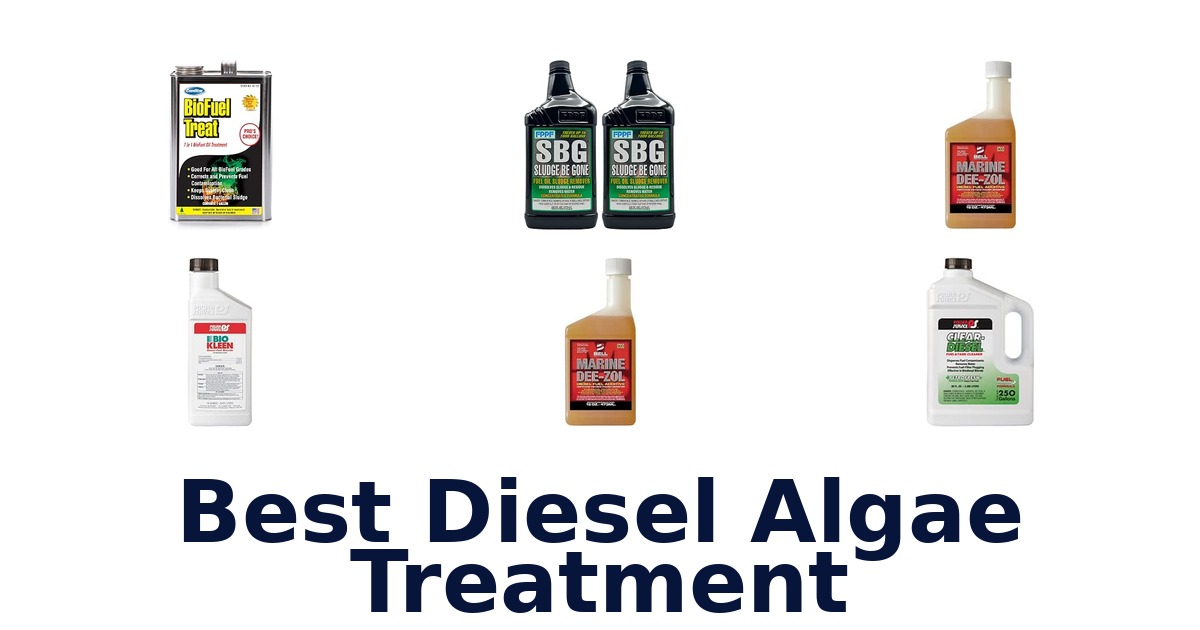
A strong diesel algae treatment should target the problem you have: microbial growth in stored fuel calls for a biocide, while contaminated tanks may also need a separate cleaner. This roundup suits owners of diesel storage tanks, marine systems, generators, and commercial fuel operations comparing treatments and related products. The list includes dual-phase biocides, fuel-oil treatments, a tank cleaner intended for use alongside a biocide, and broader fuel additives.
Product details vary in how clearly they state compatibility and treatment rates, so check the label for dosing and application instructions before use. Some items are multipacks or products for other fuel-system goals, not direct substitutes for a diesel biocide.
The rankings prioritize stated microbial-control use and relevant specifications.
Power Service Bio Kleen is the leading choice because its listed facts identify it as a diesel fuel biocide that works in both diesel fuel and water and kills bacteria and fungus. That dual-phase action fits the central concern behind diesel algae treatment: microbial contamination in fuel systems, including tanks where water may be present. For an alternative with an EPA-registration claim and a stated tank-treatment capacity, consider FPPF Killem Biocide; use the product label to confirm dosing for your application.
Our Top Picks
 Best Overall
Its listed facts identify a diesel biocide that kills bacteria and fungus and works in both diesel fuel and water.
View on Amazon EPA-Registered Pick
The product description identifies it as an EPA-registered fuel-oil biocide, and listed features say it controls bacteria and fungi.
View on Amazon Dosing Guidance
This biocide targets diesel and other fuels; its listed dosing guidance gives initial and maintenance treatment rates.
View on Amazon- Tank-Cleaning Pick Power Service Clear-Diesel
Compare diesel treatments by their intended use
| # | Product | Weight | Buy |
|---|---|---|---|
| 1 | 1. Power Service Bio KleenBest Overall | 16 oz | View on Amazon |
| 2 | 2. FPPF Killem BiocideEPA-Registered Pick | 16 oz | View on Amazon |
| 3 | 3. Hammonds Biobor JFDosing Guidance | 1.25 lb | View on Amazon |
| 4 |  4. FPPF Killem Four-PackBulk fuel-treatment supply | — | View on Amazon |
| 5 |  5. Power Service Clear-DieselTank-Cleaning Pick | 4.85 lb | View on Amazon |
| 6 |  6. FPPF Sludge Be GoneCommercial fuel-storage programs | 3.9 lb | View on Amazon |
| 7 |  7. ComStar BioFuel TreatBiodiesel sludge and cold flow | — | View on Amazon |
| 8 |  8. Bell Marine Dee-ZolMarine diesel engine treatment | 2 lb | View on Amazon |
| 9 | 9. Bell Marine Dee-Zol CaseMarine fleets buying cases | — | View on Amazon |
| 10 |  10. Algae-X LG-X 500Installed fuel-system conditioning | 2.5 lb | View on Amazon |
Detailed Reviews: Best Diesel Algae Treatment
#1 · Best Overall
1. Power Service Bio Kleen
- Weight: 16 oz
Best for: Fuel-and-water microbial control.
Why it ranks #1: Its listed facts identify a diesel biocide that kills bacteria and fungus and works in both diesel fuel and water.
Power Service Bio Kleen works in both diesel fuel and water, a dual-phase feature that addresses microbial contamination across the two phases found in fuel systems. Its 16-fluid-ounce liquid format is aimed at buyers managing stored diesel or fuel-system contamination where bacteria and fungi are concerns.
The product is described as killing microbes, including bacteria and fungi, and its dual-phase action is specified for both diesel fuel and water. That matters for storage situations where water can be present alongside diesel, including biodiesel, which the supplied description notes can contain more water than standard petroleum diesel. The liquid comes in a 16-fluid-ounce bottle. The listing positions it for microbial contamination rather than for dispersing sludge or stabilizing fuel during storage.
- Dual-phase action in diesel fuel and water
- Kills bacteria and fungi microbes
- Liquid 16-fluid-ounce format
- Suitable for addressing microbial contamination
- The supplied details do not state a treatment volume or dose.
Skip it if you need stated water removal and fuel stabilization; Power Service Clear-Diesel Fuel & Tank Cleaner lists both functions.
Choose Bio Kleen when microbial control in both fuel and water is the central need, particularly for stored diesel. The listing does not give a dose or treatment volume, so it offers less planning detail than products with stated coverage.
Full product details
| Brand | Power Service |
|---|---|
| Included Components | Power Service 09016-09 Bio Kleen Diesel Fuel Biocide – 16 oz. |
| Item Form | Liquid |
| Item Volume | 16 fluid ounces |
| Item Weight | 16 ounces |
| Manufacturer | Power Service |
| Material Feature | Eliminates Microbes |
| Material Features | Eliminates Microbes |
| Model Number | 09016-09 |
| Size | 1 Count (Pack of 1) |
| Warranty Description | As Labelled |
| Additional Information | Important Information Proposition 65 Warning for California Consumers WARNING: Cancer and Reproductive Harm – www.P65Warnings.ca.gov |
Listed on Amazon as: Power Service 09016-09 Bio Kleen Diesel Fuel Biocide – 16 oz.
View on Amazon#2 · EPA-Registered Pick
2. FPPF Killem Biocide
- Weight: 16 oz
Best for: Stored diesel tank maintenance.
Why it ranks #2: The product description identifies it as an EPA-registered fuel-oil biocide, and listed features say it controls bacteria and fungi.
FPPF Killem is an EPA-registered fuel-oil biocide that controls bacteria and fungi, making it a focused option for managing microbial growth in diesel storage. Its listed 16-ounce bottle treats 1,280 gallons according to the product features, giving storage-tank owners a stated treatment scale for planning fuel maintenance.
Killem targets bacteria and fungi, while its listed benefits also include reducing corrosion and slime. Those functions make it relevant when microbial growth and tank cleanliness are the maintenance concerns, rather than a general-purpose engine treatment. The 16-ounce bottle is specified to treat 1,280 gallons in the key features, which helps buyers relate the treatment to a storage volume. The product is supplied as a fuel-treatment bottle, with no additional application equipment listed.
- EPA-registered fuel-oil biocide
- Controls bacteria and fungi growth
- Helps reduce corrosion
- Helps reduce slime
- The supplied details do not state a maintenance-treatment schedule.
Skip it if you need a treatment with a stated dual-phase action in both fuel and water; Power Service Bio Kleen lists that capability.
This suits diesel-storage owners seeking a biocide focused on bacteria, fungi, slime, and corrosion. Use the stated treatment volume as a planning reference, and note that the listing does not specify a maintenance schedule or application instructions.
Full product details
| Brand | FPPF |
|---|---|
| Included Components | Fuel Treatment Bottle |
| Item Weight | 16 ounces |
| Manufacturer | FPPF Chemical Company |
| Model Number | FPPF-90119-1 |
| Warranty Description | No Manufacturer Warranty |
Listed on Amazon as: 00119 KILLEM BIOCIDE 16 OZ. BOTTLE, TREATS 1920 GALLONS OF DIESEL FUEL PER BOTTLE
View on Amazon#3 · Dosing Guidance
3. Hammonds Biobor JF
- Weight: 1.25 lb
Best for: Multi-fuel tank biocide.
Why it ranks #3: This biocide targets diesel and other fuels; its listed dosing guidance gives initial and maintenance treatment rates.
Hammonds Biobor JF combines microbial control with sludge management and added lubricity, giving tank owners more than a bacteria-and-fungi treatment alone. Its listed uses span diesel, kerosene, biodiesel, and home heating oil, making it a versatile option for mixed fuel-storage needs.
Biobor JF helps prevent bacterial and fungal growth while breaking up or preventing sludge formation, addressing two related tank-maintenance concerns. The listed benefits also include fewer clogged filters and reduced bacterial corrosion to tanks. Added lubricity is specified for lower-sulfur diesel, connecting the treatment to that fuel type. The product lists initial-use and maintenance concentrations, so buyers have separate dose references for startup treatment and ongoing maintenance; the stated initial rate is 1 ounce per 40 gallons.
- Helps control bacteria and fungi
- Breaks up or prevents sludge formation
- Helps prevent clogged filters
- Adds lubricity to lower-sulfur fuel
- The supplied details do not state a total gallon coverage for the 16-ounce bottle.
Skip it if you need a stated treatment volume of 1,280 gallons per 16-ounce bottle; FPPF Killem lists that coverage in its features.
Biobor JF suits owners maintaining tanks that hold diesel, biodiesel, kerosene, or heating oil, especially when sludge and filter clogging matter. Follow the listed initial or maintenance concentration appropriate to the treatment phase.
Full product details
| Brand | Duda Energy |
|---|---|
| Item Weight | 1.25 pounds |
| Manufacturer | Hammonds |
| Part Number | biobor16oz |
| Package Dimensions | 8 x 4 x 2 inches |
Listed on Amazon as: 16 oz Hammonds Biobor JF MicroBiocide Diesel Fuel Sludge Slime Bacteria Tank Treatment Biocide
View on Amazon#4
4. FPPF Killem Four-Pack
Best for: Bulk fuel-treatment supply.
Why it ranks #4: The four-bottle listing is formulated for microbial control in diesel and fuel-oil storage systems, though no per-bottle treatment rate is supplied here.
This four-bottle FPPF Killem listing packages an EPA-registered fuel-oil biocide for routine microbial maintenance across stored fuel systems. The treatment is described as helping control bacteria and fungi in diesel and heating-oil storage, while the multi-bottle format gives operators several bottles for ongoing maintenance needs.
Killem is formulated to help manage microbial growth, including bacteria and fungi, in fuel storage tanks. The listing specifies compatibility with diesel fuel, heating oil, and storage tanks, so it can serve systems using either named fuel. Its maintenance-oriented description supports routine use rather than presenting it as a sludge-removal or fuel-stabilizing product. Four 16-ounce bottles are included, but the supplied details do not provide a treatment rate or gallon coverage, limiting volume-based planning from this listing alone.
- EPA-registered fuel-oil biocide
- Helps control bacteria and fungi
- Suitable for diesel and heating oil storage
- Four 16-ounce bottles included
- No treatment rate or gallon coverage is stated.
Skip it if you need stated gallon coverage for dosing plans; the single-bottle FPPF Killem listing specifies treatment of 1,280 gallons.
This package suits operators maintaining multiple fuel-storage points or keeping treatment on hand for routine use. Its stated fuel compatibility covers diesel and heating oil, but the listing lacks a dose rate, so volume planning requires details beyond the supplied product facts.
Full product details
| Brand | FPPF |
|---|---|
| Container Type | Bottle |
| Included Components | Fuel Treatment Bottle |
| Manufacturer | FPPF Chemical Company |
| Part Number | FPPF-90119-4 |
| Manufacturer Warranty Description | No Manufacturer Warranty |
| Model Number | FPPF-90119-4 |
| Size | 16 oz |
Listed on Amazon as: KILLEM – EPA Registered Fuel Oil Biocide for Bacteria Control, 16 oz (Pack of 4
View on Amazon#5 · Tank-Cleaning Pick
5. Power Service Clear-Diesel
- Weight: 4.85 lb
Best for: Contaminated-fuel cleanup.
Why it ranks #5: It removes water and slime and disperses contaminants; the listing specifically describes use alongside Bio Kleen during microbial cleanups.
Power Service Clear-Diesel combines water and slime removal with contaminant dispersion, making it a cleanup-oriented choice for diesel tanks rather than a biocide alone. Its fuel-polishing formula also stabilizes fuel for long-term storage, a useful pairing for buyers addressing contamination while maintaining stored fuel.
The formula disperses diesel contaminants and removes water and slime, helping address material associated with microbial contamination cleanups. It also provides long-term storage stability, so the same treatment can support fuel conditioning after cleanup. The product is listed as safe for all diesel engines and effective in ULSD and biodiesel, broadening its stated fuel compatibility. It works in conjunction with Bio Kleen to remove residual water and contaminants, but the listing does not provide a treatment-volume figure.
- Disperses fuel contaminants
- Removes water and slime
- Supports long-term fuel storage stability
- Listed for ULSD and biodiesel
- The listing gives no treatment volume or dose.
Skip it if you want a biocide explicitly stated to kill bacteria and fungi; Power Service Bio Kleen lists microbial-killing action.
This fits diesel owners handling water, slime, and dispersed contaminants, especially when long-term fuel stability matters too. It is a cleaner and stabilizer, not the listing’s explicitly named microbial-killing treatment; check that distinction against the problem at hand.
Full product details
| Brand | Power Service |
|---|---|
| Item Weight | 4.85 pounds |
| Item model number | 09280-06 |
| Manufacturer | Power Service |
| Part Number | 09280-06 |
| Model | 09280-06 |
| Dimensions | 6.8 x 3.5 x 10.2 inches |
| Additional Information | Important Information Proposition 65 Warning for California Consumers WARNING: Cancer – www.P65Warnings.ca.gov |
Listed on Amazon as: Power Service 09280-06 Clear-Diesel Fuel & Tank Cleaner – 80 oz.
View on Amazon#6
6. FPPF Sludge Be Gone
- Weight: 3.9 lb
Best for: Commercial fuel-storage programs.
Why it ranks #6: This treatment is intended for diesel, heating oil, and bulk storage, but its listed facts do not identify it as a biocide.
FPPF Sludge Be Gone is a liquid fuel conditioner listed for diesel, heating oil, and bulk fuel storage, with applications extending to generators, marine systems, HVAC equipment, and commercial fuel systems. Its two 32-ounce bottles suit ongoing storage-management programs across those named settings.
The formula is intended for routine fuel maintenance in storage tanks and bulk-fuel applications, linking its use to ongoing fuel-management workflows rather than a one-time engine treatment. Its listed compatibility with diesel and heating oil supports more than one storage-fuel type, while named settings include generators, HVAC equipment, marine applications, and commercial systems. The product is a liquid treatment supplied in two 32-ounce bottles. The available details do not provide a dose rate or specifically state that it kills bacteria or fungi.
- For diesel and heating-oil applications
- Suitable for bulk fuel storage
- Named for generators, HVAC, and marine systems
- Two 32-ounce bottles included
- The supplied details do not state a treatment rate.
Skip it if you need a stated biocide action against bacteria and fungi; FPPF Killem specifically lists control of both.
Sludge Be Gone suits professional or commercial operators managing diesel, heating oil, or bulk fuel across listed equipment and storage settings. The liquid format supports routine programs, but dosing details and explicit microbial-killing claims are not supplied.
Full product details
| Brand | FPPF |
|---|---|
| Item Weight | 3.9 pounds |
| Item model number | 20342 |
| Manufacturer | FPPF Chemical Company |
| Part Number | 20342 |
| Model | Sludge Be Gone (SBG) |
| Dimensions | 5 x 4 x 10 inches |
| Additional Information | Important Information Proposition 65 Warning for California Consumers WARNING: Cancer and Reproductive Harm – www.P65Warnings.ca.gov |
Listed on Amazon as: 00342 Sludge Be Gone (SBG) Fuel Treatment for Diesel, Heating Oil & Bulk Fuel Storage Systems, 32 oz. (Pack of 2)
View on Amazon#7
7. ComStar BioFuel Treat
Best for: Biodiesel sludge and cold flow.
Why it ranks #7: Its 128-fluid-ounce treatment targets sludge in biofuels up to B20, but the listed features do not claim microbial control.
ComStar BioFuel Treat targets spider-web sludge and semi-solid biofuel buildup while lowering pour point for cold-weather flow. Its stated compatibility with biofuel blends up to B20 makes the one-gallon treatment relevant to users managing biofuel-related deposits and low-temperature handling.
The product is described as eliminating spider-web sludge and semi-solid buildup, which can otherwise clog alarms, vents, and filters according to its features. Its cold-climate protection lowers pour point to support fuel flow in freezing temperatures, connecting sludge management with a separate operating concern. The listing specifies compatibility with biofuel blends up to B20 and supplies 128 fluid ounces. Although called a 7-in-1 treatment, the supplied details do not enumerate all seven functions or provide a dosing rate.
- Targets spider-web sludge
- Addresses semi-solid biofuel buildup
- Lowers pour point for cold conditions
- Compatible with biofuel blends up to B20
- The supplied details do not state a dosing rate.
Skip it if you need a diesel biocide explicitly stated to kill bacteria and fungi; Power Service Bio Kleen lists that function.
ComStar suits biofuel users facing sludge deposits and cold-weather flow concerns, especially with blends up to B20. It is presented as a broad biofuel treatment, but no dosing rate or explicit bacteria-and-fungi killing claim is supplied.
Full product details
| Brand | ComStar |
|---|---|
| Manufacturer | ComStar International, Inc. |
| Model Number | 60-122 |
| Size | 128 Fl Oz (Pack of 1) |
| Additional Information | Important information |
Listed on Amazon as: BioFuel Treat 1 gal 7-in-1 Fuel Oil Additive, Prevents Sludge
View on Amazon#8
8. Bell Marine Dee-Zol
- Weight: 2 lb
Best for: Marine diesel engine treatment.
Why it ranks #8: This marine diesel additive lists water control and detergency, but its features do not identify it as a microbial biocide.
Bell Performance Marine Dee-Zol combines detergency, cetane improvement, water control, and combustion enhancement in one marine-diesel treatment. That multi-function approach suits boat owners seeking injector cleaning alongside fuel conditioning, rather than a product described only as a microbial biocide.
The listed detergents clean fuel injectors, addressing deposits that the product description says can reduce marine-engine power and efficiency over time. Cetane improvement, water control, and combustion enhancement add several fuel-treatment functions in the same formula. The listing identifies it for all marine diesel engines, so its stated application is specifically marine rather than general fuel storage. It comes as a 16-ounce bottle, although the supplied information does not state a dosing rate or gallon coverage for that bottle.
- Formulated for marine diesel engines
- Detergents clean fuel injectors
- Includes cetane improvement
- Provides water control and combustion enhancement
- The supplied details do not state a biocide or microbial-killing claim.
Skip it if you need a treatment explicitly listed to kill bacteria and fungi; Power Service Bio Kleen states that microbial action.
Marine Dee-Zol fits boat owners seeking injector detergency and multiple fuel-treatment functions for marine diesel engines. Its listing does not identify microbial killing, so choose it for the stated engine-treatment features rather than as a confirmed algae biocide.
Full product details
| Brand | Bell Performance |
|---|---|
| Item Weight | 2 pounds |
| Manufacturer | Bell Performance |
| Part Number | 10571160164 |
| Package Dimensions | 9 x 4 x 1 inches |
Listed on Amazon as: Marine Dee-Zol Treatment for Marine Diesel Fuel – 16 oz. Bottle
View on Amazon#9
9. Bell Marine Dee-Zol Case
Best for: Marine fleets buying cases.
Why it ranks #9: The case contains marine diesel additive bottles with water control and detergency, but no listed claim that it kills fuel microbes.
The case listing supplies twelve 16-ounce bottles of Bell Performance Marine Dee-Zol, pairing a bulk quantity with marine-diesel injector detergency and fuel conditioning. Its formula lists cetane improvement, water control, and combustion enhancement, making the case relevant to ongoing treatment across marine diesel operations.
Marine Dee-Zol’s detergents clean injector deposits, which the supplied description links to reduced marine-engine power and efficiency. Cetane improvement, water control, and combustion enhancement add complementary treatment functions, while the listing specifies use for all marine diesel engines. The twelve-bottle case suits buyers handling repeated or multiple marine applications, rather than someone needing only one bottle. The supplied facts do not state a dose, total gallon coverage, or a microbial-killing claim, so those needs are not established here.
- Case contains twelve 16-ounce bottles
- Formulated for marine diesel engines
- Detergents clean fuel injectors
- Includes water control and cetane improvement
- No dose rate or total fuel coverage is stated.
Skip it if you need an explicitly stated bacteria-and-fungi biocide; Power Service Bio Kleen lists microbial-killing action.
This case fits marine operators who want multiple bottles of injector-cleaning, multi-function diesel treatment on hand. Its listed use is marine diesel, and the supplied information does not establish microbial killing or specify how much fuel the case treats.
Full product details
| Brand | Bell Performance |
|---|---|
| Manufacturer | Bell Performance |
| Part Number | 10571169167 |
Listed on Amazon as: Marine Dee-Zol Treatment for Marine Diesel Fuel – Case (12-16 oz. Bottles) – Save 22%
View on Amazon#10
10. Algae-X LG-X 500
- Weight: 2.5 lb
Best for: Installed fuel-system conditioning.
Why it ranks #10: This is an in-line fuel conditioner with a stated maximum flow of 90 GPH, not a listed chemical biocide for microbial growth.
The Algae-X LG-X 500 is an in-line fuel conditioner, not a pour-in biocide, and is specified for flow up to 90 gallons per hour. Its listed 1/2-inch port and up-to-500-horsepower range help identify the installation and system scale it is intended to serve.
As an in-line unit, the LG-X 500 is listed to clean the entire fuel system, including injectors, filters, and tanks. The product claims optimization of diesel combustion, filtration, and stability, with applications also listed for jet fuel, biofuels, gasoline, hydraulic fluid, and oil. The 1/2-inch port and 90-GPH maximum flow give buyers concrete connection and flow specifications to assess for a system. This is installed hardware, so it differs from bottle treatments used directly in fuel.
- In-line fuel conditioner
- Listed to clean injectors, filters, and tanks
- Maximum flow of 90 GPH
- Listed for diesel and several other fluids
- Requires an in-line installation rather than simple bottle dosing.
Skip it if you want a bottle-applied microbial treatment; FPPF Killem is a liquid biocide for fuel storage systems.
This fits owners seeking installed, whole-system conditioning within the stated 90-GPH flow and up-to-500-horsepower range. Consider the 1/2-inch port and in-line installation context; it is not a bottle treatment with a stated biocide claim.
Full product details
| Brand | Algae-X LG-X 500 |
|---|---|
| Item Weight | 2.5 pounds |
| Item model number | LG-X 500 |
| Manufacturer | Algae-X |
| Dimensions | 6 x 3 x 6 inches |
Listed on Amazon as: In-Line Fuel Conditioner
View on AmazonWhy microbial growth and tank sludge are different problems
Microbial growth and existing tank deposits are related but distinct problems, so a biocide and a cleaner may serve different roles. Power Service Bio Kleen is explicitly described as killing bacteria and fungus in diesel fuel and water. Power Service Clear-Diesel, by contrast, disperses contaminants and removes water and slime; its listing says it can be used with Bio Kleen during microbial-contamination cleanups.
That distinction matters because choosing a cleaner alone does not establish that microbes have been killed, while a biocide listing does not establish that accumulated deposits have been removed. The product details do not provide a universal cleanup sequence or prove that every contamination problem needs both products.
Follow each label’s directions, especially for dosing, compatibility, and handling removed contamination. If filters are already clogging or slime is present, treat cleanup as a separate question from prevention and consider whether the system needs inspection as well.
How to Choose a Diesel Algae Treatment
Biocide action and fuel phase
Look first for an explicit claim that the product controls or kills microbes, and check whether it works in both fuel and water. Power Service Bio Kleen is listed as dual-phase and kills bacteria and fungus; FPPF Killem Biocide is described as an EPA-registered fuel-oil biocide, while Hammonds Biobor JF is listed for diesel and several other fuels. By comparison, Clear-Diesel removes water and slime but is a cleaner, and the marine additives list water control without a microbial-kill claim.
Buyers addressing suspected contamination in a water-bearing tank should favor a clearly identified biocide; buyers handling deposits may need a separately specified cleaner.
Treatment scale and dosing information
Choose a package and dosing plan that match your fuel volume, using the product label as the final authority. The listed Killem bottle is stated to treat up to 1,280 gallons in its features, while Hammonds Biobor JF supplies initial-use guidance of 1 ounce per 40 gallons and maintenance guidance of 1 ounce per 80 gallons. The Killem product title also states a different 1,920-gallon figure, so verify the current label rather than assuming one rate.
A four-pack of Killem may suit repeated or larger-scale maintenance, but the supplied listing does not specify a total coverage figure. Buyers with a measured tank volume benefit most from clear, matching label directions.
Product role and system compatibility
Match the product’s stated role to your system instead of treating every fuel additive as an algae biocide. Killem and Bio Kleen are presented for microbial control; Clear-Diesel is a tank cleaner, and Sludge Be Gone is described for diesel, heating oil, and bulk-fuel maintenance. Bell Marine Dee-Zol is specifically framed for marine diesel engines, while ComStar BioFuel Treat lists compatibility with biofuel blends up to B20 and targets sludge.
The Algae-X LG-X 500 is an installed in-line conditioner with a 1/2-inch port and 90 GPH maximum flow, not a bottle of biocide. Storage-tank owners should prioritize direct microbial claims; marine or biofuel buyers should check their application and label compatibility.
Which Diesel Algae Treatment Should You Choose?
Choose Power Service Bio Kleen if you want the clearest fit for microbial contamination: it is listed as a diesel biocide effective in both fuel and water and kills bacteria and fungus. For a single bottle with an EPA-registration claim and stated control of bacteria and fungi, choose FPPF Killem Biocide; confirm the treatment rate on its label because the supplied listing gives differing capacity figures. Hammonds Biobor JF suits buyers who want listed initial and maintenance dosing guidance.
If contamination cleanup also involves water, slime, or dispersed deposits, Power Service Clear-Diesel is a cleaner to consider alongside—not instead of—a biocide. Choose the Killem Four-Pack for multiple bottles, and reserve the remaining products for their stated sludge, marine-additive, biofuel, or in-line-conditioning roles rather than microbial treatment.
Related Buying Guides
Frequently Asked Questions
How can I tell whether diesel fuel has microbial contamination rather than ordinary sediment?
Slime or sludge may suggest microbial contamination, but appearance alone cannot reliably distinguish it from ordinary sediment. Microbes can involve bacteria or fungus, and water may be present in the tank. Treat the signs as a reason to investigate rather than proof; a qualified fuel professional can help confirm the cause.
Should I use a biocide and a fuel-tank cleaner together, and in what order?
A cleaner and a biocide serve different roles: a biocide targets microbes, while a cleaner may address water, slime, or dispersed deposits. A cleaner is not a substitute for microbial treatment. Check both product labels for compatibility and directions; do not assume an order or combine products unless their instructions support it.
How should treated diesel fuel be stored to reduce the chance of microbial regrowth?
Keep water out of the fuel system and follow the biocide label’s storage and maintenance directions. Water can be part of the microbial-contamination concern, so inspect tanks and fuel for signs of water or recurring slime. If contamination returns, investigate the source rather than relying on repeated treatment alone.
How do I choose a treatment rate when product listings show different capacities?
Use the treatment rate on the product’s label for your application, not an inconsistent listing figure. The supplied Killem information gives differing capacity figures, so verify its directions before dosing. For other products, likewise follow their own labels; do not transfer a rate from one treatment to another.
When is a fuel additive or sludge treatment a better fit than a biocide?
Choose according to the stated role. A biocide is the clearer fit for bacteria or fungus; a cleaner may help when water, slime, or dispersed deposits are also a concern. Marine additives, biofuel additives, in-line conditioners, and sludge treatments are listed for those roles, not as replacements for microbial treatment.
Final Words
For suspected microbial contamination, choose Power Service Bio Kleen: its listed action covers bacteria and fungus in both diesel fuel and water. Consider FPPF Killem Biocide as an alternative, checking its label because the supplied capacity figures differ. Hammonds Biobor JF is another option when listed initial and maintenance dosing guidance matters.
If cleanup also involves water or deposits, consider a cleaner alongside—not instead of—a biocide; reserve other treatments for their stated roles.