Best Aquatic Plant Fertilizer for Freshwater Tanks and Ponds
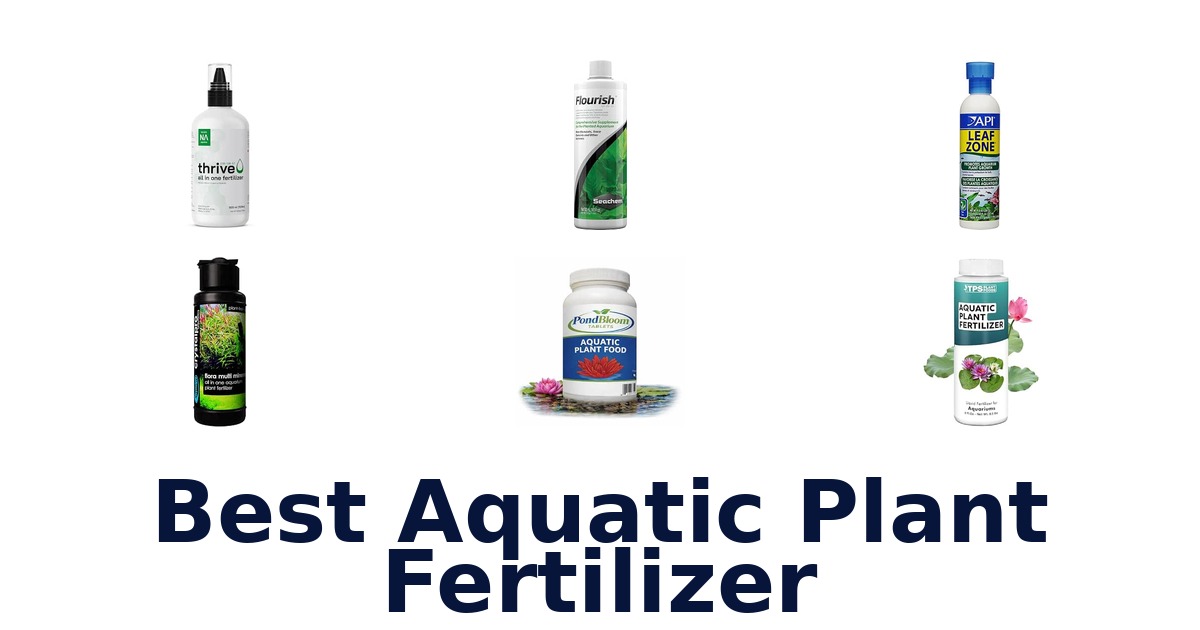
A strong aquatic plant fertilizer supplies nutrients in a format suited to the plants and water system, making it useful for freshwater tank keepers and pond gardeners alike. For a planted freshwater aquarium, NilocG Aquatics Thrive leads this lineup with a combined macro- and micronutrient liquid and a stated dose of 1 ml per 5 gallons. The options also include targeted leaf or root products, mineral blends, and slow-release pond tablets, so they are not interchangeable.
Check whether a product is intended for aquarium use, pond plants, or plants grown in water outside an aquarium before dosing. This roundup compares each option by form, stated ingredients, and intended application; it does not assume that a broader nutrient list is automatically a better match for every tank.
NilocG Aquatics Thrive is the Best Aquatic Plant Fertilizer in this selection for a freshwater planted aquarium. It combines macronutrients, micronutrients, and essential minerals in one liquid, with directions to dose 1 ml per 5 gallons one to three times per week or as needed. That makes it a direct match for aquarists seeking all-in-one tank nutrition.
For a supplement without significant nitrogen or phosphorus, Seachem Flourish is a more targeted alternative; rooted pond plants call for a pond-specific tablet instead.
Our Top Picks
 Best Overall
Combines macro- and micronutrients with essential minerals for freshwater planted aquariums; directions specify 1 ml per 5 gallons, one to three times weekly.
View on Amazon Best Mineral Blend
Crystalpro Flora Multi Minerals
Provides potassium, nitrate, magnesium, calcium, and trace minerals in a liquid; the dropper cap supports measured dosing, including smaller aquariums.
View on Amazon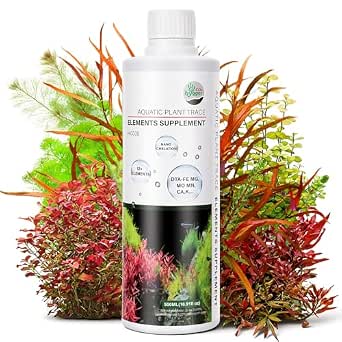 Best Trace Coverage
Lists 12 trace elements plus supplemental nitrogen, phosphorus, and potassium for freshwater planted tanks, with a measuring cup and weekly dosing directions.
View on Amazon- Best Leaf Support API Leaf Zone
- Best Root Tabs API Root Tabs
Compare These Aquatic Plant Fertilizers
| # | Product | Form | Weight | Buy |
|---|---|---|---|---|
| 1 | 1. NilocG Aquatics ThriveBest Overall | Liquid | 14.4 oz | View on Amazon |
| 2 | 2. Crystalpro Flora Multi MineralsBest Mineral Blend | Liquid | 100 g | View on Amazon |
| 3 | 3. Hygger CO2 HC035Best Trace Coverage | Liquid | 0.2 kg | View on Amazon |
| 4 |  4. Seachem Flourish 500mlTrace-nutrient supplement users | Liquid | 1.2 lb | View on Amazon |
| 5 |  5. API Leaf ZoneBest Leaf Support | Liquid | 4.8 oz | View on Amazon |
| 6 |  6. API Root TabsBest Root Tabs | Tablets | 13 g | View on Amazon |
| 7 |  7. TPS Aquatic Plant FertilizerFast-dispersing aquarium or pond liquid | Liquid | — | View on Amazon |
| 8 |  8. Seachem Flourish 100mlSmall-volume trace supplement | Liquid | 100 g | View on Amazon |
| 9 |  9. PondBloom Fertilizer TabletsRoot-fed pond lilies and lotus | Tablets | — | View on Amazon |
| 10 |  10. TPS Water Plant FertilizerWater-grown plants and propagation | Liquid | — | View on Amazon |
Detailed Reviews: Best Aquatic Plant Fertilizer
#1 · Best Overall
1. NilocG Aquatics Thrive
- Form: Liquid
- Weight: 14.4 oz
Best for: All-in-one planted-tank dosing.
Why it ranks #1: Combines macro- and micronutrients with essential minerals for freshwater planted aquariums; directions specify 1 ml per 5 gallons, one to three times weekly.
A single formula combining macronutrients, micronutrients, and essential minerals makes NilocG Aquatics Thrive a convenient choice for freshwater planted tanks seeking broad nutrition. Its listed dose is 1 milliliter per 5 gallons, one to three times weekly or as needed, supporting a flexible aquarium maintenance routine.
Thrive’s all-in-one nutrient coverage can simplify a planted-tank routine by combining macro and micronutrient feeding in one liquid product. The stated dose of 1 milliliter per 5 gallons, used one to three times per week or as needed, lets dosing frequency adapt to the keeper’s routine. A pump bottle is included, and the directions call for filling it to the indicated level and determining pumps from aquarium size documentation, linking dispensing to tank volume.
- Combines macro and micronutrients in one formula.
- Includes essential minerals.
- Listed for freshwater planted aquariums.
- Dose is 1 milliliter per 5 gallons, one to three times weekly or as needed.
- Pump count depends on aquarium-size documentation.
Skip it if you want a trace-focused supplement without significant nitrogen or phosphorus; Seachem Flourish Freshwater Plant Supplement has that profile.
NilocG Aquatics Thrive suits freshwater planted-tank keepers who prefer one liquid covering macro and micronutrients. Its flexible frequency is useful, but buyers should follow the aquarium-size pump guidance when setting each dose.
Full product details
| Brand | NilocG Aquatics |
|---|---|
| Included Components | Thrive |
| Item Form | Liquid |
| Item Weight | 14.4 ounces |
| Manufacturer | NilocG Aquatics |
| Model Number | 810122821052 |
#2 · Best Mineral Blend
2. Crystalpro Flora Multi Minerals
- Form: Liquid
- Weight: 100 g
Best for: Dropper-dosed mineral coverage.
Why it ranks #2: Provides potassium, nitrate, magnesium, calcium, and trace minerals in a liquid; the dropper cap supports measured dosing, including smaller aquariums.
A dropper cap that measures 15 drops per milliliter gives Crystalpro Flora Multi Minerals a useful edge for controlled dosing, especially in smaller aquariums. Its liquid formula combines listed macro and micro minerals, including potassium, nitrate, magnesium, calcium, and iron, for freshwater plant care.
The dropper cap avoids needing a separate dropper, and the stated 15-drop milliliter conversion gives aquarists a clear way to measure smaller additions. A capful is listed as 7 milliliters for larger doses. The mineral blend includes macro and micro elements, while its lack of phosphate and silicate is an important formula distinction for buyers selecting nutrients around those ingredients. It is intended for freshwater aquarium use.
- Dropper cap supports smaller measured doses.
- 15 drops equal 1 milliliter.
- Includes a broad list of macro and micro minerals.
- Does not contain phosphate or silicate.
- Freshwater aquarium use only.
Skip it if you need a fertilizer for saltwater; API LEAF ZONE is also explicitly limited to freshwater, so choose a product labeled for marine use.
Crystalpro Flora Multi Minerals suits freshwater aquarists who want a mineral-rich liquid and fine control from a dropper cap. Its listed formula excludes phosphate and silicate, so check that nutrient profile against your tank’s needs.
Full product details
| Brand | crystalpro |
|---|---|
| Included Components | 1 Bottle of Flora Multi Minerals |
| Item Form | Liquid |
| Item Weight | 100 g |
| Manufacturer | crystalpro |
| Model Number | Flora Multi Minerals |
| Warranty Description | 5 year manufacturer |
| Additional Information | Important information Safety Information For aquarium use only. Ingredients potassium, nitrate, magnesium, calcium, sulphate, sodium, iron, boron, manganese, zinc, copper, molybdenium, cobalt. Does not contain phosphate and silicate. Directions For aquarium use only. |
Listed on Amazon as: Crystalpro Flora Multi Minerals All-in-One Aquarium Plant Fertilizer – Plant Food for Fast Root & Leaf Growth – Safe for Fish, Shrimp & Snails (4.2 Oz / 125ml)
View on Amazon#3 · Best Trace Coverage
3. Hygger CO2 HC035
- Form: Liquid
- Weight: 0.2 kg
Best for: Measured freshwater aquascaping doses.
Why it ranks #3: Lists 12 trace elements plus supplemental nitrogen, phosphorus, and potassium for freshwater planted tanks, with a measuring cup and weekly dosing directions.
An included measuring cup and a stated weekly dose of 1 milliliter per 40 liters give Hygger CO2 HC035 a measured routine for freshwater planted tanks. Its formula lists 12 trace elements alongside supplemental nitrogen, phosphorus, and potassium, making it an all-in-one option for aquascaping enthusiasts.
The measuring cup supports accurate portions, while the weekly dose of 1 milliliter per 40 liters gives buyers a clear starting point for tank-volume calculations. The listed trace elements include iron, calcium, magnesium, manganese, zinc, boron, molybdenum, copper, and silicon, alongside supplemental N, P, and K. That combination makes the product relevant to keepers seeking both trace and macro nutrients in one liquid, rather than a trace-only supplement.
- Includes a measuring cup for dosing.
- Weekly dose is 1 milliliter per 40 liters.
- Lists 12 essential trace elements.
- Adds supplemental nitrogen, phosphorus, and potassium.
- Directions specify a weekly dosing schedule.
Skip it if you want dosing one to three times weekly as needed; NilocG Aquatics Thrive lists that flexible frequency for planted tanks.
Hygger CO2 HC035 suits freshwater aquascaping enthusiasts who want measured weekly dosing and both trace and macro nutrients in one liquid. Use the stated water-volume ratio when calculating the amount for your tank.
Full product details
| Brand | Hygger CO2 |
|---|---|
| Included Components | Trace Elements |
| Item Form | Liquid |
| Item Weight | 0.2 kg |
| Manufacturer | Shenzhen Mago Trading Co., Ltd |
| Model Number | QUS-HC035 |
| Additional Information | Important information Ingredients Trace elements Directions Add 1 ml per 40 Liters (≈10.57 US gallons) of water once a week for best results. |
Listed on Amazon as: HC035 All-in-One Liquid Aquarium Plant Fertilizer – with Essential Micro & Macro Nutrients for Freshwater Planted Tanks, 150ml/500ml/1000ml (150mL)
View on Amazon#4
4. Seachem Flourish 500ml
- Form: Liquid
- Weight: 1.2 lb
Best for: Trace-nutrient supplement users.
Why it ranks #4: A comprehensive freshwater supplement for micro and trace elements, deliberately without significant nitrogen or phosphorus; suited to targeted supplementation.
A comprehensive mix of micro elements, trace elements, and other nutrients makes Seachem Flourish a focused supplement for natural freshwater planted aquariums. Because it does not contain significant nitrogen or phosphorus, it fits keepers who want to add those nutrients separately rather than rely on this bottle for them.
Flourish’s broad trace-nutrient profile supports buyers addressing micronutrient needs, while the stated lack of significant nitrogen and phosphorus helps distinguish its role from a complete macronutrient fertilizer. That can suit a planned dosing routine using separate supplements for those elements. The liquid form fits aquarium dosing, and the product is identified for freshwater planted aquariums. It is best considered as one part of a nutrient program, not a source of every major plant nutrient.
- Comprehensive freshwater plant supplement.
- Provides micro and trace elements.
- Includes other nutrients beyond trace elements.
- Does not contain significant nitrogen or phosphorus.
- Does not supply significant nitrogen or phosphorus.
Skip it if you want one product supplying significant nitrogen and phosphorus; NilocG Aquatics Thrive offers macro and micronutrient nutrition.
Seachem Flourish fits freshwater planted-tank keepers who want trace and micro elements in a liquid supplement. Pair it with an appropriate source of nitrogen and phosphorus if those nutrients are part of your routine.
Full product details
| Brand | Seachem |
|---|---|
| Included Components | fertilizer |
| Item Form | Liquid |
| Item Weight | 1.2 pounds |
| Manufacturer | Seachem Laboratories, Inc. |
| Part Number | 075231 |
| Model Number | 67105130 |
| Warranty Description | See Manufacturers Website |
Listed on Amazon as: Seachem Flourish Freshwater Plant Supplement
View on Amazon#5 · Best Leaf Support
5. API Leaf Zone
- Form: Liquid
- Weight: 4.8 oz
Best for: Weekly freshwater leaf care.
Why it ranks #5: Freshwater liquid fertilizer supplies chelated iron and potassium, targeting leafy growth; its stated directions call for weekly dosing.
Chelated iron and potassium give API LEAF ZONE a leaf-focused role in freshwater tanks, supporting strong, hardy, colorful foliage and helping prevent yellowing and decay. Its liquid form suits aquarists who want to add plant nutrients to a weekly aquarium-care routine rather than push fertilizer into the substrate.
API describes weekly dosing, making the bottle a straightforward fit for a recurring maintenance schedule. Plants absorb nutrients through both leaves and roots, so a liquid fertilizer can contribute nutrients through the water as well as support root-fed plants. The formula is identified as freshwater-only, and the product information specifically says not to use it in saltwater aquariums. Its focus on iron and potassium suits buyers prioritizing leaf condition over a broad all-in-one nutrient specification.
- Liquid form fits water-column dosing.
- Contains chelated iron and potassium.
- Supports colorful, hardy leaves.
- Weekly dosing provides a recurring care schedule.
- Not for saltwater aquariums.
Skip it if you need a saltwater fertilizer; this product is explicitly for freshwater aquariums only.
Choose API LEAF ZONE for a freshwater aquarium where weekly liquid feeding and healthy foliage are the priorities. Its iron-and-potassium focus is a fit for leaf care, but it is not an option for saltwater setups.
Full product details
| Brand | API |
|---|---|
| Item Form | Liquid |
| Item Weight | 4.8 ounces |
| Manufacturer | Mars Fishcare |
| Model Number | 576G |
| Additional Information | Important information Safety Information Keep out of reach of children and pets. Do not ingest. For aquarium use only. Do not use in saltwater aquariums. Ingredients Freshwater Aquarium Plant Fertilizer Directions Dose your aquarium weekly with 5 ml of API LEAF ZONE per 10 US gallons of aquarium water. |
Listed on Amazon as: API LEAF ZONE Freshwater Aquarium Plant Fertilizer 8-Ounce Bottle
View on Amazon#6 · Best Root Tabs
6. API Root Tabs
- Form: Tablets
- Weight: 13 g
Best for: Substrate-rooted freshwater plants.
Why it ranks #6: Freshwater tablets supply iron, potassium, and carbon to the gravel bed, with one tablet per 30 square inches and monthly replenishment directions.
Monthly tablets pushed into aquarium gravel give API ROOT TABS a clear role for rooted freshwater plants, delivering nutrients near their root zone instead of through a liquid water-column dose. The formula lists iron, potassium, and carbon, and the product is presented for both new plants and established growth.
The directions specify one tablet per 30 square inches of gravel surface, pushed midway into the gravel bed, creating a repeatable substrate-feeding routine. Monthly replacement makes upkeep less frequent than a weekly liquid schedule. Root support is the product’s central purpose, while its listed nutrients include iron, potassium, and carbon. It is intended for freshwater aquariums, and the listing says it is safe for tropical fish, making it relevant to planted community tanks.
- Tablet form feeds through the gravel bed.
- Directions give a tablet-per-surface-area measure.
- Includes iron, potassium, and carbon.
- Supports new and established freshwater plants.
- Requires gravel placement and monthly replacement.
Skip it if you keep plants in water without a gravel bed; TPS NUTRIENTS Water Plant Fertilizer is a liquid option for water-grown plants.
Choose API ROOT TABS for freshwater tanks with rooted plants in gravel and a preference for monthly substrate feeding. It is less suited to plants grown without a gravel bed or keepers seeking a water-column liquid.
Full product details
| Brand | API |
|---|---|
| Item Form | Tablets |
| Item Weight | 13 g |
| Manufacturer | Mars Fishcare |
| Model Number | 577C |
Listed on Amazon as: API ROOT TABS Freshwater Aquarium Plant Fertilizer 0.4-Ounce 10-Count Box
View on Amazon#7
7. TPS Aquatic Plant Fertilizer
- Form: Liquid
Best for: Fast-dispersing aquarium or pond liquid.
Why it ranks #7: An aquatic-plant liquid that disperses in water and is marketed for growth and color, though the supplied details give no ingredient list or dose.
Its fast-dispersing liquid formula mixes instantly for even distribution, making this TPS Nutrients fertilizer a practical option for buyers who want aquatic plant food to spread through the water without a tablet-placement step. The listing positions it for aquarium or pond use and emphasizes fuller plant coverage and richer green tones.
The liquid is described as dispersing quickly and distributing evenly, which supports a simple water-based application workflow. The product claims to deliver nutrients directly in water for uptake and to support root development, growth density, and visual color. Its listed aquarium-or-pond positioning gives it a broader stated setting than freshwater aquarium-only products, though the supplied details do not give a dosing schedule or nutrient breakdown to guide more precise regimen planning.
- Fast-dispersing liquid mixes instantly.
- Positioned for aquarium or pond use.
- Aims to support fuller plant coverage.
- Promotes richer green tones and visual vibrancy.
- The supplied details do not specify a dosing schedule.
Skip it if you need a stated weekly dose or nutrient list; TPS NUTRIENTS Water Plant Fertilizer lists a teaspoon-per-gallon weekly direction.
Consider this liquid for aquarium or pond keepers prioritizing easy water distribution and lush-looking growth. The available listing does not specify a dose or ingredient profile, so it offers less guidance for tightly measured routines.
Full product details
| Brand | TPS NUTRIENTS |
|---|---|
| Item Form | Liquid |
| Manufacturer | TPS Nutrients |
| Model Number | TPS-AQUATICPLANT-8OZ |
Listed on Amazon as: Aquatic Plant Fertilizer, Liquid Plant Food for Lush Growth, 8 oz
View on Amazon#8
8. Seachem Flourish 100ml
- Form: Liquid
- Weight: 100 g
Best for: Small-volume trace supplement.
Why it ranks #8: The same freshwater micro- and trace-element supplement as the larger Flourish option, with a stated 5 ml per 60 gallons once or twice weekly.
A 100 mL bottle gives Seachem Flourish a compact option for freshwater aquarists seeking micro elements, trace elements, and other nutrients without significant nitrogen or phosphorus. Its stated dose—5 milliliters per 60 gallons once or twice weekly—also makes the supplement’s role and schedule explicit.
Flourish is intended as a comprehensive supplement for natural freshwater aquariums, but the listing says it is designed to be used with other macro- and micronutrient supplements. That distinction matters for buyers planning a multi-product regimen rather than expecting one bottle to provide everything. The dosing direction specifies 5 milliliters per 60 gallons once or twice weekly, and refrigeration is recommended three months after opening, a storage detail to include in ongoing care.
- Provides micro and trace elements.
- Does not contain significant nitrogen or phosphorus.
- Specific dose is given for 60 gallons.
- Refrigeration is recommended three months after opening.
- Requires other supplements for a broader nutrient regimen.
Skip it if you want one formula with macro and micronutrients; NilocG Aquatics Thrive combines both in a planted-tank liquid.
Choose this Seachem supplement for freshwater aquarists building a regimen around trace and micro elements, with dosing guidance for larger tanks. Plan on separate nutrient supplements and follow the stated refrigeration recommendation after opening.
Full product details
| Brand | Seachem |
|---|---|
| Included Components | fertilizer |
| Item Form | Liquid |
| Item Weight | 100 g |
| Manufacturer | Seachem Laboratories, Inc. |
| Part Number | 075467 |
| Model Number | 67105150 |
| Warranty Description | See Manufacturers Website |
| Additional Information | Important information Directions Use 1 capful (5 mL) for each 250 L (60 US gallons) of aquarium water once or twice a week. For smaller doses, cap thread is approximately mL. Refrigeration recommended 3 months after opening. |
Listed on Amazon as: Seachem Flourish 100 mL / 3.4 fl. oz.
View on Amazon#9
9. PondBloom Fertilizer Tablets
- Form: Tablets
Best for: Root-fed pond lilies and lotus.
Why it ranks #9: Slow-release NPK and micronutrient tablets are aimed at rooted pond plants such as water lilies and lotus, rather than standard aquarium dosing.
Slow-release tablets that activate underground make PondBloom a targeted choice for rooted pond plants such as water lilies and lotus. Its listed nitrogen, phosphate, and soluble potash provide a pond-oriented nutrient blend, while the tablet format places feeding near roots in water gardens and aquatic containers.
PondBloom is aimed at rooted aquatic plants, so the tablet delivery method fits lilies, lotus, and other plants growing in pond substrate better than a routine liquid dose. The slow-release action supports feeding below the surface, while the listed macro and micronutrient blend is intended to encourage stronger roots, greener leaves, and blooms. Its stated use spans koi ponds, water gardens, and aquatic containers, giving pond keepers several relevant settings.
- Slow-release tablets activate underground.
- Targets rooted aquatic plants.
- Lists nitrogen, phosphate, and soluble potash.
- Suitable for ponds, water gardens, and aquatic containers.
- Tablet format is for root-zone feeding, not liquid water dosing.
Skip it if you need a liquid for weekly water dosing; TPS NUTRIENTS Water Plant Fertilizer gives a teaspoon-per-gallon direction.
PondBloom suits pond keepers feeding rooted lilies, lotus, or similar plants in containers and water gardens. Its underground, slow-release tablet format is the key fit consideration for buyers maintaining floating or water-column plants.
Full product details
| Brand | smart spring |
|---|---|
| Item Form | Tablets |
| Manufacturer | Plantabbs |
| Model Number | PB-MSTR |
| Additional Information | Important information Ingredients Nitrogen. Phosphate. Soluable Potash. Boron. Potassium |
#10
10. TPS Water Plant Fertilizer
- Form: Liquid
Best for: Water-grown plants and propagation.
Why it ranks #10: Directions and intended uses cover water-grown plants, water gardens, propagation jars, and planters; its safety instructions say not to allow it into water sources.
A weekly direction of one teaspoon per gallon makes TPS NUTRIENTS Water Plant Fertilizer easy to incorporate into care for plants grown directly in water. Its stated uses range from water lilies and lotus to propagation jars and indoor water planters, extending its fit beyond conventional aquarium plant care.
The product is formulated for plants growing in water without soil, so its liquid format suits water gardens, indoor planters, and propagation setups where a gravel-bed tablet is not the intended workflow. The listed dose—one teaspoon per gallon, applied weekly—provides a repeatable routine. The listing also says to avoid eye and skin contact and not allow it to enter water sources, a handling consideration when measuring or disposing of the fertilizer.
- Formulated for water-grown plants without soil.
- Suitable for water lilies and lotus.
- Listed for propagation jars and indoor planters.
- Provides a weekly teaspoon-per-gallon direction.
- Directions say not to allow it to enter water sources.
Skip it if you need fertilizer intended for aquarium water; API LEAF ZONE is specifically labeled for freshwater aquarium use.
This liquid fits growers tending water lilies, lotus, propagation jars, or indoor water planters, with a stated weekly dose to guide upkeep. Note its direction to keep the product out of water sources during handling.
Full product details
| Brand | TPS NUTRIENTS |
|---|---|
| Item Form | Liquid |
| Manufacturer | TPS Nutrients |
| Model Number | TPS-WATERPLANT-8OZ |
| Additional Information | Important information Safety Information Avoid contact with eyes and skin. Do not allow to enter water sources. Directions Mix 1 teaspoon per gallon of water, apply weekly. For best results, use with TPS Nutrients' Aqua Soil and Aqua CO2. |
Listed on Amazon as: Water Plant Fertilizer, Liquid Plant Food for Healthy Aquatic Growth, 8 oz
View on AmazonAvoid confusing aquarium, pond, and water-grown products
The intended water system is the first compatibility check: these products cover distinct settings, and the labels do not make them universally interchangeable. NilocG Aquatics Thrive and Seachem Flourish are explicitly for freshwater planted aquariums; API Leaf Zone and API Root Tabs also specify freshwater aquarium use. PondBloom, by contrast, targets rooted pond plants such as water lilies and lotus, using slow-release tablets placed near roots.
TPS Water Plant Fertilizer is described for water gardens, propagation jars, and water planters, and its instructions say not to allow it into water sources. That warning makes it a poor choice for dosing an aquarium.
A product described broadly as an aquatic fertilizer should not be assumed safe for every aquatic setting. Match the product’s stated application and directions to the actual tank or pond before adding it.
Liquid dosing and root feeding solve different problems
Liquid fertilizer and root tabs deliver nutrients differently, so substrate and plant feeding needs affect the choice. Liquids such as NilocG Aquatics Thrive, Crystalpro Flora Multi Minerals, and Seachem Flourish are dosed into aquarium water; the plants take up nutrients through leaves and roots. API Root Tabs instead go into the gravel bed, with directions for one tablet per 30 square inches and monthly replenishment.
That targeted placement suits rooted plants and avoids treating both formats as equivalent. A tablet’s stated ingredients include iron, potassium, and carbon, while a liquid may offer a broader blend or a narrower supplement.
The product facts do not establish that one format alone will meet every plant’s needs. Consider the plants’ rooting habit and the nutrients already supplied by the aquarium before combining products, since overlapping fertilizers can result in excessive dosing.
How to Choose an Aquatic Plant Fertilizer
Match the formula to your tank’s nutrient needs
Choose a formula based on which nutrients it supplies and what your tank already receives. NilocG Aquatics Thrive combines macronutrients, micronutrients, and minerals, while Hygger CO2 HC035 lists 12 trace elements plus supplemental nitrogen, phosphorus, and potassium. Crystalpro Flora Multi Minerals includes potassium and nitrate among its minerals but explicitly excludes phosphate and silicate.
Seachem Flourish provides micro and trace elements without significant nitrogen or phosphorus. The broader formulas suit buyers seeking a single source of multiple nutrient groups; Flourish may suit aquarists who want a supplement alongside separate macro-nutrient products.
Do not assume the widest ingredient list is best: account for other fertilizers and the aquarium’s existing nutrient supply.
Pick liquid dosing or substrate tablets
Look at how the fertilizer is delivered and where your plants take up nutrients. Most aquarium options here are liquids, including NilocG Aquatics Thrive, API Leaf Zone, and both Seachem Flourish sizes. API Root Tabs are tablets pushed into gravel, with directions for one tablet per 30 square inches and monthly use.
PondBloom also comes as tablets, but its slow-release formula is for rooted pond plants rather than aquarium gravel. Liquids suit buyers who want to dose the water column; root tabs suit those targeting rooted freshwater aquarium plants.
The pond tablets are for water lilies, lotus, and similar pond plants. Choose by habitat and feeding placement, not simply by the word fertilizer on the package.
Check the stated dose and measuring method
Prefer a product whose directions are clear and workable for your aquarium volume. NilocG Aquatics Thrive specifies 1 ml per 5 gallons, one to three times weekly or as needed; Seachem Flourish specifies 5 ml per 60 gallons once or twice weekly. Hygger CO2 HC035 calls for 1 ml per 40 liters once a week, while Crystalpro includes a dropper cap and states that 15 drops equal 1 ml.
These differing dose rates are not directly comparable measures of strength because the formulas differ. A clearly stated, measurable dose benefits buyers who want a repeatable routine; a dropper or measuring cup may help with small or precisely measured additions.
Follow the chosen product’s own directions rather than transferring another brand’s dose.
Which Aquatic Plant Fertilizer Should You Choose?
For a freshwater planted aquarium needing one combined liquid, choose NilocG Aquatics Thrive: it provides macro- and micronutrients and gives a dose of 1 ml per 5 gallons. Choose Crystalpro Flora Multi Minerals if a liquid mineral blend with a dropper cap fits your routine, or Hygger CO2 HC035 if its listed trace elements plus NPK match your supplementation plan. For a micro- and trace-element supplement without significant nitrogen or phosphorus, select Seachem Flourish 500ml; the 100ml version offers the same stated formula in a smaller bottle.
Rooted aquarium plants in gravel may suit API Root Tabs, while API Leaf Zone is a weekly liquid with iron and potassium. PondBloom is for rooted pond plants, not a standard aquarium.
Avoid TPS Water Plant Fertilizer for aquarium dosing; its instructions warn against allowing it into water sources.
Frequently Asked Questions
How can I tell whether my aquarium plants need fertilizer or whether a deficiency has another cause?
Look for patterns in plant growth and check your tank routine before adding more fertilizer. Poor growth can also relate to lighting, CO2, water conditions, or the needs of rooted plants. Compare symptoms with the nutrients your current product supplies, then make one measured adjustment and observe new growth rather than changing several factors at once.
Can aquarium plant fertilizer harm fish, shrimp, or snails if I overdose?
Yes, overdosing can create risks for aquarium livestock, so follow the product’s directions and account for tank volume. Do not assume that a “safe for” claim makes unlimited dosing appropriate. If you suspect an overdose, stop adding fertilizer and check the product label for guidance; avoid combining products without understanding their nutrient overlap.
How should I balance fertilizer dosing with lighting and CO2 in a planted tank?
Keep fertilizer, lighting, and CO2 in a consistent routine and adjust cautiously. Plant growth depends on more than nutrients, so adding fertilizer may not fix a problem caused by another part of the setup. Follow the fertilizer’s stated dosing directions, note changes in new growth, and avoid increasing several inputs simultaneously.
Should I use liquid fertilizer or root tabs for plants growing in gravel?
For rooted aquarium plants in gravel, root tabs may be a suitable choice; API Root Tabs are intended for freshwater aquarium plants. Liquid fertilizers are a different dosing format and may better fit a routine aimed at the water column. Choose based on where your plants grow and follow the product’s directions.
Can I use pond fertilizer tablets in a standard aquarium?
No; PondBloom is described for rooted pond plants, including water lilies and lotus, and is not a standard aquarium choice. For a freshwater aquarium, select a fertilizer intended for aquarium use instead. Match the format to your plants: the supplied guidance identifies root tabs for rooted aquarium plants and liquid products for tank dosing.
Final Words
For a freshwater planted aquarium needing one combined liquid, NilocG Aquatics Thrive is the clearest fit in this selection: it supplies macro- and micronutrients, with directions to dose 1 ml per 5 gallons one to three times weekly or as needed. Choose Seachem Flourish for a micro- and trace-element supplement without significant nitrogen or phosphorus, API Root Tabs for rooted aquarium plants, and PondBloom only for rooted pond plants.