Best Rare Perennial Flower Seeds for Shade and Sun
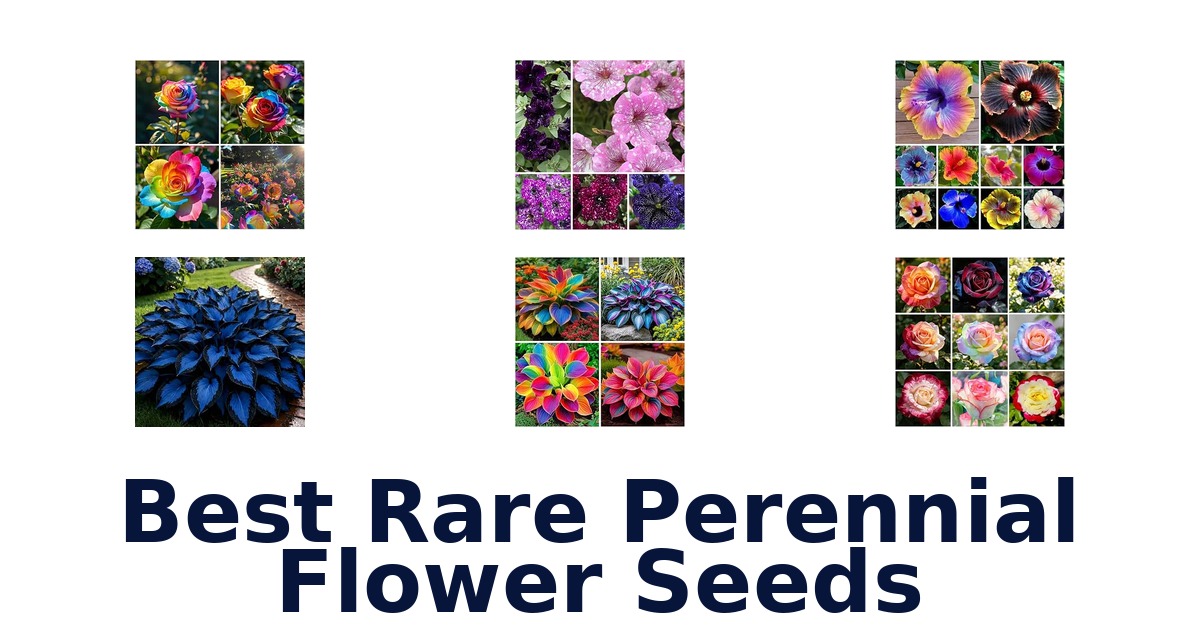
A strong choice among rare perennial flower seeds matches your garden’s light and space while offering a clear growing profile, and this selection suits gardeners seeking unusual foliage or blooms. The range includes shade-tolerant hostas, mixed-color iris, tall lupines, hibiscus, daisies, and rose seeds, with packet counts from 30+ to 500+. Some listings specify useful details such as USDA zones, sowing season, or germination conditions; others provide less cultivation guidance.
Perennial claims also deserve a close look: the petunia listing calls its seeds perennial but also identifies them as annual, so it ranks last for this search. Use the comparisons below to weigh plant type, seed count, and the conditions each listing says it favors before choosing.
Mixrug Hosta Seeds Mixed is the best overall pick because its listing combines a perennial shade-garden use with useful growing specifics: pre-treated seeds, partial-shade sowing, and stated adaptability to USDA zones 3–It is a practical match for gardeners filling shaded borders, containers, or woodland-style spaces. For other conditions, consider the listed iris, sun-loving African daisy, or tall Russell lupine seeds; the best fit depends on your light, planting space, and desired flower form.
Our Top Picks
 Best Overall
The listing specifies pre-treated seeds, partial-shade sowing, and USDA zones 3–9, making this perennial hosta a well-documented shade-garden choice.
View on Amazon Best for Shade
Its 210+ seeds are presented for shaded pathways and borders, with hosta foliage suited to low-light gardens and containers.
View on Amazon Best Iris Mix
This 205+ seed packet offers rare heirloom iris in orange, pink, and blue, with the listing identifying the flowers as perennial.
View on Amazon- Tallest Blooms Marde Ross Russell Lupine Seeds
- Pollinator Pick Generic African Daisy Seeds
Compare these rare perennial flower seed options
| # | Product | Material Feature | Material Features | Buy |
|---|---|---|---|---|
| 1 | 1. Mixrug Hosta Seeds MixedBest Overall | GMO Free | GMO Free | View on Amazon |
| 2 | 2. BuggyBeds Hosta SeedsBest for Shade | GMO Free | GMO Free | View on Amazon |
| 3 | 3. Mixrug Mixed Iris SeedsBest Iris Mix | GMO Free | GMO Free | View on Amazon |
| 4 |  4. Marde Ross Russell Lupine SeedsTallest Blooms | Heirloom | Heirloom | View on Amazon |
| 5 |  5. Generic African Daisy SeedsPollinator Pick | GMO Free | GMO Free | View on Amazon |
| 6 |  6. Carpet Creeping Giant Hibiscus SeedsWarm-Season Hibiscus Starter | GMO Free, Heirloom | GMO Free, Heirloom | View on Amazon |
| 7 |  7. Wivolibe Mixed Rose SeedsColor-Mix Rose Seed Growers | GMO Free, Heirloom | GMO Free, Heirloom | View on Amazon |
| 8 |  8. BuggyBeds Rainbow Rose SeedsMulti-Tonal Rose Shrub Borders | GMO Free | GMO Free | View on Amazon |
| 9 |  9. Carpet Creeping Hosta SeedsShade-Tolerant Hosta Planting | GMO Free | GMO Free | View on Amazon |
| 10 |  10. Wivolibe Petunia SeedsHigh-Count Petunia Seed Starts | GMO Free | GMO Free | View on Amazon |
Detailed Reviews: Best Rare Perennial Flower Seeds
#1 · Best Overall
1. Mixrug Hosta Seeds Mixed
- Material Feature: GMO Free
- Material Features: GMO Free
Best for: Zone-Range Hosta Gardeners.
Why it ranks #1: The listing specifies pre-treated seeds, partial-shade sowing, and USDA zones 3–9, making this perennial hosta a well-documented shade-garden choice.
A stated USDA hardiness range of zones 3–9 is the clearest planning feature, helping gardeners assess whether these mixed-color hostas suit their location. Mixrug lists more than 220 pre-treated seeds, heart-shaped variegated foliage, and planting in moist soil with partial shade.
Pre-treated seeds and simple instructions to sow in moist soil and partial shade make the starting workflow more explicit than listings without sowing guidance. The stated zones 3–9 help buyers assess climate fit, while the listed use in shaded gardens, borders, and containers supports different layouts. Once established, the plants are described as drought-resistant and low-maintenance. Their heart-shaped, variegated leaves are the central ornamental feature; the supplied details do not specify a germination timetable.
- More than 220 seeds listed
- Pre-treated seeds with sowing guidance
- Stated hardiness range of USDA zones 3–9
- Heart-shaped variegated foliage and multiple placement options
- A specific germination timeline is not provided.
Skip it if you need a stated germination timetable to schedule indoor starts; these details give sowing conditions but no timing.
This Mixrug selection suits gardeners in the listed zones 3–9 seeking heart-shaped foliage for partial-shade borders, containers, or woodland-style spaces. Use the moist-soil instructions, while allowing for the absence of a stated germination schedule.
Full product details
| Brand | Mixrug |
|---|---|
| Color | Hosta |
| Item Weight | 4.8 ounces |
| Manufacturer | Mixrug |
| Part Number | LYJ-BS02611-0005 |
| Material Feature | GMO Free |
| Material Features | GMO Free |
| Model Number | Hosta Seeds Mixed for Planting Outdoors |
| Special Features | Low Maintenance |
| Special Feature | Low Maintenance |
Listed on Amazon as: 220+ Mixed Color Hosta Seeds for Planting – Hostas Seeds Rare Perennial, Flower Seed Beauties Easy to Grow Low Maintenance Heart Shaped Leaves Heart Hosta Plants for Outdoors Garden
View on Amazon#2 · Best for Shade
2. BuggyBeds Hosta Seeds
- Material Feature: GMO Free
- Material Features: GMO Free
Best for: Shade Garden Ground Cover.
Why it ranks #2: Its 210+ seeds are presented for shaded pathways and borders, with hosta foliage suited to low-light gardens and containers.
Shade-tolerant hosta seeds are the defining feature here, enabling foliage planting in low-light spaces beneath trees and along shaded borders. BuggyBeds lists more than 210 seeds, with use spanning containers, flower beds, and ground cover, so one packet can serve several garden placements.
The shade-garden suitability makes these seeds relevant where sun-loving flowers may not fit, while the listed ground-cover use supports filling broader spaces beneath trees or along pathways. Container and flower-bed options also let gardeners keep hostas in smaller or more defined areas. Once established, the plants are described as drought-tolerant and suited to a variety of soils, which can reduce routine attention; the listing characterizes them as low-maintenance, but gives no germination schedule or planting depth.
- More than 210 seeds listed
- Suitable for shaded spaces beneath trees and borders
- Can be planted in containers, flower beds, or as ground cover
- Established plants are described as drought-tolerant and low-maintenance
- The listing provides no germination timing or planting-depth guidance.
Skip it if you need a listed sowing schedule or a stated growing-zone range; those details are not provided for these BuggyBeds seeds.
Choose these BuggyBeds seeds for shaded borders, under-tree areas, or containers where ornamental foliage and ground-cover use suit the plan. Their stated drought tolerance applies once established, so this is not a substitute for establishment care.
Full product details
| Brand | BuggyBeds |
|---|---|
| Color | blue |
| Item Weight | 13.61 g |
| Manufacturer | BuggyBeds |
| Material Feature | GMO Free |
| Material Features | GMO Free |
| Special Features | Low Maintenance |
| Special Feature | Low Maintenance |
Listed on Amazon as: 210+ Hosta Seeds – Rare Perennial Flower Seeds for Shade Gardens, Long Blooming Plants for Ground Cover & Containers, Ideal for Shaded Pathways and Borders
View on Amazon#3 · Best Iris Mix
3. Mixrug Mixed Iris Seeds
- Material Feature: GMO Free
- Material Features: GMO Free
Best for: Heirloom Iris Color Mix.
Why it ranks #3: This 205+ seed packet offers rare heirloom iris in orange, pink, and blue, with the listing identifying the flowers as perennial.
Rare heirloom iris varieties are the key distinction, enabling a garden planting with varieties described as uncommon and blooms in orange, pink, and blue shades. Mixrug lists more than 205 non-GMO seeds, hand-selected for quality and color variety, with suitability for outdoor perennial planting.
The described color range can bring varied blooms to an outdoor garden, while the hand-selected, mixed-variety seed selection supports a less uniform planting than a single-color choice. The listing also calls the seeds easy to plant for gardeners of all levels, which can suit beginners who want to add heirloom irises. Deer resistance is listed as a special feature, but the supplied facts do not specify planting depth, germination timing, or growing-zone limits.
- More than 205 seeds listed
- Rare heirloom varieties described as uncommon
- Mixed blooms include orange, pink, and blue shades
- Listed as non-GMO and deer resistant
- No growing-zone range or germination timing is supplied.
Skip it if you need a stated growing-zone range or germination timetable to plan sowing; Mixrug does not provide either in the supplied details.
Pick these Mixrug seeds for an outdoor perennial bed where rare heirloom iris varieties and mixed bloom colors are the goal. The listing notes deer resistance, but gardeners relying on a precise sowing calendar will need information beyond the supplied details.
Full product details
| Brand | Mixrug |
|---|---|
| Color | Mixed |
| Manufacturer | Mixrug |
| Part Number | LYJ-JJ1211-51 |
| Material Feature | GMO Free |
| Material Features | GMO Free |
| Special Features | Deer Resistant |
| Special Feature | Deer Resistant |
Listed on Amazon as: 205+ Rare Mixed Iris Seeds for Planting – Perennial Bearded Iris Flower Seeds Exotic -Non-GMO Heirloom Exotic Flower Seeds Perennial for Garden Outdoor
View on Amazon#4 · Tallest Blooms
4. Marde Ross Russell Lupine Seeds
- Material Feature: Heirloom
- Material Features: Heirloom
Best for: Tall Lupine Border Plantings.
Why it ranks #4: The listing gives a 36–48-inch flower-spike height, zones 3–9, and fall or early-spring sowing guidance for this perennial lupine.
Lupine spikes reaching 36–48 inches give this seed mix a strong vertical role, enabling height in borders, meadows, and wildflower gardens. Marde Ross & Company lists 100 mixed seeds with purple, pink, and blue pea-like flowers and fall or early-spring sowing guidance.
The stated height of 36–48 inches helps gardeners place lupines toward the back of borders or in meadow-style plantings where vertical blooms matter. Purple, pink, and blue pea-like flowers add mixed color, while pollinator attraction is listed. Sowing outdoors in fall or early spring supports natural cold stratification, and the supplied care details specify sun or part shade, well-drained soil, zones 3–9, and a 14–30 day germination period.
- 100 mixed seeds listed
- 36–48-inch flower spikes for vertical planting
- Purple, pink, and blue pea-like flowers
- Sowing, light, soil, zone, and germination guidance supplied
- The stated germination window spans 14–30 days.
Skip it if you cannot sow outdoors in fall or early spring; the listed timing uses natural cold stratification for these lupines.
These Marde Ross lupines suit growers seeking tall, mixed-color spikes for borders, meadows, or wildflower gardens in zones 3–9. Plan for well-drained soil and the stated outdoor sowing windows rather than a compact flower display.
Full product details
| Brand | Marde Ross & Company |
|---|---|
| Color | Multi |
| Item Weight | 4.54 g |
| Manufacturer | Rising Phoenix |
| Material Feature | Heirloom |
| Material Features | Heirloom |
| Special Features | Attracts Pollinators |
| Care Instructions | Sow lupine seeds outdoors in fall or early spring. Grow in sun or part shade. Thrive in well-drained soil, germinating in 14-30 days. Hardy in zones 3-9. |
| Special Feature | Attracts Pollinators |
Listed on Amazon as: Russell Lupine Seeds, 100 Mixed
View on Amazon#5 · Pollinator Pick
5. Generic African Daisy Seeds
- Material Feature: GMO Free
- Material Features: GMO Free
Best for: Sunny Border Daisy Growers.
Why it ranks #5: These 145+ perennial daisy seeds are described as drought-tolerant and pollinator-attracting, with sun and well-drained soil guidance.
Sun-loving African daisies with drought-tolerant positioning give these seeds a clear role in sunny borders, rock gardens, and containers. The listing includes more than 145 seeds and describes compact growth, making them a candidate for edging and smaller planting areas as well as flower beds.
The sowing guidance says to cover seeds lightly with well-draining soil and keep it consistently moist without waterlogging, giving growers a clear starting approach. After establishment, care calls for plenty of sun and moderate watering, allowing the surface to dry before rewatering. The listed border, edging, and container uses make the compact plants adaptable to different garden layouts. Pollinator attraction is also listed, though no bloom timing or growing-zone range appears in the supplied facts.
- More than 145 seeds listed
- Suitable for borders, edging, rock gardens, and containers
- Compact growth is described
- Sowing and watering guidance specifies light cover and moderate moisture
- The listing does not state a growing-zone range or bloom schedule.
Skip it if you need a stated growing-zone range or flowering timetable to plan a planting; neither is provided for these African daisies.
Choose these seeds for a sunny border, rock garden, or container where compact African daisies and pollinator attraction fit the planting. Follow the supplied moisture guidance, and note that a growing-zone range is not stated.
Full product details
| Brand | Generic |
|---|---|
| Manufacturer | Generic |
| Material Feature | GMO Free |
| Material Features | GMO Free |
| Special Features | Attracts Pollinators |
| Special Feature | Attracts Pollinators |
Listed on Amazon as: 145+ Perennial Rare African Daisy Flower Seeds for Planting Outdoor – Drought-Tolerant, Ideal for Borders, Rock Gardens & Containers, Attracts Pollinators
View on Amazon#6
6. Carpet Creeping Giant Hibiscus Seeds
- Material Feature: GMO Free, Heirloom
- Material Features: GMO Free, Heirloom
Best for: Warm-Season Hibiscus Starter.
Why it ranks #6: The 100+ non-GMO heirloom seeds are listed as perennial; the listing also gives a late-spring-to-early-summer sowing window after frost.
A stated planting window after the last frost sets these giant hibiscus seeds apart, enabling growers to time sowing for late spring to early summer. Carpet Creeping lists mixed-color, non-GMO heirloom seeds and recommends waiting until soil temperatures consistently reach 65–75°F.
The late-spring-to-early-summer timing, after the last frost, gives growers a practical seasonal cue for starting these seeds outdoors. The stated soil-temperature range of 65–75°F adds a second condition to use alongside frost timing, helping avoid sowing into colder soil. Mixed colors suit a varied garden display, while the listing calls the seeds fragrant and provides straightforward planting instructions. Water is listed as a care instruction, though no detailed watering schedule is supplied.
- More than 100 seeds listed
- Mixed-color giant hibiscus blooms
- Non-GMO heirloom seed
- Planting guidance specifies after last frost and soil at 65–75°F
- The supplied planting guidance limits sowing to a warm post-frost window.
Skip it if you need a seed with a stated fall or early-spring sowing window; these hibiscus details specify late spring to early summer after frost.
These seeds suit gardeners who can wait for post-frost conditions and want mixed-color giant hibiscus in a home garden. Use the stated soil-temperature range to guide timing; the listing does not provide a detailed ongoing watering schedule.
Full product details
| Brand | Carpet Creeping |
|---|---|
| Color | Mixed |
| Manufacturer | Carpet Creeping |
| Material Feature | GMO Free, Heirloom |
| Material Features | GMO Free, Heirloom |
| Special Features | Fragrant |
| Care Instructions | water |
| Special Feature | Fragrant |
Listed on Amazon as: 100+Giant Hibiscus Seeds for Planting Outdoor- Perennial Rare Non-GMO Heirloom Flowers Plant for Your Flourishing Garden Home
View on Amazon#7
7. Wivolibe Mixed Rose Seeds
- Material Feature: GMO Free, Heirloom
- Material Features: GMO Free, Heirloom
Best for: Color-Mix Rose Seed Growers.
Why it ranks #7: The 500+ non-GMO heirloom packet promises a broad rainbow mix and perennial seeds, though the provided listing offers limited cultivation specifics.
A mix of more than 500 non-GMO heirloom rose seeds is the concrete draw, enabling gardeners to start a larger rose planting with a range of bloom colors. Wivolibe lists deep reds, pinks, yellows, whites, lavenders, and bi-color varieties for home gardens, borders, and cut-flower arrangements.
The broad color mix gives a garden or border a wider palette than a single-color seed selection, and the listed cut-flower use also suits growers planning blooms for arrangements. With more than 500 seeds in the packet, the listing supports sowing across a larger planting area or making multiple starts. The seeds are identified as non-GMO and heirloom; however, the supplied information does not state germination timing, planting depth, or a rose-specific care schedule.
- More than 500 seeds listed
- Color range includes reds, pinks, yellows, whites, lavenders, and bi-colors
- Non-GMO heirloom seed
- Listed for home gardens, borders, and cut-flower arrangements
- The supplied listing gives no specific germination schedule or planting-depth instructions.
Skip it if you need stated sowing depth or rose-care timing before starting seeds; those details are not supplied for this Wivolibe mix.
This mix suits gardeners seeking varied rose colors for borders or cut-flower plans and who want a large seed count for a broader sowing. The listing does not give growing instructions, so buyers needing a detailed schedule should look elsewhere.
Full product details
| Brand | Wivolibe |
|---|---|
| Color | Multicolor |
| Manufacturer | Wivolibe |
| Material Feature | GMO Free, Heirloom |
| Material Features | GMO Free, Heirloom |
| Special Features | High Germination Rate, Non-GMO |
| Special Feature | High Germination Rate, Non-GMO |
Listed on Amazon as: 500+ Mixed Rare Rose Seeds for Planting, Perennial Seeds, Rainbow Mix, Ideal for Home Garden, Borders & Cut Flower Arrangements, Non-GMO Heirloom
View on Amazon#8
8. BuggyBeds Rainbow Rose Seeds
- Material Feature: GMO Free
- Material Features: GMO Free
Best for: Multi-Tonal Rose Shrub Borders.
Why it ranks #8: The 30+ seeds are described as perennial Rosa for beds and borders, with distinctive multi-tonal blooms and pollinator appeal.
The promise of multi-tonal blooms on an upright ornamental rose shrub is the defining feature, enabling a more varied visual effect in beds and borders. BuggyBeds lists more than 30 perennial Rosa seeds, with pollinator attraction noted as a special feature for outdoor landscapes.
An upright shrub form gives these roses a defined role in garden beds and borders, rather than the ground-cover use listed for some other flowers. Multi-tonal blooms are described as varied, so the planting aims for visual variation rather than a single uniform color. The perennial designation suits a longer-term landscape plan, and pollinator attraction is listed. The supplied facts do not include sowing depth, germination timing, or care instructions, which limits planning detail.
- More than 30 seeds listed
- Upright ornamental shrub growth
- Multi-tonal blooms described as varied
- Listed for garden beds, borders, and outdoor landscapes
- No sowing depth, germination timing, or care schedule is supplied.
Skip it if you want complete seed-starting instructions before planting; this BuggyBeds listing does not state sowing depth or germination timing.
Choose these seeds for a garden bed or border where an upright perennial rose shrub and multi-tonal blooms fit the landscape. The supplied details identify its form and placement but do not provide a seed-starting schedule.
Full product details
| Brand | BuggyBeds |
|---|---|
| Color | coloful |
| Item Weight | 13.61 g |
| Manufacturer | BuggyBeds |
| Material Feature | GMO Free |
| Material Features | GMO Free |
| Special Features | Attracts Pollinators |
| Special Feature | Attracts Pollinators |
Listed on Amazon as: 30+ Rare Rainbow Rose Seeds for Planting – Perennial Rosa Flower Seed, Ornamental Bush Variety for Garden Beds, Borders and Outdoor Landscape
View on Amazon#9
9. Carpet Creeping Hosta Seeds
- Material Feature: GMO Free
- Material Features: GMO Free
Best for: Shade-Tolerant Hosta Planting.
Why it ranks #9: This 250+ seed packet fits shade gardens and ground cover, but provides fewer detailed cultivation specifics than the higher-ranked hosta listing.
Exceptional shade tolerance is the central feature of these hosta seeds, enabling planting in difficult low-light garden areas. Carpet Creeping lists more than 250 seeds, with use as ground cover or border plants and colorful foliage described as a lasting garden feature.
Shade tolerance makes this option relevant for spaces that receive less light, while the ground-cover and border uses offer two ways to place hostas across a landscape. The listing describes the plants as easy to maintain and suitable for beginner gardeners, reducing complexity for someone adding foliage plants. A high germination rate is also named as a special feature, but no percentage, planting depth, or germination timeframe is provided, so the listing cannot set expectations for schedule or spacing.
- More than 250 seeds listed
- Suitable for shaded garden areas
- Can be used as ground cover or border plants
- High germination rate is listed as a special feature
- No germination percentage or timetable is specified.
Skip it if you need a stated germination percentage or schedule before sowing; the listing names a high rate but gives no figures or timing.
These seeds fit beginner gardeners filling shady landscape areas with hosta borders or ground cover. They offer a listed high germination rate without a numeric figure, so growers who require a quantified timetable should account for that information gap.
Full product details
| Brand | Carpet Creeping |
|---|---|
| Color | Mixed |
| Manufacturer | Carpet Creeping |
| Material Feature | GMO Free |
| Material Features | GMO Free |
| Special Features | High Germination Rate |
| Special Feature | High Germination Rate |
Listed on Amazon as: 250+ USA Premium Seeds Rare Perennial Hosta Flower Seed for Planting Outdoors Garden Home Beauties
View on Amazon#10
10. Wivolibe Petunia Seeds
- Material Feature: GMO Free
- Material Features: GMO Free
Best for: High-Count Petunia Seed Starts.
Why it ranks #10: Despite the perennial wording in its title, the listing also calls these annual petunias, making them a weaker match for perennial-seed shoppers.
More than 5,000 petunia seeds give this packet its defining scale, enabling many seed-starting placements from one selection. Wivolibe’s instructions specify indoor starts four to six weeks before the last expected frost, with germination usually within 21 days at 65–70°F.
Starting indoors four to six weeks before the last expected frost gives gardeners a defined lead-in for spring planting. The instructions call for pressing seeds into soil, lightly covering with peat moss, and shading the tray because darkness aids germination. A stated rate of two to three seeds per plant helps organize sowing, while germination is listed at about 21 days at 65–70°F. The title identifies these petunias as annual, so perennial expectations should not guide selection.
- More than 5,000 seeds listed
- Indoor-start window stated as four to six weeks before last frost
- Germination guidance gives 21 days at 65–70°F
- Sowing rate of two to three seeds per plant supplied
- The title identifies these petunias as annual, not perennial.
Skip it if you specifically need a perennial flower; Wivolibe's title identifies these petunias as annual despite the perennial wording elsewhere.
This packet suits growers planning a high-volume petunia sowing with indoor-start instructions and a stated temperature range. It is identified as annual in the title, so choose it for seasonal color rather than a perennial planting.
Full product details
| Brand | Wivolibe |
|---|---|
| Color | Petunia |
| Manufacturer | Wivolibe |
| Material Feature | GMO Free |
| Material Features | GMO Free |
Listed on Amazon as: 5000+ Rare Petunia Seeds for Planting – Perennial Flowers Seeds Heirloom Vine Seeds Annual Petunia Plant Seeds
View on AmazonWatch for conflicting perennial claims
Check for contradictions between a listing’s perennial label and its plant description before choosing seeds. The Wivolibe Petunia Seeds listing calls the product perennial in its title but also labels it annual, so it is a poor fit if lasting, returning plants are essential. Other listings make perennial claims but do not provide enough detail here to verify performance in a particular garden or climate.
A seed packet’s label also does not guarantee that seedlings will reproduce the advertised flower colors or form; the mixed rose and iris listings describe varied blooms, but the supplied information does not establish how reliably each seed produces them. Treat advertised variety as potential rather than a guaranteed uniform result.
Confirm the botanical identity, local suitability, and any packet-specific growing instructions before sowing, especially when the listing leaves those details unclear.
Match seed counts to the space you can grow
A larger seed count is useful only if you have room and a plan for the resulting seedlings. The listed packets range from 30+ BuggyBeds Rainbow Rose Seeds to 500+ Wivolibe Mixed Rose Seeds, with hosta listings ranging from 210+ to 250+ seeds. Those figures do not tell you how many plants will establish: the supplied product details do not provide comparable germination rates or spacing recommendations for every packet.
Seedlings may also need a suitable site before they can grow on, and the hosta listings specifically target shade while the African daisy listing calls for plenty of sun. Avoid sowing every seed at once simply because a packet contains many; first check the plant’s expected mature size and local growing guidance, then reserve space for the number of plants your beds or containers can accommodate.
How to Choose Rare Perennial Flower Seeds
Garden light and site
Start by matching the seed listing to the light and location you can provide. BuggyBeds Hosta Seeds are specifically presented for shaded pathways, borders, containers, and ground cover, while Mixrug Hosta Seeds Mixed recommends moist soil and partial shade. Generic African Daisy Seeds are described as thriving in sun, and Marde Ross Russell Lupine Seeds can grow in sun or part shade.
These are meaningfully different site needs, so a sunny border favors the daisy, while a low-light area points toward hostas. Lupine offers flexibility if the site receives either sun or partial shade.
Check the planting instructions for the specific packet before sowing, since the listings do not give equally detailed light guidance for every flower.
Seed quantity and planting capacity
Choose a packet size that fits the number of plants you can start and eventually place in your garden. The options span 30+ BuggyBeds Rainbow Rose Seeds, 100+ Giant Hibiscus Seeds, 145+ African Daisy Seeds, 205+ Mixed Iris Seeds, and 500+ Mixed Rose Seeds; listed hosta packets contain 210+, 220+, or 250+ seeds. More seeds can support a larger planting or allow for unsuccessful starts, but the supplied data does not provide comparable germination percentages across these products.
A smaller packet may suit a trial in limited beds or containers, while a larger one suits gardeners planning a broader sowing. Base the decision on available space and the packet’s sowing guidance, not seed count alone.
Growing guidance and climate fit
Favor listings that give instructions relevant to your sowing season and climate. Marde Ross Russell Lupine Seeds list hardiness in zones 3–9, fall or early-spring sowing, and 14–30 days to germinate in well-drained soil. Mixrug Hosta Seeds Mixed also states zones 3–9 and recommends sowing in moist soil in partial shade.
For Giant Hibiscus Seeds, the supplied guidance places sowing in late spring to early summer after frost, when soil reaches 65–75°F. These specifics make those options easier to compare with local conditions than listings offering little timing information.
If your season, zone, or soil conditions differ, seek reliable guidance for the named plant before sowing; the packet descriptions do not establish suitability for every region.
Which Rare Perennial Flower Seeds Should You Choose?
For a shaded garden with a stated hardiness range, choose Mixrug Hosta Seeds Mixed: it specifies USDA zones 3–9 and partial-shade sowing. If your priority is a hosta packet explicitly aimed at shaded pathways and borders, BuggyBeds Hosta Seeds is a close alternative. Choose Mixrug Mixed Iris Seeds for a colorful perennial iris mix, or Marde Ross Russell Lupine Seeds if you want tall 36–48-inch flower spikes and clear sowing guidance.
For a sunny, pollinator-friendly planting, Generic African Daisy Seeds are the most direct fit. Carpet Creeping Giant Hibiscus Seeds suit gardeners who can follow the stated post-frost, warm-soil timing.
Rose listings offer mixed-color options, but their supplied cultivation details are limited. Avoid Wivolibe Petunia Seeds if you require a confidently perennial choice, because its listing also calls petunias annual.
Related Buying Guides
Frequently Asked Questions
How should I prepare and store perennial flower seeds before sowing?
Keep seeds dry, cool, and protected from light until you are ready to sow. Check the packet for any preparation instructions, since requirements can differ by flower. Label saved seeds with the plant name and collection date, and store them in a sealed container to help prevent moisture exposure and mix-ups.
When should I start perennial flower seeds indoors versus sowing them outdoors?
Use the packet’s sowing directions and your local conditions to choose a start date. Indoor sowing can give seedlings a head start when outdoor weather is unsuitable; outdoor sowing avoids transplanting and follows the garden’s natural conditions. The listings here vary: some provide specific guidance, while others offer limited cultivation details.
How can I tell whether a seed-grown flower will match its parent plant?
A seed-grown flower is not guaranteed to match its parent, especially when the seed is part of a mixed-color selection. The listings include mixes such as rainbow roses and mixed irises, so expect variation in those choices. Treat claims such as heirloom as listing descriptions, not a guarantee of identical offspring.
Which seeds are a better fit for shade or full sun?
For shade, the editorial pick is Mixrug Hosta Seeds Mixed, whose listing specifies partial-shade sowing and USDA zones 3–9; BuggyBeds Hosta Seeds is aimed at shaded pathways and borders. For a sunny, pollinator-friendly planting, Generic African Daisy Seeds are the most direct fit among these options.
What should I check before choosing a seed packet with mixed or conflicting descriptions?
Read the full listing for growing conditions and consistency. Wivolibe Petunia Seeds is described as perennial in its title, but its listing also calls petunias annual, so it is not a confident choice if perennial growth is essential. Rose listings offer mixed colors, but the supplied cultivation details are limited.
Final Words
Choose seeds by matching the listing to your light, available space, and desired flower form. For a shaded garden where a stated hardiness range matters, Mixrug Hosta Seeds Mixed is the strongest overall fit; BuggyBeds is an alternative for shaded pathways and borders. Consider iris for a colorful mix, lupine for tall spikes, or African daisy for sunny pollinator plantings.
Check sowing guidance carefully, especially where descriptions conflict or details are sparse.