
Best Hardy Perennial Flower Seeds for Different Gardens
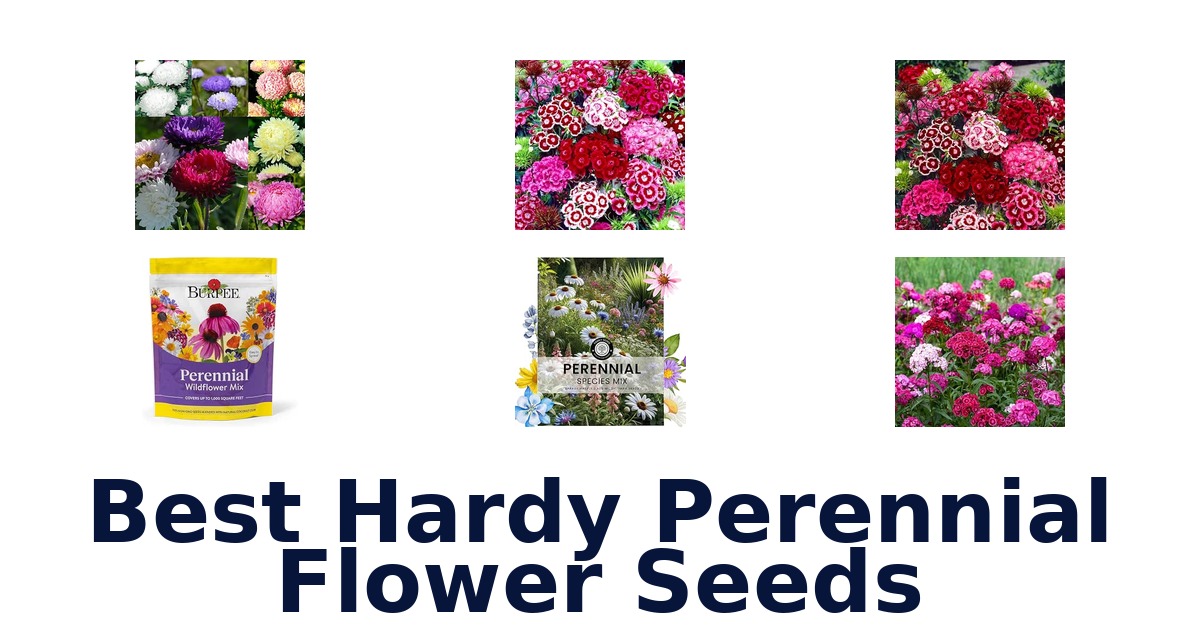
A strong choice in hardy perennial flower seeds matches your climate and garden space, with clear information about hardiness, bloom type, and sowing needs. This selection includes broad wildflower mixes, named flowers such as asters and Sweet William, and distinctive Billy Buttons. Some listings specify USDA zones, while others give a perennial label without a hardiness range, so those details are not equally clear.
Seed quantities also vary widely, from 200+ hibiscus seeds to 25,000 wildflower seeds, but more seeds do not necessarily mean a better fit. Use the ranked picks to narrow your options by climate information, flower style, and intended planting area.
Before sowing, check each packet’s instructions and confirm the plants suit your local conditions.
Outsidepride Sweet William is the best overall choice for gardeners who want a clearly specified hardy perennial. Its listing gives USDA zones 3–9, describes winter hardiness and drought tolerance, and notes fragrant blooms on plants 18–24 inches tall. Those details make it easier to assess climate fit and garden placement than listings that simply call seeds perennial.
For a mixed planting instead, compare it with the broad wildflower mixes, which offer more variety but less specific zone guidance.
Our Top Picks
 Best Overall
Its USDA zones 3–9, stated winter hardiness and drought tolerance, and fragrant 18–24-inch blooms make climate fit unusually clear.
View on Amazon Widest Zone Range
The listing specifies USDA zones 2–8 and an eight-week cold stratification step, plus pollinator appeal and a growing guide.
View on Amazon Cold Climate Pick
This mix is listed as cold hardy for USDA zones 3–8 and includes 1,000+ seeds in purple, pink, white, and lavender.
View on Amazon- Largest Seed Count Burpee Perennial Wildflower Mix
- Broadest Mix Family Sown Perennial Species Mix
Compare These Hardy Perennial Flower Seeds
| # | Product | Material Feature | Material Features | Buy |
|---|---|---|---|---|
| 1 | 1. Outsidepride Sweet WilliamBest Overall | GMO Free | GMO Free | View on Amazon |
| 2 | 2. KVITER New England AsterWidest Zone Range | GMO Free, Heirloom | GMO Free, Heirloom | View on Amazon |
| 3 | 3. Mixrug New England AsterCold Climate Pick | Organic | Organic | View on Amazon |
| 4 |  4. Burpee Perennial Wildflower MixLargest Seed Count | GMO Free | GMO Free | View on Amazon |
| 5 |  5. Family Sown Perennial Species MixBroadest Mix | — | — | View on Amazon |
| 6 |  6. Outsidepride Billy ButtonSpherical yellow cut-flower accents | GMO Free | GMO Free | View on Amazon |
| 7 |  7. BuggyBeds Dutch AsterLate-season butterfly-friendly beds | — | — | View on Amazon |
| 8 |  8. BuggyBeds DianthusFragrant container and border blooms | — | — | View on Amazon |
| 9 |  9. Mixrug Sweet WilliamFragrant biennial border planting | GMO Free | GMO Free | View on Amazon |
| 10 |  10. CarpetC Mixed HibiscusLarge summer garden focal points | GMO Free | GMO Free | View on Amazon |
Detailed Reviews: Best Hardy Perennial Flower Seeds
#1 · Best Overall
1. Outsidepride Sweet William
- Material Feature: GMO Free
- Material Features: GMO Free
Best for: Cold-climate fragrant cut flowers.
Why it ranks #1: Its USDA zones 3–9, stated winter hardiness and drought tolerance, and fragrant 18–24-inch blooms make climate fit unusually clear.
Sweet William’s stated USDA Zones 3–9 hardiness gives this Outsidepride mix a broad climate range, while its fragrant, vibrant blooms bring scent and color to perennial beds. At 18–24 inches tall, the plants can add vertical interest, and their pollinator appeal makes them useful beyond their ornamental role.
The listed zone range and winter hardiness support gardeners planning a perennial display in cooler as well as warmer climates; drought tolerance also reduces dependence on frequent watering once plants are established. Sweet William’s 18–24-inch height adds a taller layer to borders, while sturdy stems support blooms for cut arrangements. Fragrant clusters attract pollinators, combining garden color with wildlife interest. The product’s care guidance calls for well-drained soil, so site preparation should account for drainage rather than persistently wet ground.
- Hardy in USDA Zones 3–9
- Drought tolerant
- 18–24-inch plants add vertical interest
- Fragrant blooms attract pollinators and have sturdy stems for arrangements
- Requires well-drained soil.
Skip it if you cannot provide well-drained soil; the product’s care instructions specify drainage as a growing requirement.
Choose Outsidepride Sweet William for a fragrant, winter-hardy border that can also supply cut flowers and pollinator interest. Its 18–24-inch stature suits layered beds, while gardeners should provide well-drained soil for the listed growing conditions.
Full product details
| Brand | Outsidepride |
|---|---|
| Color | Mix |
| Manufacturer | Outsidepride |
| Part Number | FBA_OUT-3240 |
| Material Feature | GMO Free |
| Material Features | GMO Free |
| Special Features | Seeds |
| Care Instructions | Well-drained |
| Special Feature | Seeds |
| Style Name | Sweet William |
Listed on Amazon as: Outsidepride Sweet William Dianthus Seeds – 5000 Pcs. Perennial, Winter Hardy Wildflower Seeds w/Fragrant & Vibrant Blooms, Ideal for Pollinator Gardens, Cut Flowers & Colorful Landscaping
View on Amazon#2 · Widest Zone Range
2. KVITER New England Aster
- Material Feature: GMO Free, Heirloom
- Material Features: GMO Free, Heirloom
Best for: Cold-stratified New England asters.
Why it ranks #2: The listing specifies USDA zones 2–8 and an eight-week cold stratification step, plus pollinator appeal and a growing guide.
KVITER’s New England aster seeds are listed for USDA Zones 2–8 and specify an eight-week cold-stratification period, giving gardeners a clear starting requirement for this purple perennial. The included growing guide and shallow sowing direction help translate that preparation into fall or spring planting.
Cold stratification for eight weeks is an important planning step before sowing, while the stated sowing depth of just under one-eighth inch helps keep the seeds positioned as instructed. Fall or spring sowing offers two seasonal windows, and the listed options include containers, pods, and outdoor beds. The purple aster blooms attract bees and butterflies, adding pollinator value to the planting. With Zones 2–8 specified and a growing guide included, this listing gives both climate and process details for planning.
- Listed for USDA Zones 2–8
- Growing guide included
- Suitable for fall or spring sowing
- Attracts bees and butterflies
- Seeds require eight weeks of cold stratification before sowing.
Skip it if you cannot set aside eight weeks for cold stratification; the listed germination process requires that preparation.
Choose KVITER New England asters if you want a purple, pollinator-attracting perennial and can schedule the specified cold stratification. Its zone range and growing guide support planning, but the eight-week preparation step is a real part of the process.
Full product details
| Brand | KVITER |
|---|---|
| Color | Purple |
| Manufacturer | KVITER |
| Material Feature | GMO Free, Heirloom |
| Material Features | GMO Free, Heirloom |
| Special Features | Attracts Pollinators, Compact, Growing Guide Included, Low Maintenance, Made in the USA |
| Care Instructions | Detailed Step-By-Step Growing Guide on every seed packet — plant with confidence and watch it thrive. See more |
| Special Feature | Attracts Pollinators, Compact, Growing Guide Included, Low Maintenance, Made in the USA |
| Style Name | New England Aster |
Listed on Amazon as: 600 New England Aster Heirloom Flower Seeds, Aster Novae-Angliae
View on Amazon#3 · Cold Climate Pick
3. Mixrug New England Aster
- Material Feature: Organic
- Material Features: Organic
Best for: Cold-winter aster borders.
Why it ranks #3: This mix is listed as cold hardy for USDA zones 3–8 and includes 1,000+ seeds in purple, pink, white, and lavender.
Mixrug’s New England aster mix is listed for USDA Zones 3–8, making cold hardiness its clearest advantage for northern perennial gardens. More than 1,000 mixed-color seeds can produce daisy-like flowers in purple, pink, white, and lavender, bringing variety to a planting intended to return each spring.
The stated hardiness across Zones 3–8 makes this aster selection relevant to gardeners who need flowers suited to harsh winters. Its mixed palette and yellow-centered, daisy-like blooms create a varied display without relying on a single flower color. The listing describes the perennial as returning stronger each spring, and its extended-bloom-time feature points to a longer seasonal presence. With more than 1,000 seeds, the packet quantity supports a larger bed or multiple planting areas rather than just a small accent.
- Listed as cold hardy in USDA Zones 3–8
- More than 1,000 mixed aster seeds
- Purple, pink, white, and lavender flower colors
- Perennial described as returning each spring
- The supplied details do not specify mature plant height.
Skip it if you need mature-height information to plan exact spacing; this listing provides no plant-height specification.
Choose Mixrug asters for a cold-climate garden seeking mixed colors and a perennial display across Zones 3–8. The generous seed count fits broader planting plans, but gardeners who need exact spacing should note that mature height is not supplied.
Full product details
| Brand | Mixrug |
|---|---|
| Color | Mixed |
| Manufacturer | Mixrug |
| Part Number | LYJ-1107-CJS8320093 |
| Material Feature | Organic |
| Material Features | Organic |
| Special Features | Extended Bloom Time |
| Special Feature | Extended Bloom Time |
Listed on Amazon as: 1000+ Mix Aster Flower Seeds Perennial,New England Asters Seeds for Planting Cold Hardy & Pollinator Friendly Non-GMO Heirloom Seed for Home Outdoor Garden
View on Amazon#4 · Largest Seed Count
4. Burpee Perennial Wildflower Mix
- Material Feature: GMO Free
- Material Features: GMO Free
Best for: Pollinator-focused mixed borders.
Why it ranks #4: Its 25,000-seed bulk bag combines a dozen-plus wildflower favorites in a sun-loving perennial mix for pollinators and people.
Burpee’s perennial mix combines 18 wildflower varieties in a bulk bag of 25,000 seeds, giving gardeners one sowing choice for a diverse, sun-loving display. The blend includes familiar flowers such as cornflower and zinnia, with varied colors, forms, scents, and bloom times that can feed bees and butterflies.
The mix’s diversity of flowering plants provides pollen and nectar for bees, butterflies, and other helpful garden visitors, while different flower forms and bloom times add variety across the display. Its bulk quantity suits gardeners establishing a larger patch rather than a few isolated pots. Burpee describes it as early-blooming and carefree; however, seedlings need attention at the start, since the care guidance says to keep soil from drying out during the first few weeks.
- 18 varieties create a varied wildflower planting
- 25,000 seeds support broad coverage
- Includes pollen- and nectar-producing flowers for pollinators
- Mix includes cornflower and zinnia
- Seedlings need consistently moist soil during their first few weeks.
Skip it if you want a small, single-variety planting; this bulk mix contains 25,000 seeds across 18 wildflower varieties.
Choose Burpee if you want a broad, sun-loving perennial wildflower patch with varied blooms and pollinator forage. Its large seed quantity and early seedling moisture needs make it a better fit for prepared garden space than a tiny container.
Full product details
| Brand | Burpee |
|---|---|
| Color | Perennial Mix |
| Included Components | seeds |
| Manufacturer | Burpee |
| Part Number | 13220D |
| Material Feature | GMO Free |
| Material Features | GMO Free |
| Model Number | Perennial Wildflower Seeds Mix | |
| Special Features | Heirloom Seeds, Non-GMO, Organic Seeds |
| Care Instructions | Do not allow the soil to dry out during the first few weeks. Seedlings are vulnerable and need plenty of attention. A light covering of peat moss could be used to mulch and hold water. See more |
| Special Feature | Heirloom Seeds, Non-GMO, Organic Seeds |
| Style Name | Perennial Mix |
Listed on Amazon as: Burpee Wildflower 25,000 Bulk, 1 Bag | 18 Varieties of Non-GMO Flower Seeds Pollinator Garden, Perennial Mix
View on Amazon#5 · Broadest Mix
5. Family Sown Perennial Species Mix
Best for: Large naturalized wildflower areas.
Why it ranks #5: The perennial species blend offers over 2,500 seeds and is described for a 20-square-foot area, borders, and naturalized planting.
A 5-gram envelope containing over 2,500 seeds is the practical draw of FAMILY SOWN’s perennial species mix, with the listing indicating coverage for 20 square feet. It suits gardeners filling a border or naturalized area with a hardy blend intended to return with color year after year.
The stated coverage gives a concrete starting point for laying out a 20-square-foot planting, while the perennial mix is presented as a low-maintenance option for long-lasting flower beds. Its suggested uses include borders and naturalized areas, and the flowers are described as attracting pollinators. Detailed planting instructions on the packet can guide preparation for the included varieties, helping gardeners follow the seed-specific directions rather than rely on a generic sowing method. The product description identifies the blend as a mix, not a single named flower.
- Over 2,500 seeds in a 5-gram envelope
- Listed coverage of 20 square feet
- Perennial mix intended to bloom year after year
- Planting instructions included on the packet
- The supplied details do not name the flower species in the mix.
Skip it if you want to select a specific flower species; this product is described as a perennial mix without named varieties.
Choose FAMILY SOWN for filling a measured border or naturalized patch with a perennial wildflower blend and packet planting guidance. It is a practical fit for mixed planting, but not for gardeners who need a specified species list.
Full product details
| Brand | FAMILY SOWN |
|---|---|
| Manufacturer | FAMILY SOWN |
| Part Number | FSW033-ENV-odd |
Listed on Amazon as: Perennial Species Mix – Large 5g Envelope – 2,500 Flower Seeds for Planting – Wildflower Mix
View on Amazon#6
6. Outsidepride Billy Button
- Material Feature: GMO Free
- Material Features: GMO Free
Best for: Spherical yellow cut-flower accents.
Why it ranks #6: This perennial is described as drought tolerant, with distinctive yellow spherical blooms, a 24-inch height, and cut-flower appeal.
Billy Button’s bright yellow, spherical flower heads give this Craspedia a distinctive shape for summer beds and cut-flower displays. The plants reach 24 inches, and the listing describes the ornamental blooms as lasting through summer, offering a compact vertical accent with a form unlike typical open-faced flowers.
The one-inch flower heads form globe-like clusters, creating an easily recognized focal detail in outdoor displays and arrangements. At 24 inches tall, the plants add height without requiring the scale of a much taller shrub, while the product identifies them as perennial, hardy, and drought tolerant. The listing also points to pollinator gardens as a suitable use. Its 1,000-seed quantity supports planting more than a single isolated specimen, though the supplied details do not state a hardiness-zone range.
- Distinctive spherical yellow flower heads
- Plants reach 24 inches tall
- Listed as hardy and drought tolerant
- Suitable for cut-flower and pollinator gardens
- No USDA hardiness-zone range is specified.
Skip it if you need a documented USDA zone range before sowing; this listing gives no hardiness-zone specification.
Pick Outsidepride Billy Buttons for a sunny display that benefits from unusual yellow globes, summer color, and cut-flower potential. The listed 24-inch height can add a mid-height accent, but gardeners should note the missing zone range.
Full product details
| Brand | Outsidepride |
|---|---|
| Color | Yellow |
| Item Weight | 4.54 g |
| Manufacturer | Outsidepride |
| Part Number | OUT-1489 |
| Material Feature | GMO Free |
| Material Features | GMO Free |
| Special Features | Seeds |
| Special Feature | Seeds |
#7
7. BuggyBeds Dutch Aster
Best for: Late-season butterfly-friendly beds.
Why it ranks #7: The 1,000-seed perennial aster is presented as low maintenance and a late-summer-to-autumn nectar source, though no USDA zone is listed.
BuggyBeds Dutch asters are described as supplying nectar in late summer and autumn as other flowers fade, making seasonal timing their clearest garden advantage. The 1,000-plus non-GMO seeds are listed as perennial and low maintenance, with colorful blooms and butterfly-attracting appeal for outdoor beds.
The late-season nectar detail gives these asters a role in extending pollinator forage when other flowers are fading, while the listed butterfly attraction adds a specific wildlife benefit. More than 1,000 seeds can support a broader outdoor bed rather than only a single accent. The product also identifies the variety as perennial and low maintenance, which suits gardeners seeking recurring seasonal color without a complex care profile. The supplied details do not provide a USDA zone range, so climate matching cannot be assessed from this listing alone.
- More than 1,000 Dutch aster seeds
- Perennial variety listed as low maintenance
- Provides nectar in late summer and autumn
- Attracts butterflies
- No USDA hardiness-zone range is specified.
Skip it if you need a stated USDA hardiness zone to match seeds to your climate; this listing supplies no zone range.
Choose BuggyBeds Dutch asters to add colorful, perennial flowers and late-season nectar to an outdoor bed, especially where butterfly interest matters. Their low-maintenance listing is appealing, but gardeners needing zone-specific guidance should seek a stated range.
Full product details
| Brand | BuggyBeds |
|---|---|
| Color | colorful |
| Item Weight | 13.61 g |
| Manufacturer | BuggyBeds |
| Special Features | Low Maintenance |
| Special Feature | Low Maintenance |
Listed on Amazon as: 1000+ Dutch Aster Seeds for Planting – Perennial Hardy Flower, Butterfly Magnet & Pollinator Friendly, with Vibrant Blooms, Ideal for Outdoor Home Gardens & Flower Beds
View on Amazon#8
8. BuggyBeds Dianthus
Best for: Fragrant container and border blooms.
Why it ranks #8: The listing calls this 5,000-seed Dianthus a fragrant hardy perennial for borders, containers, and cut flowers, but gives no zone range.
Five thousand Dianthus seeds pair fragrant blooms with planting flexibility, letting gardeners carry one perennial flower choice from borders and flower beds to containers and rock gardens. BuggyBeds highlights the flowers’ sweet scent as well as their hardy character, making fragrance a central reason to select this seed option.
The stated 5,000-seed quantity gives gardeners material for establishing displays across multiple growing seasons, rather than limiting the choice to a single small planting. Dianthus is listed for borders, containers, rock gardens, and flower beds, so the same flower type can suit varied garden layouts. Its sweet fragrance adds an aromatic element alongside the blooms. The supplied details do not specify a hardiness zone or planting depth, so this listing is best judged on scent, quantity, and versatility.
- 5,000 seeds for extensive planting
- Sweetly fragrant flowers
- Suitable for borders and flower beds
- Can be planted in containers and rock gardens
- No USDA hardiness zone is specified in the supplied product details.
Skip it if you need a stated USDA hardiness range before choosing seeds; this listing gives no zone information.
Pick BuggyBeds Dianthus if fragrance and flexible placement matter for borders, containers, rock gardens, or beds. It suits gardeners seeking a generous seed quantity, but those who need a documented hardiness zone should use a listing that supplies one.
Full product details
| Brand | BuggyBeds |
|---|---|
| Manufacturer | BuggyBeds |
| Special Features | Fragrant |
| Special Feature | Fragrant |
Listed on Amazon as: Dianthus Seeds 5000PCS– Fragrant Perennial Flower Seeds for Planting | Hardy Garden Blooms for Borders, Containers & Cut Flowers
View on Amazon#9
9. Mixrug Sweet William
- Material Feature: GMO Free
- Material Features: GMO Free
Best for: Fragrant biennial border planting.
Why it ranks #9: It offers 5,000+ fragrant, pollinator-attracting seeds and lists zones 4–10, but its description calls the flower biennial rather than perennial.
Mixrug Sweet William reaches 12–24 inches and blooms the year after planting, helping gardeners plan a fragrant mid-spring-to-mid-summer display with a defined schedule. Its clusters come in white, pink, purple, red, and violet, while the biennial flowers are listed as a draw for beneficial insects.
The stated 12–24-inch height and 6–12-inch width help with placement in beds and borders, and the product also lists cut flowers as a use. Because blooms arrive the year after planting, this is a choice for gardeners willing to wait through the first growing season rather than seeking immediate flowers. Full sun and good drainage are specified, giving a clear site requirement. The 5,000-plus seed quantity offers scope for more than a small cluster, while fragrant multicolor blooms add sensory and visual interest.
- More than 5,000 seeds
- Fragrant flower clusters in five listed color shades
- 12–24 inches tall and 6–12 inches wide
- Suitable for beds, borders, and cut flowers
- Blooms the year after planting, not in the first season.
Skip it if you need flowers in the planting year; Mixrug Sweet William is listed to bloom the following year.
Pick Mixrug Sweet William if you can plan ahead for next year’s fragrant blooms and have a full-sun, well-drained bed or border. Its stated dimensions and cut-flower use help with placement, but it is not an immediate-bloom choice.
Full product details
| Brand | Mixrug |
|---|---|
| Color | Gazania |
| Manufacturer | Mixrug |
| Part Number | LYJ-1021-GS03905-02 |
| Material Feature | GMO Free |
| Material Features | GMO Free |
| Special Features | Attracts Pollinators |
| Special Feature | Attracts Pollinators |
Listed on Amazon as: 5000+ Sweet William Seeds Perennial for Planting-Dianthus Seeds Sweetness Flower Non-GMO Heirloom for Outdoor Garden Hardy to USDA Zones 3-9
View on Amazon#10
10. CarpetC Mixed Hibiscus
- Material Feature: GMO Free
- Material Features: GMO Free
Best for: Large summer garden focal points.
Why it ranks #10: The listing calls it hardy perennial, but its additional description emphasizes tropical hibiscus and warm temperatures, leaving cold-climate suitability unclear.
Hibiscus blooms can reach 12 inches across, giving this mixed-color seed collection the scale to anchor a sunny border or pond-side planting. Plants grow upright and bushy to 3–8 feet, while summer-to-frost flowering offers an extended seasonal display despite each individual bloom lasting just one day.
The large, saucer-shaped flowers provide a prominent focal point, and continuous flowering from summer until frost keeps new blooms coming after individual flowers fade. The 3–8-foot mature height and bushy habit suit borders, rain gardens, and pond margins, with containers also listed as an option. For seed starting, the product specifies soaking seeds in warm water for 24 hours before planting; that preparation step is part of the workflow. It also identifies nectar-rich blooms as attractive to hummingbirds and butterflies.
- Flowers grow up to 12 inches across
- Plants reach 3–8 feet tall
- Listed for borders, containers, rain gardens, and pond margins
- Flowers from summer until frost
- Each individual flower lasts only one day.
Skip it if you want each flower to remain open for several days; these hibiscus blooms last one day, though plants flower continuously.
Select these hibiscus seeds for a sunny garden spot where giant blooms and a tall, bushy habit can make a focal display. Allow room for plants that reach 3–8 feet, and plan to soak seeds before planting.
Full product details
| Brand | Carpet Creeping |
|---|---|
| Color | Hibiscus |
| Manufacturer | Carpet Creeping |
| Part Number | Hibiscus Mixed Seeds200 |
| Material Feature | GMO Free |
| Material Features | GMO Free |
| Special Features | Attracts Pollinators, Extended Bloom Time |
| Care Instructions | water |
| Special Feature | Attracts Pollinators, Extended Bloom Time |
Listed on Amazon as: CarpetC 200+ Hibiscus Seeds Mixed Colors for Planting – Hardy Perennial Giant Flower, Non-GMO Heirloom with for Home, Outdoor Gardens & Borders
View on AmazonAvoid the Perennial Label Trap
A perennial label alone does not establish that a flower will overwinter in your garden. Look for a USDA zone range and compare it with your location before choosing: Outsidepride Sweet William lists zones 3–9, while KVITER New England Aster lists zones 2–Even those ranges do not replace local growing instructions.
Another trap is relying on a product title when the detail is inconsistent: Mixrug Sweet William is titled perennial, but its description calls the flower biennial and says it blooms the year after planting. CarpetC Mixed Hibiscus is titled hardy perennial, yet its additional description stresses tropical hibiscus and warm temperatures.
Treat those conflicting claims as reasons to verify the seed packet and plant identity, rather than assuming winter survival. When zone details are absent, such as for several other picks here, the listing provides less basis for judging cold hardiness.
How to Choose Hardy Perennial Flower Seeds
Hardiness and climate clarity
Look first for a stated USDA zone range if winter survival is your priority. Outsidepride Sweet William lists zones 3–9, KVITER New England Aster lists 2–8, and Mixrug New England Aster lists 3–Mixrug Sweet William gives zones 4–10 but also describes the plant as biennial, so read beyond the title.
Several other options, including the Family Sown mix and BuggyBeds Dianthus, do not provide a zone range in the supplied details. Gardeners in colder areas may prefer the picks with explicit lower-zone guidance; in milder areas, a flower without a stated range may still be worth considering, but its hardiness is less certain from this information.
Seed quantity and planting scale
Choose seed quantity according to the area and variety of planting you want, not the biggest number alone. Burpee offers 25,000 seeds in a bulk wildflower mix, while Family Sown lists over 2,500 seeds and says the packet can transform 20 square feet. BuggyBeds Dianthus and Mixrug Sweet William each list 5,000 seeds, and the aster options include 600 or 1,000+ seeds.
These figures are not directly comparable because the products contain different flowers and the listings do not give consistent coverage estimates. A large mix suits a broad naturalized display; a smaller named-flower packet can be a better fit when you want one particular flower type.
Flower type and garden purpose
Match the flower to the display you want, since these seeds range from mixed wildflowers to individual species. Burpee and Family Sown offer perennial mixes for broad, varied plantings. The aster selections focus on New England or Dutch asters, while Outsidepride Sweet William highlights fragrant blooms and 18–24-inch height.
Billy Button stands out for yellow spherical blooms and cut-flower use; the hibiscus listing describes large flowers up to 12 inches across but has unclear cold-climate suitability. Buyers seeking varied color and a less uniform look may lean toward a mix, while gardeners planning borders, fragrant displays, or distinctive cut flowers may prefer a named type.
Which Perennial Flower Seeds Should You Choose?
Choose Outsidepride Sweet William if you want a named flower with a clear zones 3–9 range, winter-hardiness information, and fragrant blooms. For colder-climate guidance, KVITER New England Aster lists zones 2–8; its eight-week cold stratification requirement is important to factor into sowing. If you want a broad planting, Burpee Perennial Wildflower Mix supplies 25,000 seeds, while Family Sown Perennial Species Mix specifies coverage of 20 square feet.
Pick Mixrug New England Aster for a 1,000+ seed, multi-color aster option, or Outsidepride Billy Button for spherical yellow blooms and stated drought tolerance. BuggyBeds Dianthus suits buyers seeking fragrance, but lacks a zone range.
Treat CarpetC Mixed Hibiscus cautiously if cold hardiness is essential because its listing also describes tropical growing conditions.
Frequently Asked Questions
When should I sow perennial flower seeds for the best chance of establishment?
Sow when the conditions and timing on the seed packet suit your local climate. Perennial seeds vary in their needs, and some may require preparation before planting. Check the instructions for sowing depth, temperature, and any cold stratification guidance, then allow seedlings time to establish before challenging weather arrives.
How can I tell whether a perennial seed mix will return in my local climate?
Look for a stated hardiness range and compare it with your local conditions; a mix without zone guidance is harder to assess. The listings vary in detail: Outsidepride Sweet William specifies zones 3–9, while broad mixes may offer variety without the same clear climate information. Check each listed species when possible.
How much garden area will a packet of perennial flower seeds cover?
Use the packet’s stated coverage when available, since seed counts alone do not establish how much ground a planting will fill. Family Sown Perennial Species Mix specifies 20 square feet. Other listings give counts, such as 25,000 seeds for Burpee’s mix, but do not state coverage in the supplied details.
What should I check before choosing seeds for a cold climate?
Check both the listed hardiness zone and any sowing preparation requirements. KVITER New England Aster lists zones 2–8 and requires eight weeks of cold stratification, while Outsidepride Sweet William lists zones 3–9 and describes winter hardiness. Confirm that the range suits your location and that you can follow the preparation instructions.
When is a broad wildflower mix a better choice than a named flower?
Choose a broad mix when you want more variety across a planting; Burpee’s Perennial Wildflower Mix lists 18 varieties, and Family Sown’s mix specifies coverage of 20 square feet. Choose a named flower when its characteristics matter more, such as Sweet William’s stated zone range or Billy Button’s spherical yellow blooms.
Final Words
For the clearest climate guidance, choose Outsidepride Sweet William: its listing gives zones 3–9, winter hardiness, and fragrant blooms. For colder-climate guidance, compare KVITER New England Aster, while accounting for its eight-week cold stratification requirement. If variety or a broad planting matters more, consider the wildflower mixes and use stated coverage where available.
For any option, check the packet instructions and match its growing requirements to your garden before sowing.