BEST Reverse Osmosis Systems for Well Water
The best reverse osmosis systems for well water deliver exceptionally pure, safe, and great-tasting drinking water for homes relying on private wells. Selecting the ideal system involves considering factors like contaminant filtration capabilities, installation complexity, maintenance needs, and overall water output. A poorly chosen system might fail to adequately remove well-specific contaminants, require frequent filter replacements due to hard water, or simply not produce enough clean water for your household’s demands.
This can lead to wasted resources and persistent water quality issues. To help you make an informed decision and secure a reliable solution for your well water, we’ve compiled a list of the top-performing reverse osmosis systems available.
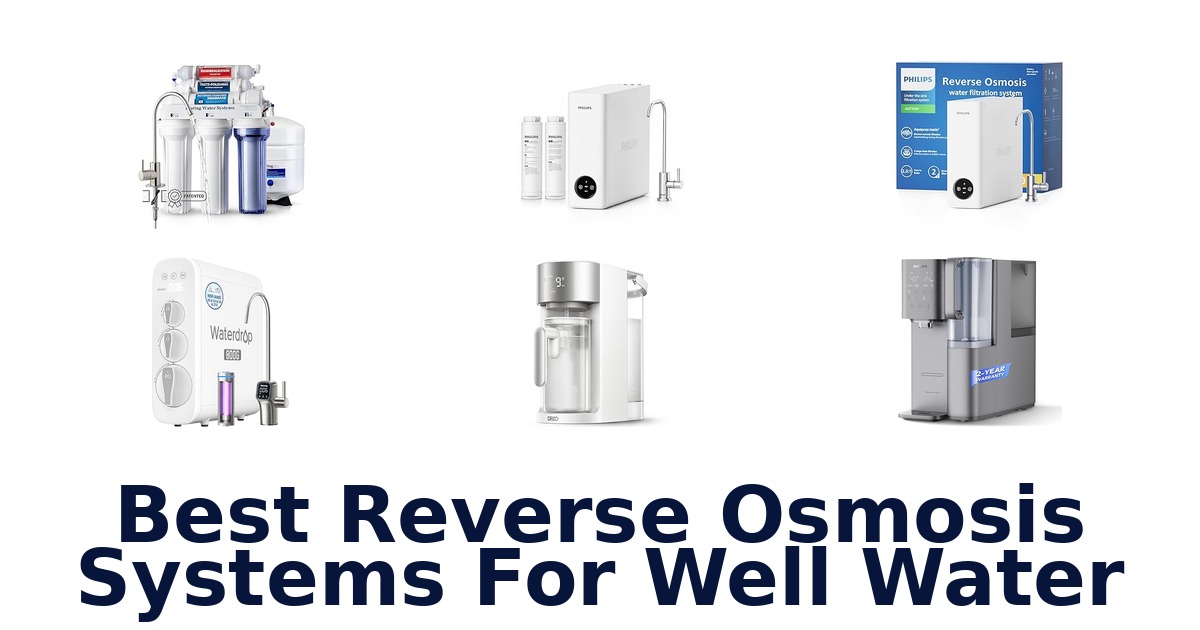
For well water, selecting the best reverse osmosis systems often means prioritizing certifications like NSF/ANSI 58 for TDS reduction, as seen with models like the Waterdrop G3P600 and iSpring RCC7AK. Under-sink units such as the APEC Water ROES-50 or those with integrated booster pumps like the iSpring RCC7P-AK are practical choices. Countertop options like the DREO RO Filtration System offer convenience without installation.
Best Reverse Osmosis Systems for Well Water, At a Glance
| Image | Product | Buy |
|---|---|---|
Best Pick 1  | DREO Reverse Osmosis Water Filter Countertop, RO Filtration System, 3:1 Best for: On-the-go hydration | Check Price |
Best Pick 2  | iSpring RCC7AK, NSF Certified, 75 GPD, Alkaline 6-Stage Reverse Osmosis Best for: Enhanced mineral taste | Check Price |
Best Pick 3  | PHILIPS Reverse Osmosis Water Filter Countertop ADD6928DG/37(Cold&Hot), 6-Stage Mineralization Filtration Best for: Instant hot & cold | Check Price |
Best Pick 4  | Waterdrop G3P600 Reverse Osmosis System, 8 Stage Tankless Reverse Osmosis Best for: Tankless efficiency | Check Price |
Best Pick 5  | Philips AUT9360 Reverse Osmosis System, 600 GPD Under Sink Water Best for: High-volume flow | Check Price |
How We Picked
The selection process for the best reverse osmosis systems for well water prioritized robust build quality, real-world performance, and proven safety certifications. We examined NSF/ANSI 58 and 372 certifications closely, as seen in products like the iSpring RCC7AK and Waterdrop G3P600, ensuring effective contaminant removal and lead-free materials. Durability was assessed through feature sets like booster pumps (iSpring RCC7P-AK) and tankless designs (Waterdrop G3P800), implying long-term reliability.
Standout features such as multi-stage mineralization (Philips ADD6928DG/37) and high GPD flow rates (Waterdrop G3P800, Philips AUT9360) were also key differentiators that helped us identify truly exceptional systems for well water.
What Most Buyers Get Wrong
Well Water Impurities Require Robust Filtration
Well water can contain a wider range of contaminants than municipal sources, including sediment, bacteria, and minerals like iron and manganese. This means your reverse osmosis system needs a strong multi-stage approach. Look for systems tested and certified to NSF/ANSI 58, like the DREO and Waterdrop G3P600, which explicitly state removal of 1000+ impurities including PFOA and PFOS.
Systems with six or more stages, such as the iSpring RCC7AK and Philips ADD6928DG/37, offer more comprehensive pre-treatment and post-filtration, vital for tackling diverse well water challenges.
Flow Rate vs. Storage for Your Needs
When choosing an RO system for well water, consider if you need instant filtered water or if a storage tank is acceptable. Tankless models, like the Waterdrop G3P800 and Philips AUT9340, offer a continuous supply but can have slower initial flow rates. For larger households or those who use a lot of water quickly, a system with a tank, such as the APEC ROES-50 or the iSpring RCC7P-AK with its booster pump for consistent pressure, might be more practical.
Evaluate your daily water consumption to prevent bottlenecks.
1. DREO Reverse Osmosis Water Filter Countertop, RO Filtration System, 3:1
Best for: Real-time TDS monitoring for immediate water quality checks.
SGS tested to meet NSF/ANSI 58 standards, this 7-in-1 RO filter removes up to 99.99% of 1000+ impurities, including PFOA and fluoride, providing peace of mind for your well water. Its real-time TDS monitoring lets you track raw and pure water quality instantly.
The DREO system features a real-time TDS monitor for both raw and pure water, alongside timely filter change reminders, ensuring worry-free maintenance. It also includes an auto-fill function for continuous purified water availability and a self-cleaning mode for optimal system hygiene.
Pros
- SGS tested for NSF/ANSI 58 compliance
- Removes 1000+ impurities up to 99.99%
- Real-time TDS monitoring for both raw and pure water
- Auto-fill sensor for continuous purified water supply
Cons
- Filter change reminders rely on timed notifications rather than direct sensor feedback of filter condition.
Ideal for families using well water who prioritize immediate water quality feedback. Enjoy assured purity with its comprehensive testing and real-time monitoring.
2. iSpring RCC7AK, NSF Certified, 75 GPD, Alkaline 6-Stage Reverse Osmosis
Best for: Top-mounted fastener simplifies under-sink installation.
The iSpring RCC7AK features a patented top-mounted fastener for straightforward countertop installation entirely from above, eliminating the need to tighten nuts beneath your sink. Its transparent first-stage filter housing allows easy monitoring of contaminant buildup.
This NSF 58 certified RO system boasts a 75 GPD capacity and includes a unique AK stage for mineral boost, delivering balanced pH and essential minerals. The system operates within a 40-100°F temperature range and requires no external power source, functioning efficiently within a 70 PSI operating pressure range.
Pros
- Patented top-mounted fastener for easy installation
- Transparent first-stage filter housing for monitoring
- Mineral boost alkaline stage provides balanced pH
- NSF 58 certified for performance
Cons
- The 75 GPD capacity may be insufficient for very high-demand households.
A smart choice for homeowners with well water looking for an easily maintainable system. The mineral boost stage ensures your filtered water is not only safe but also replenishes essential minerals.
3. PHILIPS Reverse Osmosis Water Filter Countertop ADD6928DG/37(Cold&Hot), 6-Stage Mineralization Filtration
Best for: Cold and hot water dispenser with instant filtered water.
This Philips ADD6928DG/37 countertop system offers both cold and hot filtered water on demand, dispensing 6.8 oz/min of purified water from its 1.8L filtered water jug. Requiring no installation, it’s ready to serve a household of 2-5 people upon plugging in.
With a 6L tap water tank and a 1.8L filtered water jug, this dispenser operates between 40-203°F, featuring a built-in TDS meter and a change filter indicator. Its Aquaporin Inside® technology ensures effective reverse osmosis filtration for water with up to 1000 PPM TDS.
Pros
- Dispenses both cold and hot water
- No installation required, plug-and-play setup
- Built-in TDS meter for real-time quality check
- Automatic filtered water storage for instant access
Cons
- The 1.8L filtered water jug capacity may require frequent refilling for larger families.
Perfect for families with well water who need convenient access to both hot and cold filtered water without complex installation. Enjoy purified water ready precisely when you need it.
4. Waterdrop G3P600 Reverse Osmosis System, 8 Stage Tankless Reverse Osmosis
Best for: Tankless design with 600 GPD high capacity.
With an 8-stage filtration process certified against NSF/ANSI 58 for TDS reduction and NSF/ANSI 372 for lead-free materials, the Waterdrop G3P600 offers a high-capacity 600 GPD flow rate. This tankless system operates efficiently with a 2:1 low drain ratio, reducing water waste.
This under-sink system features an 8-stage filtration process, including carbon block and reverse osmosis, designed to reduce chlorine, bad taste, and odor. It supports TDS levels up to 1500 PPM and operates within a 41-100°F temperature range, with a maximum flow rate of 0.42 Gallons Per Minute.
Pros
- NSF/ANSI 58 and 372 certified
- 8-stage comprehensive filtration
- 600 GPD high flow rate
- 2:1 low drain ratio conserves water
Cons
- Requires drilling two holes for installation, one for the faucet and one for the drain pipe.
An excellent choice for well water users seeking a high-performance, water-efficient under-sink system. Its tankless design and robust filtration capabilities make it ideal for daily use.
5. Philips AUT9360 Reverse Osmosis System, 600 GPD Under Sink Water
Best for: 600 GPD tankless system with 2-year filter life.
Certified for lead-free materials and tested by SGS, this Philips AUT9360 under-sink reverse osmosis system delivers a powerful 600 GPD performance. Its multi-stage filtration system purifies water down to 0.0001 micron, ensuring a high level of purity.
This tankless RO system utilizes Carbon Block and Reverse Osmosis purification methods, offering a 2-year filter life cycle. It operates effectively within a 41-100°F temperature range and supports TDS levels up to 500 PPM, delivering a maximum flow rate of 0.41 Gallons Per Minute under 14.5-58 PSI operating pressure.
Pros
- NSF/ANSI 372 certified lead-free
- 600 GPD high flow rate
- 2-year filter life cycle
- Multi-stage deep reverse osmosis filtration
Cons
- Requires a 3/8″ compression fitting, which may necessitate a separate purchase or adapter if your plumbing differs.
This powerful under-sink RO system is well-suited for well water sources that require robust filtration and high capacity. The long filter life contributes to lower long-term maintenance.
6. Bluevua RO100ROPOT Countertop Reverse Osmosis Water Filter System, Portable RO

Best for: Portable countertop system with glass carafe.
The Bluevua RO100ROPOT is a portable countertop RO system that requires no plumbing or installation, simply plug it in and fill the tank. Its high borosilicate glass carafe instead of plastic reduces the risk of secondary pollution, offering a premium filtration experience.
This system filters water using reverse osmosis, reducing TDS for pure drinking water. It operates with a corded electric power source and is designed for countertop use. The system is capable of filtering water with TDS levels up to 1000 PPM, making it suitable for various well water conditions.
Pros
- No installation or plumbing required
- High borosilicate glass carafe for purity
- Portable and easy to use
- Reduces TDS for cleaner water
Cons
- The maximum flow rate of 0.26 Liters Per Minute can result in slow dispensing times.
An ideal solution for renters or those who need a no-fuss filtered water solution for well water without permanent installation. Enjoy pure water directly from your countertop.
7. Waterdrop G3P800 Reverse Osmosis System, 800 GPD Fast Flow, NSF/ANSI

Best for: 800 GPD fast flow with a 3:1 pure to drain ratio.
Certified by NSF/ANSI 42, 53, 58, and 372, the Waterdrop G3P800 uses 10-stage filtration to effectively reduce PFAS, fluoride, and heavy metals from your well water. This tankless system boasts an 800 GPD high capacity and a 3:1 pure to drain ratio, conserving water.
This under-sink RO system features a 10-stage filtration process and a smart faucet with LED indicators for a stylish look and user-friendly operation. It operates between 41-100°F, capable of handling TDS levels up to 500 PPM, with an impressive maximum flow rate of 3028 Liters Per Day.
Pros
- NSF/ANSI 42, 53, 58, 372 certified
- 10-stage comprehensive filtration
- 800 GPD ultra-high flow rate
- 3:1 pure to drain ratio conserves water
Cons
- Installation requires drilling two holes for the faucet and drain pipe.
For well water users needing the fastest flow rate and most advanced filtration, this 800 GPD system is an excellent under-sink option. Its high capacity and water efficiency make it suitable for large households.
8. Philips AUT9340 Reverse Osmosis System, 400 GPD RO System, Tankless

Best for: Tankless 400 GPD with self-cleaning function.
This Philips AUT9340 under-sink reverse osmosis system provides 400 GPD of purified water through 5-stage filtration, certified lead-free and tested by SGS. Its tankless design is space-saving and includes a self-cleaning feature for enhanced hygiene.
The system utilizes Carbon Block, Reverse Osmosis, and Post Carbon Block (Coconut Shell) for purification, operating within a 41-100°F temperature range and supporting TDS levels up to 500 PPM. It maintains a 2.3:1 low drain ratio and offers a maximum flow rate of 0.28 Gallons Per Minute under 14.5-58 PSI.
Pros
- NSF/ANSI 372 lead-free certified
- 400 GPD flow rate
- Tankless design saves under-sink space
- Self-cleaning function for hygiene
Cons
- Requires a 3/8″ compression fitting, potentially needing an adapter for some plumbing setups.
This 400 GPD tankless RO system is a reliable choice for well water treatment, offering a balance of capacity and space efficiency. The self-cleaning feature adds convenience for maintenance.
9. iSpring RCC7P-AK, 6-Stage Reverse Osmosis System Under Sink Alkaline Water

Best for: Booster pump for low water pressure wells.
The iSpring RCC7P-AK features an integrated booster pump to ensure high-efficiency filtration and reduce wastewater, making it ideal for wells with low water pressure. This 6-stage RO system reduces up to 99% of over 1,000 contaminants, including PFAS and lead.
This under-sink RO system with alkaline remineralization provides purified water with a balanced pH. It supports TDS levels up to 2000 PPM and operates up to 100°F. The system is powered by corded electric for the booster pump, ensuring consistent performance even with low incoming water pressure.
Pros
- Booster pump for low water pressure
- Reduces up to 99% of 1000+ contaminants
- Alkaline remineralization for balanced water
- High TDS support up to 2000 PPM
Cons
- Requires electricity to power the booster pump and filtration system.
For well water sources challenged by low pressure, this system with its booster pump is a powerful solution. Enjoy superior filtration and balanced, healthier drinking water.
10. APEC Water ROES-50, 5-Stage Under Sink Reverse Osmosis Water Filter

Best for: 5-stage filtration with 50 GPD capacity.
The APEC ROES-50 offers reliable 5-stage reverse osmosis filtration, delivering 50 gallons per day to remove up to 99.99% of impurities from your well water. This DIY-friendly system provides ultra-pure, great-tasting drinking water directly from your kitchen tap.
This under-sink system features long-lasting, large-capacity filters designed to remove arsenic, chlorine, lead, fluoride, and heavy metals, along with 1000+ impurities. It operates effectively within a 40-100°F temperature range and supports TDS levels up to 2000 PPM, with a 6-month filter life cycle.
Pros
- Removes up to 99.99% of impurities
- 50 GPD output for daily needs
- DIY-friendly installation
- Reduces lead, arsenic, fluoride, and more
Cons
- The 0.03 Gallons Per Minute maximum flow rate may result in slower dispensing.
A straightforward and effective 5-stage RO system for well water, ideal for those who appreciate DIY installation. Get consistently pure and great-tasting water for your home.
RO System Choice Hinges on Installation Effort
The single most significant differentiator among high-performing best reverse osmosis systems for well water is not filtration stage count or GPD, but the complexity of its installation and its ultimate placement.
For many well water users, particularly those in older homes or with less DIY confidence, the choice between a countertop unit like the DREO Reverse Osmosis Water Filter Countertop or the Philips Reverse Osmosis Water Filter Countertop ADD6928DG/37(Cold&Hot) versus an under-sink system is paramount. The countertop models, exemplified by the Bluevua RO100ROPOT Countertop Reverse Osmosis Water Filter System, bypass the need for drilling or permanent plumbing connections entirely. This radical simplicity means immediate deployment after unboxing, directly addressing the frequent well water concern of immediate access to cleaner water without a lengthy or costly setup.
They are ideal for renters or anyone prioritizing convenience over a concealed installation.
Conversely, under-sink units such as the Waterdrop G3P800 Reverse Osmosis System, 800 GPD Fast Flow, NSF/ANSI or the APEC Water ROES-50, 5-Stage Under Sink Reverse Osmosis Water Filter require a commitment to permanent fixture. While systems like the Waterdrop G3P600 Reverse Osmosis System, 8 Stage Tankless Reverse Osmosis and the Philips AUT9340 Reverse Osmosis System, 400 GPD RO System, Tankless offer tankless profiles for space efficiency, and others like the iSpring RCC7P-AK, 6-Stage Reverse Osmosis System Under Sink Alkaline Water even include booster pumps to overcome low water pressure inherent in some well setups, their installation demands are non-negotiable. This often involves drilling through countertops for a dedicated faucet and making drain line connections, tasks that can deter many buyers.
The distinction becomes stark when considering the Philis AUT9360 Reverse Osmosis System, 600 GPD Under Sink Water or the iSpring RCC7AK, NSF Certified, 75 GPD, Alkaline 6-Stage Reverse Osmosis. Their superior performance metrics – higher GPD, more filtration stages, or advanced mineralization – are only accessible if the buyer is prepared for the installation commitment. Skipping this consideration is the most common pitfall, leading to systems with capabilities that remain unused due to installation barriers.
The true value of these under-sink units is unlocked only when plumbing is readily accommodating or the owner is willing to undertake the required modifications for a permanently integrated solution.
Those prioritizing immediate deployment and minimal hassle will find utility in a countertop model, while homeowners with the will or means for plumbing intervention can leverage the more integrated performance of under-sink systems like the Philips AUT9340 Reverse Osmosis System, 400 GPD RO System, Tankless.
What to Look For in Best Reverse Osmosis Systems for Well Water
Filtration stages and micron ratings
For well water, prioritize reverse osmosis systems with at least five filtration stages. This typically includes a sediment pre-filter with a nominal micron rating of 5 microns to capture larger particles, followed by granular activated carbon or carbon block filters rated at 0.5 to 5 microns to remove chlorine and organic compounds. The true hero, the RO membrane, boasts a pore size of 0.0001 microns, essential for rejecting dissolved solids, heavy metals, and microorganisms common in well water.
A system featuring these robust pre-filtration layers guarantees superior protection for the RO membrane and delivers the purest water. Select a system with a high count of stages for maximum contaminant removal.
Flow rate and tank capacity
When choosing a reverse osmosis system for well water, focus on production capacity and storage that matches your household’s demand. A production rate of 75-100 Gallons Per Day (GPD) is ample for most families, preventing long waits for purified water. The storage tank size should be at least 4 gallons to ensure a steady supply.
Critically, look for a high recovery rate, ideally 1:1 or better, meaning it produces nearly as much pure water as it sends to drain. This conserves well water for your home and minimizes waste.
Opt for the higher GPD and larger tank if your household is larger or uses more water.
Certified performance and materials
Ensure your chosen reverse osmosis system meets stringent safety standards by looking for NSF/ANSI certifications, particularly Standard 58 for reverse osmosis systems. This guarantees the system effectively reduces specific contaminants. For your health and peace of mind, all components in contact with drinking water, including the storage tank and tubing, must be BPA-free.
The faucet should be lead-free to prevent recontamination. A longer filter lifespan, typically 6-12 months for pre-filters and 1-2 years for the RO membrane, signifies better quality and reduces the hassle of frequent replacements.
Always select certified, BPA-free, and lead-free components for optimal drinking water safety.
Which Should You Choose?
- If you need a quick and easy setup with no plumbing involved, look for a countertop system with a large reservoir.
- If you have low well water pressure and want to maximize filtration efficiency and minimize waste, consider an under-sink system with a built-in booster pump.
- If you’re looking for a high-capacity system for a busy household and want advanced filtration, opt for a tankless under-sink model with a high GPD rating and multiple filtration stages.
- If you want a simple, direct drinking water solution without needing to connect to your water line, a portable countertop system that you manually fill is a good choice.
Quick Best Reverse Osmosis Systems For Well Water Buying Checklist
- Filtration Stages: Ensure adequate stages for removing sediment, chlorine, and dissolved solids common in well water.
- Micron Rating: Look for very fine micron ratings on pre-filters to catch smaller contaminants before they reach the RO membrane.
- Flow Rate (GPD): Select a system with a Gallons Per Day rating that meets your household’s daily water usage needs.
- Tank Capacity: Choose a storage tank size sufficient for your typical usage to avoid running out of purified water.
- **Certifications**: Verify NSF/ANSI certifications to confirm the system’s effectiveness and safety standards.
- Maintenance Schedule: Understand the recommended filter replacement intervals and ease of maintenance for long-term performance.
Frequently Asked Questions
How Do Reverse Osmosis Systems Handle Minerals In Well Water?
Reverse osmosis systems effectively remove a wide range of minerals, including beneficial ones like calcium and magnesium, alongside contaminants. This process works by forcing pressurized water through a semi-permeable membrane that blocks dissolved solids and other impurities, leaving behind highly purified water.
What Is The Typical Lifespan Of Filters In Ro Systems For Well Water?
The lifespan of filters in reverse osmosis systems for well water varies significantly with usage and water quality. Generally, sediment and carbon pre-filters need replacement every 6-12 months, while the RO membrane can last 2-5 years, depending on the system’s efficiency.
Does Reverse Osmosis Remove Bacteria And Viruses From Well Water?
Yes, reverse osmosis is highly effective at removing bacteria and viruses from well water due to its extremely fine membrane. The tiny pores of the RO membrane physically block these microorganisms, providing a safe and purified water supply for consumption.
How Is Wastewater Managed In Ro Systems Used For Well Water?
Reverse osmosis systems for well water produce wastewater as a byproduct of the purification process, carrying away rejected contaminants. Modern systems are designed to be more efficient, with better recovery rates, meaning less water is wasted relative to the amount of pure water produced.
Are Specialized Ro Systems Needed For Well Water Specifically?
While many standard RO systems can work with well water, systems specifically designed for well water often include more robust pre-filtration stages. These advanced stages are crucial for handling higher sediment loads and potential iron or sulfur content commonly found in untreated well sources.
Final Words
Investing in the best reverse osmosis systems for well water is essential for ensuring a safe and clean drinking supply. These systems provide superior purification, removing a vast array of contaminants and offering peace of mind. Take the step towards healthier hydration and enjoy the benefits of pristine water straight from your tap.