Best Cordon Fruit Trees Mail Order: Compare 10 Fruit Trees
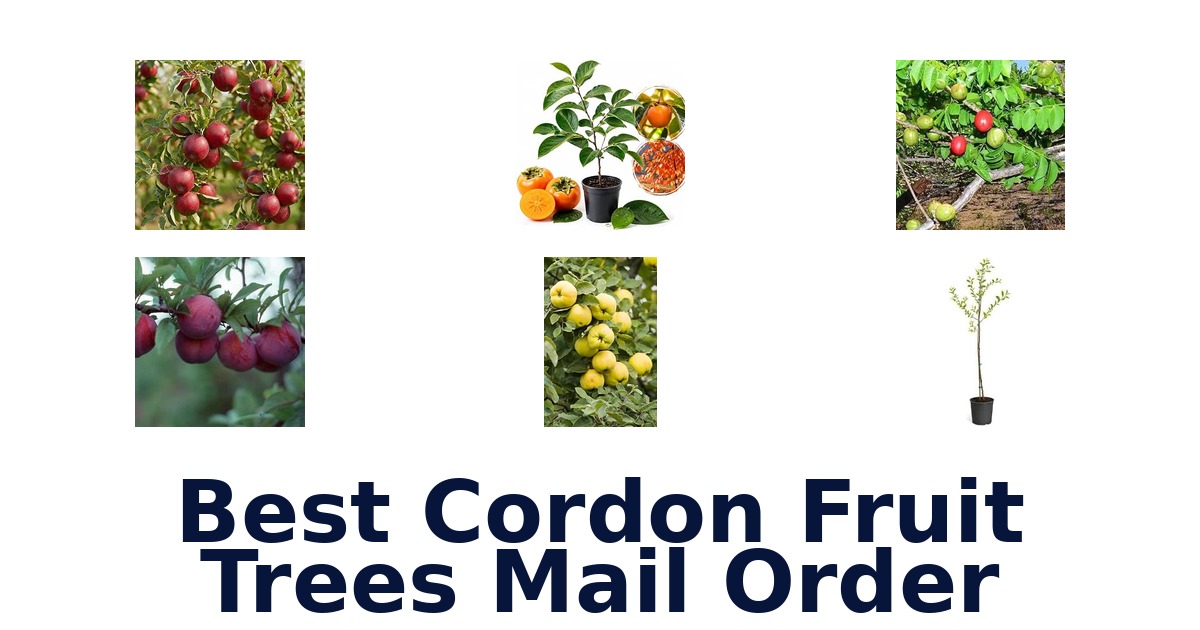
A strong mail-order choice for a cordon-style planting should have a manageable form or useful size details, suit your climate, and arrive with clear planting guidance. This group includes 10 fruit trees, but none is explicitly described as cordon-trained or guaranteed to remain compact; the closest stated fit is the dwarf North Star Cherry. Other listings range from 6–12-inch starter plants to a 4–5-foot cherry and a 30–40-inch quince, so choosing by name alone could lead to a tree that outgrows its intended space.
Use the listed dimensions, hardiness details, and shipping form to narrow the field, then confirm rootstock, mature size, training suitability, and delivery restrictions with the seller before ordering.
Brighter Blooms North Star Cherry leads as the most cordon-relevant option because it is explicitly described as a dwarf cherry and is identified as cold hardy. That still does not establish that it is cordon-trained, nor does the listing give mature dimensions or rootstock. If you need a tree supplied ready-trained to a cordon form, none of these listings verifies that requirement.
Treat this as the best starting point for further seller checks, not a confirmed cordon tree.
Our Top Picks
 Best Overall
Brighter Blooms North Star Cherry
The listing explicitly calls it a dwarf cherry and cold hardy, making it the closest stated fit for space-conscious cordon training, though training suitability needs confirmation.
View on Amazon Self-Fertile Plum
Methley is described as a small, upright, spreading plum and a self-fertile live plant in a 1-gallon trade pot, useful traits to assess for training.
View on Amazon Size-Specified Starter
This two-year-old quince is listed at 30–40 inches tall, and its dormant-season handling instructions give buyers concrete details for planning delivery and planting.
View on Amazon- Broad Zone Range HARINI Black Cherry
Compare these mail-order fruit tree options
| # | Product | Weight | Buy |
|---|---|---|---|
| 1 | 1. Brighter Blooms North Star CherryBest Overall | — | View on Amazon |
| 2 | 2. TriStar Methley PlumSelf-Fertile Plum | 5 lb | View on Amazon |
| 3 | 3. Cydonia Provence QuinceSize-Specified Starter | 16 oz | View on Amazon |
| 4 |  4. HARINI Black CherryBroad Zone Range | 8 oz | View on Amazon |
| 5 |  5. ELLA'S HOMES PersimmonCompact persimmon starters | — | View on Amazon |
| 6 |  6. GINGERGLOW American PersimmonNative persimmon gardeners | — | View on Amazon |
| 7 |  7. CZ Grain Apple SaplingsThree-tree apple starters | 2 lb | View on Amazon |
| 8 |  8. MicroStarts GA-866 JujubeLow-water jujube growers | — | View on Amazon |
| 9 |  9. Spanish Plum JocoteTropical fruit tree enthusiasts | — | View on Amazon |
| 10 |  10. Black Pearl CherryLarge sweet-cherry orchard sites | 15 lb | View on Amazon |
Detailed Reviews: Best Cordon Fruit Trees Mail Order
#1 · Best Overall
1. Brighter Blooms North Star Cherry
Best for: Cold-hardy dwarf cherry fans.
Why it ranks #1: The listing explicitly calls it a dwarf cherry and cold hardy, making it the closest stated fit for space-conscious cordon training, though training suitability needs confirmation.
The North Star is a dwarf cherry tree described as cold hardy, with the listing also highlighting cherries in the first year. At 4–5 feet, it offers a larger starting tree than the small quart-pot cherry plants in this roundup.
Its dwarf designation gives buyers a cherry option identified as smaller in habit than an unspecified full-size tree, while the listed 4–5-foot size makes the arrival scale clear. Cold hardiness is a stated feature, and the listing highlights cherries in the first year. Full sun and well-draining soil are the care instructions provided. These site requirements help guide placement, though the supplied information does not give a USDA zone range or a mature-size figure.
- Dwarf North Star cherry tree
- Listed at 4–5 feet
- Described as cold hardy
- Listing highlights cherries in the first year
- The supplied listing gives no USDA hardiness zone range.
Skip it if you need a specific USDA zone range before buying; HARINI Black Cherry Plant lists Zones 3–9.
A candidate for gardeners seeking a dwarf cherry with cold-hardiness claims and a 4–5-foot starting size. Provide full sun and well-draining soil, and note that the listing does not quantify its hardiness by USDA zone.
Full product details
| Brand | Brighter Blooms |
|---|---|
| Color | White |
| Manufacturer | Brighter Blooms |
| Part Number | CHE-NOR-45-PS |
| Material Feature | Dwarf North Star Cherry Tree |
| Material Features | Dwarf North Star Cherry Tree |
| Special Features | Cold Hardy |
| Care Instructions | Plant in well-draining soil with full sun exposure. |
| Special Feature | Cold Hardy |
Listed on Amazon as: Brighter Blooms North Star Cherry, 4-5 ft.
View on Amazon#2 · Self-Fertile Plum
2. TriStar Methley Plum
- Weight: 5 lb
Best for: Self-fertile plum growers.
Why it ranks #2: Methley is described as a small, upright, spreading plum and a self-fertile live plant in a 1-gallon trade pot, useful traits to assess for training.
Methley is listed as a self-fertile plum, allowing a single tree to set fruit without requiring a different pollinizer. This live plant comes in a one-gallon trade pot, and its reddish-purple fruit with dark red flesh gives the variety a specific harvest profile.
The one-gallon trade pot supplies a live plant for a gardener ready to establish a plum tree, while the full-sun instruction guides site selection. Methley is described as small, upright, and spreading, details that help buyers picture its growth habit. Its mid-size reddish-purple fruit has dark red flesh and a mild flavor. Although self-fertile, the listing says planting multiple trees can ensure a better crop, so a single-tree plan may trade convenience for yield potential.
- Self-fertile Methley plum
- One-gallon trade pot
- Mid-size reddish-purple fruit with dark red flesh
- Small, upright, spreading growth habit
- Planting multiple trees is recommended to ensure a better crop.
Skip it if you need delivery to California; TriStar Plants states it cannot ship this plum to that state.
A fit for full-sun gardeners who want a self-fertile Japanese plum with mild-flavored, dark-red flesh. The one-gallon plant has a compact upright, spreading habit, but the listing recommends multiples for a better crop.
Full product details
| Brand | TriStar Plants |
|---|---|
| Color | Purple |
| Item Weight | 5 pounds |
| Manufacturer | Tristar Plants |
| Material Feature | GMO Free |
| Material Features | GMO Free |
| Special Features | Attracts Pollinators |
| Special Feature | Attracts Pollinators |
Listed on Amazon as: Tristar Plants – Methley Plum Tree – Heavy yielding – Sweet Fruit – Live Plant – 1 Gallon Trade Pot
View on Amazon#3 · Size-Specified Starter
3. Cydonia Provence Quince
- Weight: 16 oz
Best for: Dormancy-timed quince planters.
Why it ranks #3: This two-year-old quince is listed at 30–40 inches tall, and its dormant-season handling instructions give buyers concrete details for planning delivery and planting.
This two-year-old Cydonia Provence quince is listed at 30–40 inches tall, offering a larger young plant than the smaller quart-pot starts in this roundup. Its seasonal shipment method also sets a clear handling plan: protect the roots and wait until dormancy for permanent planting.
From October to May, the plant ships with roots wrapped in wet media; from June to September, it is sent in a container with soil. The listing instructs buyers to move it to its permanent location only when it goes dormant in October and not to disturb roots during summer or while leaves are present. Daily watering is also specified. Those seasonal directions make timing and careful handling central to establishing this quince.
- Two-year-old Cydonia Provence quince
- Listed height of 30–40 inches
- Wet-media root shipment during dormancy
- Includes seasonal planting and watering directions
- Permanent-location planting is restricted to dormancy in October by the listing.
Skip it if you cannot wait for October dormancy to plant it permanently; this quince listing specifically warns against summer root disturbance.
A fit for quince growers who want a 30–40-inch, two-year-old plant and can follow seasonal root-handling directions. Plan around its October dormancy planting instruction rather than moving it to a permanent site during summer.
Full product details
| Brand | Generic |
|---|---|
| Color | yellow |
| Item Weight | 16 ounces |
| Manufacturer | Mightyoaktreenursery |
| Material Feature | GMO Free |
| Material Features | GMO Free |
| Special Features | Low Maintenance |
| Special Feature | Low Maintenance |
Listed on Amazon as: 30-40" Tall Cydonia Provence Quince Rooted 2 Year Old Plant
View on Amazon#4 · Broad Zone Range
4. HARINI Black Cherry
- Weight: 8 oz
Best for: Cherry starters for cold zones.
Why it ranks #4: The 6–12-inch quart-pot starter is listed for USDA Zones 3–9, but the listing does not identify dwarf rootstock or cordon training.
A black cherry starter listed for USDA Zones 3–9 offers a broad stated hardiness range for gardeners choosing a live fruit tree. It arrives 6–12 inches tall in a quart pot, making it a young planting project rather than a mature landscape specimen.
The quart-pot, 6–12-inch format is suited to buyers prepared to establish a small starter. Full sun and well-draining soil are the listed site preferences, while regular watering during the first one to two years is specified to establish roots. The listing gives spring as the blooming season and a temperature range of 60–85°F. Together, these details help buyers plan a sunny placement and attentive early watering routine.
- Listed for USDA Zones 3–9
- Live starter in a quart pot
- Full-sun exposure is specified
- Early care includes a clear watering period
- Regular watering is required during the first one to two years to establish roots.
Skip it if you cannot provide regular water during establishment; CZ Grain Apple Tree Saplings are listed for full sun but give no comparable watering schedule.
Consider this black cherry for a sunny, well-drained site within USDA Zones 3–9 if you can water regularly through its first one to two years. Its 6–12-inch size calls for patience as it establishes.
Full product details
| Brand | HARINI |
|---|---|
| Color | Green |
| Item Weight | 8 ounces |
| Manufacturer | Harini |
| Style Name | Live Starter Seedlings |
Listed on Amazon as: Black Cherry Plant Live for Planting, Sweet Cherry Fruit Tree, Fast Growing Sweet Fruit Tree in Home Garden, 6-12 Inch Tall, Quart Pot, Dormant in Winter
View on Amazon#5
5. ELLA'S HOMES Persimmon
Best for: Compact persimmon starters.
Why it ranks #5: This well-rooted 6–12-inch plant in a quart pot has a stated USDA Zones 6–9 range, but no compact form or cordon suitability is given.
A well-rooted persimmon in a quart pot arrives at a listed height of 6–12 inches, giving gardeners a small live start rather than an established orchard tree. Its stated USDA Zones 6–9 range helps buyers assess regional fit before planting.
The quart-pot format and well-rooted description make this a live starter for a gardener prepared to grow a young tree on. Sweet fruit is the stated harvest goal, while full sun and well-drained soil describe the listed site conditions. USDA Zones 6–9 provide a specific climate range for evaluating suitability. The plant is noted as dormant in winter, so seasonal leaflessness is part of its stated presentation rather than a different product type.
- Well-rooted live plant in a quart pot
- Listed at 6–12 inches tall
- Sweet fruit is the stated harvest
- Hardy in USDA Zones 6–9
- Its 6–12-inch height makes it a small starter, not a larger established tree.
Skip it if you want a tree taller than 12 inches on arrival; Brighter Blooms North Star Cherry is listed at 4–5 feet.
Choose this for a sunny site with well-drained soil in USDA Zones 6–9, if you are comfortable raising a 6–12-inch starter. Its compact arrival size means it is not an instant large-tree planting.
Full product details
| Brand | ELLA'S HOMES |
|---|---|
| Color | Green |
| Manufacturer | ELLA'S HOMES |
Listed on Amazon as: Persimmon Tree Plant, 6-12 Inch Tall Fruit Plants, Quart Pot
View on Amazon#6
6. GINGERGLOW American Persimmon
Best for: Native persimmon gardeners.
Why it ranks #6: The 6–12-inch quart-pot tree is described as cold-hardy and adaptable, though the listing supplies no zone range, rootstock, or training details.
This American persimmon is a North American native described as exceptionally cold-hardy and adaptable across a wide range of soils and climates. The quart-pot plant measures 6–12 inches tall, pairing a small live-tree start with a stated fit for diverse landscapes.
The listing identifies the plant as a well-rooted live tree in a quart pot, which gives buyers a ready-to-plant young specimen rather than a bare-root shipment. It may arrive dormant and without leaves depending on the season, so leafless arrival is an explicitly noted possibility. Its cold hardiness and adaptability to varied soil conditions support consideration for diverse landscapes. The tree is also associated with richly flavored fall fruit and seasonal color.
- American native fruit tree
- Cold-hardy and described as resilient
- Adapts to a wide range of soil conditions
- Quart-pot plant measures 6–12 inches
- The 6–12-inch size is a young starter rather than a large landscape tree.
Skip it if you want a taller arrival than 12 inches; Brighter Blooms North Star Cherry is listed at 4–5 feet.
A sensible choice for growers seeking a native persimmon, fall fruit, and a cold-hardy tree for varied soil conditions. Expect a 6–12-inch starter, and note that seasonal dormancy can mean arrival without leaves.
Full product details
| Brand | GINGERGLOW |
|---|---|
| Color | Orange |
| Manufacturer | GINGERGLOW |
Listed on Amazon as: American Persimmon Tree Live Plants, 6-12" Tall Well Rooted in Quart Pot, Cold-Hardy American Native Fruit Tree, Dormant Plant
View on Amazon#7
7. CZ Grain Apple Saplings
- Weight: 2 lb
Best for: Three-tree apple starters.
Why it ranks #7: The three dormant bare-root apple saplings provide multiple plants, but the listing gives no variety, mature size, rootstock, or cordon-training information.
Three live apple saplings arrive dormant and bare root, giving orchard-minded gardeners a multi-tree start in one shipment. The listing names gardens, backyard orchards, and containers as growing settings, with full sun identified as a preferred condition.
A three-sapling quantity lets buyers plan several planting positions or use the trees across a garden, backyard orchard, or container setup, all settings named in the listing. Because the trees ship dormant in spring and without leaves or fruit, buyers should expect saplings rather than an immediate harvest display. The stated full-sun preference helps guide placement. The listing describes the trees as hardy and adaptable but does not give a specific zone range.
- Three live apple saplings included
- Ships dormant in spring
- Bare-root format for planting
- Listed for gardens, orchards, or containers
- Dormant bare-root saplings arrive without leaves or fruit.
Skip it if you want a leafy tree on arrival; Brighter Blooms North Star Cherry is listed as a 4–5-foot tree, not a dormant bare-root bundle.
This bundle suits gardeners planning several apple planting spots or a small orchard, with full sun available. Expect dormant, bare-root saplings in spring, not leafy trees or fruit at delivery.
Full product details
| Brand | CZ Grain |
|---|---|
| Color | red green |
| Item Weight | 2 pounds |
| Manufacturer | CZ Grain, LLC |
| Style | Apple Tree Sapling to Grow |
| Style Name | Apple Tree Sapling to Grow |
Listed on Amazon as: Apple Tree Saplings – 3 Live Dormant Apple Trees for Planting, Cold Hardy Fruit Tree Starts for Backyard Orchard, Garden & Container Growing – Ships Bare Root
View on Amazon#8
8. MicroStarts GA-866 Jujube
Best for: Low-water jujube growers.
Why it ranks #8: This two-plant pack is self-fertile and heat- and drought-tolerant, but no size, rootstock, or suitability for cordon training is stated.
Two GA-866 jujube trees bring a sweet, crisp, apple-like harvest option to a home orchard, with fruit suited to fresh eating or drying. The variety is self-fertile, so a single tree can set fruit, while the included second tree can help improve fruit set.
The two-plant pack gives growers a pair of the same named variety, and the listing says additional trees can improve fruit set. Each tree is described as self-fertile, so you need no separate pollinizer for fruit setting. GA-866 fruit is large and sweet with a crisp, apple-like flavor; it can be eaten fresh or dried into a chewy texture. Heat and drought tolerance, with less water needed once established, suits low-water or arid regions.
- Includes two GA-866 jujube plants
- Self-fertile; no pollinizer needed
- Fruit suits fresh eating or drying
- Heat- and drought-tolerant once established
- Planting one tree may not maximize fruit set, since additional trees can improve it.
Skip it if you need a listed mature height or hardiness zone before choosing; this listing does not provide either specification.
A practical pick for growers in hot or arid areas who want jujubes for fresh snacks and drying, and value two plants in one pack. Keep in mind that the listing gives no mature size or hardiness zone.
Full product details
| Brand | MicroStarts |
|---|---|
| Color | Green, brown |
Listed on Amazon as: Jujube GA-866 Value Pack – 2 Plants – Edible Fruit Trees
View on Amazon#9
9. Spanish Plum Jocote
Best for: Tropical fruit tree enthusiasts.
Why it ranks #9: The listing gives a 2–3-foot height, but describes a tropical fruit tree without hardiness or cordon-training details for assessing a constrained planting.
This Spanish plum jocote, identified as Spondias purpurea, is listed at 2–3 feet tall, giving tropical-fruit enthusiasts a larger arrival than many of the small starter plants here. The listing presents it for garden, patio, or container planting and pairs edible fruit with ornamental appeal.
At 2–3 feet, the listed size gives buyers a substantial live-plant starting point for a garden, patio, or container planter, all named in the description. The product is presented as both an edible-fruit tree and an ornamental addition, connecting harvest interest with landscape greenery. Its Spanish plum jocote name and Spondias purpurea identification clarify the plant offered. However, the supplied details provide no hardiness zone or specific care schedule, so site planning must rely on the listed planting settings.
- Identified as Spanish plum jocote
- Botanical name Spondias purpurea provided
- Listed height of 2–3 feet
- Presented for gardens, patios, or containers
- The supplied listing does not specify a hardiness zone.
Skip it if you require a stated hardiness range before selecting a tree; ELLA'S HOMES Persimmon Tree Plant lists USDA Zones 6–9.
Consider this jocote if you want an identified tropical fruit tree at a listed 2–3 feet, with edible and ornamental appeal. The available details do not state a hardiness zone, so confirm your site needs independently.
Full product details
| Brand | Generic |
|---|---|
| Color | Green |
| Manufacturer | Generic |
Listed on Amazon as: Live Plant – Spanish Plum Jocote (Spondias purpurea) Tropical Live Fruit Tree 2’-3’ Feet
View on Amazon#10
10. Black Pearl Cherry
- Weight: 15 lb
Best for: Large sweet-cherry orchard sites.
Why it ranks #10: Its stated mature height of 30–50 feet and spread of 20–40 feet make this sweet cherry a poor fit for a cordon-focused search.
Black Pearl combines a spring blossom display with sweet, juicy cherries that ripen from late spring to early summer, giving this tree both ornamental and harvest roles. Its listed mature size—30–50 feet tall and 20–40 feet wide—signals a substantial planting commitment.
The large stated mature dimensions make site planning essential: allow for a tree that may reach 30–50 feet high and spread 20–40 feet. Full sun and well-drained loam are listed for growth and fruit production, with regular watering advised during dry periods and establishment. The product is identified as a sweet cherry, Prunus avium, in USDA Zones 5–7. Its early-to-mid-spring flowers also attract bees and other pollinators.
- Black Pearl sweet cherry variety
- Spring blossoms attract bees and pollinators
- Fruit ripens late spring to early summer
- USDA Zones 5–7 listed
- Mature dimensions of 30–50 feet tall and 20–40 feet wide require substantial space.
Skip it if you lack room for a 30–50-foot tree; Brighter Blooms North Star Cherry is specifically listed as a dwarf variety.
Choose Black Pearl for a sunny, well-drained loam site in USDA Zones 5–7 if you want spring flowers and sweet cherries. Its substantial mature height and spread make it a poor fit for space-limited gardens.
Full product details
| Brand | Generic |
|---|---|
| Color | Red, Green |
| Item Weight | 15 pounds |
| Manufacturer | Simpson Nursery |
| Care Instructions | Plant in well-drained loam soil in a location with full sun exposure for optimal growth and fruit production. plant from spring to fall. Water regularly, especially during dry periods and while the tree is becoming established. Prune in late winter or early spring to maintain shape, remove dead or d |
| Style Name | Black Pearl |
Listed on Amazon as: Cherry Fruiting Tree (Black Pearl, 5 gal.) (Due to Agricultural Laws, we Cannot Ship to CA, AZ, AK, or HI)
View on AmazonCheck whether a tree is actually suitable for cordon training
None of these listings confirms a cordon-trained tree, so ask the seller about rootstock and training suitability before buying. A cordon is a trained growing form, not simply a fruit-tree variety; a small plant or a tree described as upright does not establish that it will stay narrow. The strongest clues here are limited: Brighter Blooms North Star Cherry is called dwarf, and TriStar Methley Plum is described as small, upright, and spreading.
Neither listing specifies rootstock, mature dimensions, or a supplied cordon shape. By contrast, Black Pearl Cherry is listed as reaching 30–50 feet tall and 20–40 feet wide, a clear warning against treating it as a naturally compact option.
Confirm the expected mature size and whether the tree can be trained to your intended support and space before ordering. If the seller cannot answer, choose only if you have room for the tree’s unspecified natural form.
Plan around dormant shipping and delivery restrictions
Dormant delivery can change what arrives and when you should plant, so check the seasonal instructions and shipping limits before ordering. The Cydonia Provence Quince listing says roots ship wrapped in wet media from October to May and in a soil-filled container from June to September; it also says to wait until dormancy in October for permanent planting. CZ Grain Apple Saplings ship bare root and dormant in spring, while the two persimmon listings may also arrive dormant.
A leafless plant is therefore not necessarily a failed delivery, but these listings do not provide a shared arrival or planting schedule. Regional restrictions matter too: TriStar Methley Plum cannot ship to California, and Black Pearl Cherry excludes California, Arizona, Alaska, and Hawaii.
Verify your address, current dispatch timing, and the seller’s care instructions before placing an order; do not assume every plant uses the same shipping form or planting window.
How to Choose a Mail-Order Cordon Fruit Tree
Plant size and stated growth form
Look for a listing that gives a starting size or a meaningful description of growth form, then separate that from proof of cordon training. The products range from 6–12-inch quart-pot plants, including HARINI Black Cherry and ELLA’S HOMES Persimmon, to the 30–40-inch Cydonia Provence Quince and the 4–5-foot Brighter Blooms North Star Cherry. The North Star listing calls its tree dwarf, while Methley plum is described as small, upright, and spreading; neither supplies mature dimensions.
Smaller starts suit buyers willing to establish and train a young tree, while a taller plant may suit someone seeking a larger starting specimen. In either case, ask about rootstock and mature size before treating it as suitable for a narrow cordon space.
Climate suitability and hardiness details
Prioritize a stated hardiness range that includes your growing location, and do not treat broad claims as a substitute for a zone. HARINI Black Cherry lists USDA Zones 3–9, while ELLA’S HOMES Persimmon lists Zones 6–9; Brighter Blooms describes North Star Cherry as cold hardy without giving a zone range here. Black Pearl Cherry is listed for Zones 5–7, and MicroStarts GA-866 Jujube is described as heat- and drought-tolerant but has no zone range in the supplied details.
The specific zone listings help buyers who already know their local range compare options. Buyers outside a stated range, or relying on general terms such as cold hardy, should verify suitability with the seller before ordering.
Shipping form, season, and seller restrictions
Check how the tree ships and whether its planting instructions fit your delivery season and location. CZ Grain supplies three apple saplings bare root and dormant in spring; Cydonia Provence Quince changes from roots wrapped in wet media during October to May to a soil container from June to September. The persimmon listings also warn that plants may arrive dormant, and the quince instructions specify waiting until dormancy in October for permanent planting.
Regional exclusions are decisive: TriStar Methley Plum cannot ship to California, while Black Pearl Cherry cannot ship to California, Arizona, Alaska, or Hawaii. Buyers who want a defined bare-root pack can consider the apple saplings; those ordering the restricted cherries or plum should first confirm that their address is eligible and follow the product-specific timing.
Which Mail-Order Fruit Tree Fits Your Cordon Plan?
For a space-conscious cordon project, start by asking the seller about rootstock, mature size, and training suitability; Brighter Blooms North Star Cherry is the most relevant listed starting point because it is described as dwarf. If you want a plum with a stated self-fertile trait and an upright, spreading form, consider TriStar Methley Plum, while confirming its shipping restriction if you live in California. For a defined starter height and seasonal shipping instructions, Cydonia Provence Quince offers a 30–40-inch plant and detailed dormancy guidance.
Buyers seeking a broad stated zone range can compare HARINI Black Cherry’s Zones 3–9 listing. Avoid Black Pearl Cherry for a tight cordon space: its stated mature size is 30–50 feet tall and 20–40 feet wide.
None is confirmed as supplied cordon-trained.
Frequently Asked Questions
Can any of these trees be trained as a cordon, and what rootstock are they grafted onto?
None of the listings confirms cordon training or names a rootstock. Brighter Blooms North Star Cherry is the most relevant starting point because it is described as a dwarf, cold-hardy cherry, but that does not establish its training suitability. Ask each seller about rootstock, mature size, and whether the tree can be trained as a cordon.
How much space and support does a cordon fruit tree need?
Plan for a narrow growing space plus a sturdy support, but confirm the tree’s mature dimensions and training suitability with the seller before choosing a site. These listings generally do not provide cordon-specific spacing or support details. A tree’s stated size or dwarf description alone does not confirm it will remain suitable for a cordon.
When should a mail-order fruit tree be planted after delivery?
Plant it promptly after delivery, following the seller’s care instructions and keeping any exposed roots from drying out while you prepare. Check whether it arrives dormant, bare-root, or in a pot, since the listings describe different formats. The Provence Quince listing specifically provides dormancy guidance; follow its instructions for that plant.
Which listing gives the clearest information about plant size or seasonal handling?
Cydonia Provence Quince offers a stated starter height of 30–40 inches and seasonal dormancy guidance, making those details clear in its listing. The other titles also give some size or shipping-form information, such as bare-root apple saplings or quart-pot plants, but that does not establish mature dimensions or cordon suitability.
Which listings have stated pollination or shipping limitations?
TriStar Methley Plum is identified as self-fertile, while the other listings do not establish a pollination trait in the supplied details. Shipping restrictions are stated for Black Pearl Cherry, which cannot ship to California, Arizona, Alaska, or Hawaii. Check the seller’s current shipping terms for your location before ordering.
Final Words
For a space-conscious cordon project, start by asking sellers about rootstock, mature dimensions, and training suitability. Brighter Blooms North Star Cherry is the most relevant listed lead because it is described as dwarf and cold hardy, but it is not confirmed cordon-trained. Consider Methley Plum for its stated self-fertile trait, or Provence Quince for a defined starter height and dormancy guidance.
Avoid Black Pearl in tight spaces; its stated mature size is large.