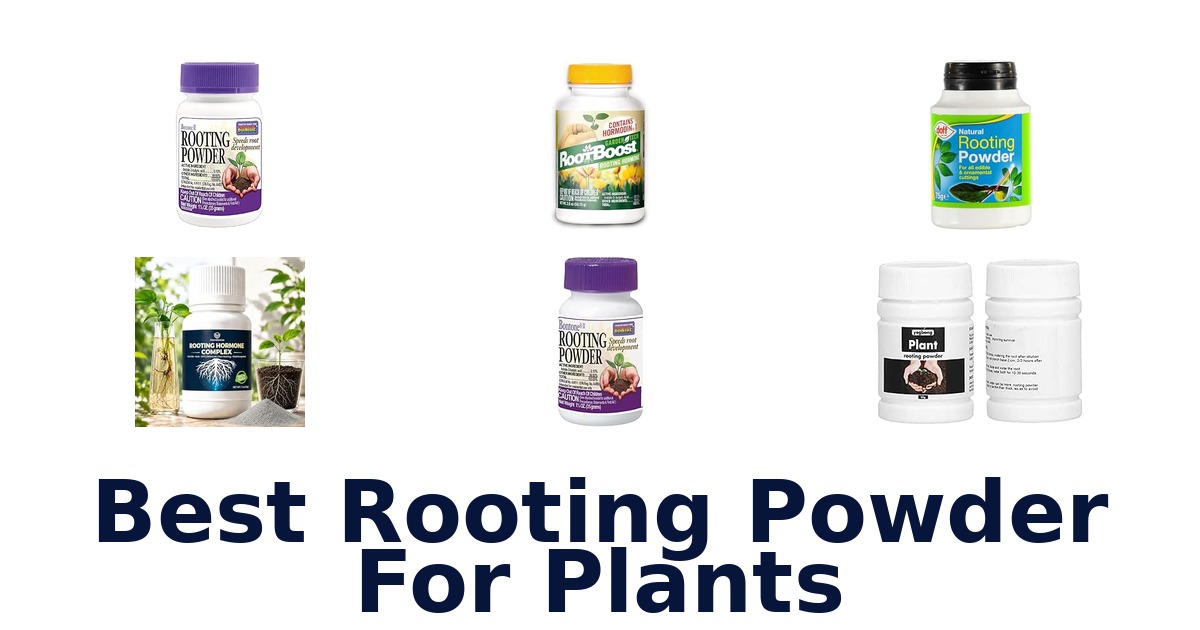
Best Rooting Powder For Plants for Cuttings and Propagation
A strong rooting powder for plants should suit the type of cutting you’re propagating, provide clear application directions, and come in a quantity that fits your workload. Garden Safe TakeRoot Rooting Hormone is a practical all-around choice for home growers: its indole-3-butyric acid formula is listed for popular plants including roses, African violets, and philodendrons. This roundup compares ten powders, from Hormex’s specified 0.10% IBA formula for softwood cuttings to larger containers such as ferti-lome’s 2-ounce tub.
Some entries also target seeds or bulbs, while the mycorrhizal inoculant is a different kind of root-zone product rather than a standard cutting hormone. Check the label for your plant and follow its directions; powder formulas and stated uses are not interchangeable.
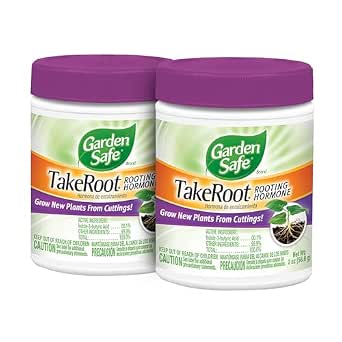
Garden Safe TakeRoot Rooting Hormone is the best overall choice for typical home propagation because it combines an identified active ingredient, indole-3-butyric acid, with directions for treating cut ends and use across many popular plants. Its listed examples include African violets, roses, poinsettias, philodendrons, and geraniums. Choose Hormex Rooting Hormone Powder #1 instead when you specifically need a product identified for softwood cuttings at 0.10% IBA; for bigger batches, ferti-lome lists a 2-ounce tub for approximately 4,500 cuttings.
Our Top Picks
 Best Overall
Its indole-3-butyric acid formula is directed at cut ends and listed for many common plants, including roses, African violets, and philodendrons.
View on Amazon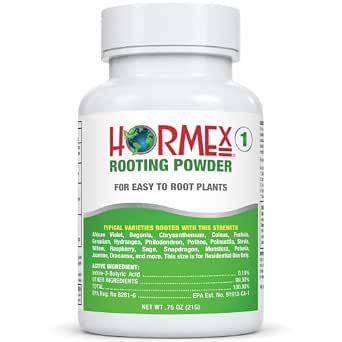 Best for Softwood
This powder specifies 0.10% IBA for softwood cuttings, and the brand identifies four strengths for different cutting types.
View on Amazon Large Powder Tub
The 2-ounce powder is intended for indoor and outdoor cuttings, and its listed plant examples include roses, geraniums, and philodendrons.
View on Amazon- Best for Large Batches ferti-lome Rooting Powder
- Water Propagation Option Herrdemia Rooting Powder
Compare rooting powders by their best use
| # | Product | Form | Weight | Buy |
|---|---|---|---|---|
| 1 | 1. Garden Safe TakeRootBest Overall | Powder | 5.92 oz | View on Amazon |
| 2 | 2. Hormex Rooting Hormone #1Best for Softwood | Powder | 9.07 g | View on Amazon |
| 3 | 3. Gardentech RootBoostLarge Powder Tub | Powder | 2 oz | View on Amazon |
| 4 |  4. ferti-lome Rooting PowderBest for Large Batches | Powder | 2 oz | View on Amazon |
| 5 |  5. Bonide Bontone IICuttings, seeds, and bulbs | Powder | 35 g | View on Amazon |
| 6 |  6. Bonide Bontone PowderCuttings plus seed and bulb use | Powder | 1.6 oz | View on Amazon |
| 7 |  7. Doff Hormone Rooting PowderYear-round general cuttings | Powder | — | View on Amazon |
| 8 |  8. Herrdemia Rooting PowderWater Propagation Option | Powder | 1.1 oz | View on Amazon |
| 9 |  9. Alvinlite Rooting PowderHardwood and softwood cuttings | Powder | 50 g | View on Amazon |
| 10 |  10. Lemant Mycorrhizal InoculantBroad-spectrum root-zone inoculant | Powder | — | View on Amazon |
Detailed Reviews: Best Rooting Powder For Plants
#1 · Best Overall
1. Garden Safe TakeRoot
- Form: Powder
- Weight: 5.92 oz
Best for: Familiar garden cutting propagation.
Why it ranks #1: Its indole-3-butyric acid formula is directed at cut ends and listed for many common plants, including roses, African violets, and philodendrons.
Indole-3-butyric acid is the active ingredient in Garden Safe TakeRoot, giving home propagators a powder treatment for cut ends. Its instructions—moisten, dip, tap off excess, then plant—provide a defined routine for making new plants from familiar garden and houseplant cuttings.
The powder is listed for most popular home, garden, and greenhouse varieties, with African violets, roses, poinsettias, philodendrons, and geraniums named as examples. That breadth makes it a practical option when one propagation routine spans several plant types. For setup, the supplied directions recommend making a hole slightly larger than the cutting so the powder is not rubbed off. The two-count inclusion also provides two containers for organizing propagation work.
- Indole-3-butyric acid is the named active ingredient.
- Listed for home, garden, and greenhouse varieties.
- Names African violets, roses, poinsettias, philodendrons, and geraniums.
- Directions explain moistening, dipping, tapping off excess, and planting.
- The listed routine treats cutting ends; seed and bulb use is not specified.
Skip it if you want a product explicitly listed for coating seeds and bulbs; Bonide Bontone II Rooting Powder supports that use.
Choose Garden Safe TakeRoot if you propagate familiar houseplants and garden varieties from cuttings and want a clear dip-and-plant routine. It is a cutting-end powder, so seed or bulb treatment is not the use established in its supplied directions.
Full product details
| Brand | Garden Safe |
|---|---|
| Included Components | Garden Safe TakeRoot Rooting Hormone, 2 Count |
| Item Form | Powder |
| Item Weight | 5.92 ounces |
| Manufacturer | United Industries |
| Model Number | HG-93221 |
Listed on Amazon as: Garden Safe Take Root Rooting Hormone 2 Oz, Promotes Rooting, 2 Pack
View on Amazon#2 · Best for Softwood
2. Hormex Rooting Hormone #1
- Form: Powder
- Weight: 9.07 g
Best for: Softwood cutting starter.
Why it ranks #2: This powder specifies 0.10% IBA for softwood cuttings, and the brand identifies four strengths for different cutting types.
Hormex Rooting Hormone Powder #1 is specifically formulated for softwood cuttings, with 0.10% IBA identified in the product details. That targeted strength lets propagators match a powder to tender plant material rather than treating every cutting type as interchangeable.
The listing describes this as a root starter for softwood cuttings and says IBA accelerates root development and supports stronger root systems. Hormex also offers four strengths for softwood, semi-hardwood, and hardwood cuttings, with a Plant Strength Guide in the product images. That range is useful when propagation work spans different cutting types: buyers can consult the guide to find the recommended strength instead of assuming this #1 formula covers them all.
- Specifically identified for softwood cuttings.
- Lists 0.10% IBA as its formulation.
- Hormex offers four strengths for different cutting types.
- A Plant Strength Guide is provided in the product images.
- This #1 formula is specified for softwood cuttings, not as the all-types option.
Skip it if you need a powder listed broadly for most home and greenhouse cuttings; Gardentech RootBoost is described for indoor and outdoor plants.
Choose Hormex #1 when tender softwood cuttings are your propagation focus and you want a stated IBA concentration. If you also root semi-hardwood or hardwood material, use the strength guide to select the matching Hormex formula.
Full product details
| Brand | Hormex |
|---|---|
| Item Form | Powder |
| Item Weight | 9.07 g |
| Manufacturer | Maia Products, Inc. |
| Model Number | HCSND1 |
| Additional Information | Important information Ingredients Indole-3-butyric acid |
Listed on Amazon as: Hormex Rooting Hormone Powder #1 – Fast Roots for Tender Plant Cuttings
View on Amazon#3 · Large Powder Tub
3. Gardentech RootBoost
- Form: Powder
- Weight: 2 oz
Best for: Indoor and outdoor cuttings.
Why it ranks #3: The 2-ounce powder is intended for indoor and outdoor cuttings, and its listed plant examples include roses, geraniums, and philodendrons.
RootBoost contains Hormodin 1, which its listing identifies as the same formula used by professionals. It gives indoor, outdoor, and container-garden propagators a powder for stem cuttings, with a simple cut, dip, and plant workflow.
The product is described for both indoor and outdoor propagation, including container gardens and garden ornamentals, so it can serve growers working across those settings. Its directions reduce the basic sequence to cutting, dipping, and planting, which keeps preparation uncomplicated. The listed examples include African violets, geraniums, roses, philodendrons, chrysanthemums, and hydrangeas. RootBoost’s safety information calls for protective eyewear and warns of inhalation or skin-absorption hazards, so careful handling is part of the workflow.
- Contains Hormodin 1, described as the formula used by professionals.
- Listed for indoor and outdoor plant propagation.
- Suitable for container gardens and garden ornamentals.
- Names several familiar plants, including roses and philodendrons.
- Handling precautions include protective eyewear and avoiding inhalation or skin contact.
Skip it if you want explicit directions for seeds and bulbs as well as cuttings; Bonide Bontone II Rooting Powder lists both uses.
RootBoost fits growers propagating indoor or outdoor stem cuttings, especially across container gardens and ornamentals. Its cut-dip-plant routine is direct, but the stated handling hazards make protective eyewear and careful application important.
Full product details
| Brand | Gardentech |
|---|---|
| Included Components | FERTILIZER |
| Item Form | Powder |
| Item Weight | 2 ounces |
| Manufacturer | GULF STREAM HOME & GARDEN |
| Model Number | 100538120 |
| Warranty Description | Warranty |
Listed on Amazon as: RootBoost Rooting Hormone, Rooting Powder for Plant Cuttings, 2 Ounces
View on Amazon#4 · Best for Large Batches
4. ferti-lome Rooting Powder
- Form: Powder
- Weight: 2 oz
Best for: High-volume cutting propagation.
Why it ranks #4: Its 2-ounce tub is stated to treat approximately 4,500 cuttings, with listed uses spanning houseplants, azaleas, and hydrangeas.
Ferti-lome’s listing says its 2-ounce powder can treat approximately 4,500 cuttings, a useful scale for growers preparing many plants. Its three-step cut, dip, and plant routine is also presented for seeding or transplanting to stimulate early root formation.
The product names household plants such as azaleas, geraniums, and hydrangeas, with additional examples including chrysanthemums, Chinese evergreens, dracaenas, and ivy. That range helps home propagators check whether familiar plants are included, while the dip-before-planting method keeps preparation simple. The listing also extends use to bulbs, roots, and ornamental plants. Indole-3-butyric acid is the named ingredient; safety information advises avoiding eye contact and using protective gloves and eyewear.
- Lists treatment for approximately 4,500 cuttings.
- Uses a simple cut, dip, and plant sequence.
- Names several houseplants and ornamental varieties.
- Indole-3-butyric acid is identified as an ingredient.
- The safety guidance calls for protective gloves and eyewear and avoiding eye contact.
Skip it if you need a powder explicitly specified for water propagation; Herrdemia Rooting Powder is listed for both water and soil.
Ferti-lome fits growers preparing many cuttings or treating listed houseplants, bulbs, roots, and ornamentals. Its stated capacity and simple dipping workflow suit batch work, while the protective-equipment guidance matters during application.
Full product details
| Brand | ferti-lome |
|---|---|
| Included Components | 1 tub |
| Item Form | Powder |
| Item Weight | 2 ounces |
| Manufacturer | Voluntary Purchasing Group Inc |
| Model Number | 10639 |
| Additional Information | Important information Safety Information Avoid contact with eyes. Use protective gloves and eyewear. Keep out of reach of children. Ingredients Indole-3-butyric acid |
Listed on Amazon as: Fertilome (10639) Rooting Powder Plant Propagation Aid, 2 oz
View on Amazon#5
5. Bonide Bontone II
- Form: Powder
- Weight: 35 g
Best for: Cuttings, seeds, and bulbs.
Why it ranks #5: The 1.25-ounce ready-to-use powder is described for cuttings and also for coating seeds or bulbs before planting.
Bonide Bontone II extends its use beyond cuttings: the powder can also coat seeds or bulbs in a bag. That gives plant propagators one product for several starting materials, while the cutting routine stays straightforward—dip the clipping end and place it in moist soil.
The stated quick-root-development use pairs a powder dip with moist soil, a simple sequence for preparing cuttings at planting time. For seeds or bulbs, the supplied directions instead call for placing them in a bag with powder and gently shaking to coat them. This gives the product a different workflow for each material. The listing identifies indole-3-butyric acid as an ingredient and says the powder is not soluble in water, a relevant boundary for anyone planning a water-based application.
- Listed for cuttings, seeds, and bulbs.
- Cuttings are dipped in powder and placed in moist soil.
- Seeds and bulbs can be coated by gentle shaking in a bag.
- Indole-3-butyric acid is identified as an ingredient.
- The powder is not soluble in water, limiting it to non-water-based application methods.
Skip it if you need a rooting powder specified for water propagation; Herrdemia Rooting Powder is listed for use in water and soil.
Pick Bonide Bontone II if you want a powder with directions for cuttings as well as seeds and bulbs. Its separate bag-coating method suits those materials, but the stated insolubility makes it a poor fit for water-based application.
Full product details
| Brand | Bonide |
|---|---|
| Included Components | 1.25 oz Dust |
| Item Form | Powder |
| Item Weight | 35 g |
| Manufacturer | Bonide Products LLC |
| Model Number | 925 |
| Warranty Description | Warranty |
| Additional Information | Important information Safety Information B000BX1HGC Ingredients Indole-3-butyric acid Directions See label for full instructions |
Listed on Amazon as: Bonide Bontone II Rooting Powder, 1.25 oz Ready-to-Use Dust for Houseplants and Transplants Speeds Root Development
View on Amazon#6
6. Bonide Bontone Powder
- Form: Powder
- Weight: 1.6 oz
Best for: Cuttings plus seed and bulb use.
Why it ranks #6: This powder promotes root development from cuttings and is also described for seeds, bulbs, and transplants.
Bonide Bontone Rooting Powder can be used on cuttings, seeds, and bulbs, broadening its role beyond a standard cutting dip. For cuttings, the listed routine is to dip the clipping end and place it in moist soil to promote quick root development.
The product description also identifies transplants as a use, making it relevant to growers preparing new plants as well as propagating from cuttings. Its seed-and-bulb method is distinct: put them in a bag with powder and gently shake to coat. That gives the product multiple preparation workflows in one powder. The supplied details do not name particular plant varieties, so buyers choosing by species-specific examples may prefer a listing that provides them.
- Listed for cuttings, seeds, and bulbs.
- Cuttings are dipped and planted in moist soil.
- Seed and bulb directions use a bag-and-shake coating method.
- Described as suitable for transplants as well as root cuttings.
- The supplied details do not identify particular plant varieties.
Skip it if you want named plant examples for choosing a propagation powder; Garden Safe TakeRoot Rooting Hormone lists African violets, roses, and other varieties.
Choose Bonide Bontone if you want one powder for cuttings and the stated seed or bulb coating method, or if you are treating transplants. Its listing is broad, but it does not offer plant-specific examples.
Full product details
| Brand | Bonide |
|---|---|
| Item Form | Powder |
| Item Weight | 1.6 ounces |
| Manufacturer | Bonide Product |
| Model Number | 925 |
Listed on Amazon as: Bontone Rooting Powder, 1.25-oz.
View on Amazon#7
7. Doff Hormone Rooting Powder
- Form: Powder
Best for: Year-round general cuttings.
Why it ranks #7: The 75-gram powder is described for all cuttings and year-round use, though the listing provides less detail on active ingredients and plant examples.
Doff’s powder is explicitly listed for use all year round, giving growers a rooting treatment that is not restricted to a stated season. The product is described as encouraging rooting in all cuttings and promoting strong, healthy roots through a powder formulation containing growth hormones.
The broad all-cuttings claim makes Doff a straightforward option when a propagator wants one general powder rather than choosing among named plant varieties. Its growth-hormone powder formulation is the stated basis for encouraging roots, while year-round use lets the same product fit propagation sessions across seasons. The supplied details do not give a dip procedure or identify a particular active ingredient, so buyers seeking those specifics will need a product whose listing supplies them.
- Listed for use all year round.
- Described as encouraging rooting in all cuttings.
- Powder formulation contains growth hormones.
- Promotes strong, healthy roots according to the product description.
- The supplied product details do not name a specific active ingredient.
Skip it if you want a named active ingredient and cut-end directions; Garden Safe TakeRoot Rooting Hormone specifies indole-3-butyric acid and a dip routine.
Doff suits growers seeking a general, year-round powder for cuttings and who do not need plant-specific examples in the listing. Its broad description is useful, but buyers prioritizing a named active ingredient should choose accordingly.
Full product details
| Brand | Doff |
|---|---|
| Item Form | Powder |
| Manufacturer | Doff |
| Model Number | DOFF-Poudre-Enracinement-75g |
| Additional Information | Important Information Toy Safety Our recommended age: Manufacturer's minimum age: not_suitable_under_3_years_supervision |
Listed on Amazon as: Doff Hormone Rooting Powder Plant and Cuttings 75g Dibber Pack Rootings Power
View on Amazon#8 · Water Propagation Option
8. Herrdemia Rooting Powder
- Form: Powder
- Weight: 1.1 oz
Best for: Water and soil propagation.
Why it ranks #8: Its listing specifically says it works in water and soil and names houseplants such as pothos, monstera, and philodendron.
Herrdemia’s defining feature is compatibility with both water and soil propagation, giving indoor growers flexibility to choose a rooting medium. Its listed ingredients include IBA, NAA, seaweed extract, and chitosan, with examples ranging from pothos and monstera to roses and tomatoes.
The product information connects IBA with a dense feeder-root network and NAA with a central taproot, giving buyers a specific rationale for its two-hormone formula. Seaweed extract is described as helping cuttings adapt to temperature and humidity changes, while chitosan supports stem health at the cut site before roots emerge. Listed water-propagation examples include monstera, pothos, philodendron, snake plant, hoya, and ferns. Follow the handling warning: keep it away from children and wash hands after use.
- Specified for propagation in water and soil.
- IBA and NAA are associated with feeder roots and a central taproot.
- Seaweed extract is described as helping adaptation to temperature and humidity changes.
- Lists water-propagation examples including pothos, monstera, and philodendron.
- The safety information warns the powder is harmful if swallowed or inhaled.
Skip it if you prefer a simple cutting dip with no water-propagation claim; Garden Safe TakeRoot Rooting Hormone gives a defined cut-end routine.
Consider Herrdemia if you move between water and soil propagation or grow its listed indoor varieties. Its multi-ingredient approach is described in specific terms, but follow the handling precautions and keep the powder away from children.
Full product details
| Brand | Herrdemia |
|---|---|
| Included Components | rooting powder for plant cuttings |
| Item Form | Powder |
| Item Weight | 1.1 ounces |
| Manufacturer | Herrdemia |
#9
9. Alvinlite Rooting Powder
- Form: Powder
- Weight: 50 g
Best for: Hardwood and softwood cuttings.
Why it ranks #9: The 50-gram powder is described for softwood and hardwood cuttings and also mentions seeds, bulbs, and transplanting.
Alvinlite’s powder is listed for both hardwood and softwood cuttings, giving propagators a stated option across those two cutting types. Its directions also cover seed and bulb coating, so the product’s uses extend beyond dipping a cutting before planting it in moist soil.
For cuttings, the listed workflow is to dip the end in powder and place it in moist soil, a direct preparation sequence for planting. Seeds and bulbs have a separate method: put them in a bag with powder and shake gently to coat. The product is described as suitable for ornamentals, vegetables, and fruit plants, while its additional information identifies amino acids and higher vitamin and mineral content. Those details support a varied planting context, but the powder’s directions remain soil-based for cuttings.
- Specified for hardwood and softwood cuttings.
- Directions cover cuttings, seeds, and bulbs.
- Cuttings are dipped and placed in moist soil.
- Described for ornamentals, vegetables, and fruit plants.
- The cutting directions specify moist soil, not water propagation.
Skip it if you propagate cuttings in water and want that use stated; Herrdemia Rooting Powder is listed for water as well as soil.
Alvinlite suits growers working with hardwood or softwood cuttings and wanting seed or bulb coating instructions too. Its listed cutting routine ends in moist soil, so water-propagation growers should choose a product that specifies that method.
Full product details
| Brand | Alvinlite |
|---|---|
| Item Form | Powder |
| Item Weight | 50 g |
| Additional Information | Important information Directions 1. Dip the end of a clipping into the powder. 2. Place it in moist soil. 3. Use on seeds or bulbs by putting them in a bag with some powder then shake the bag gently to coat the seeds or bulbs. 4. When transplanting plants, use this product to facilitate the production of healthy roots. |
Listed on Amazon as: 50g Rooting Powder Hormone Root Fertilizer Seedling Help New Roots on Cuttings and Promotes Strong Healthy Roots for Moderately Difficult to Root Plants Promote Growth
View on Amazon#10
10. Lemant Mycorrhizal Inoculant
- Form: Powder
Best for: Broad-spectrum root-zone inoculant.
Why it ranks #10: This is a soil microbe inoculant rather than a conventional cutting hormone; its listing focuses on mycorrhizae and root-zone organisms.
Lemant PureMyco combines 10 mycorrhizal strains with beneficial PGPR and other root-zone organisms, setting it apart as a biological inoculant rather than a conventional cutting-dip powder. The listing specifies endo- and ectomycorrhizal species and at least 1,000 propagules per gram.
The stated mix includes four endomycorrhizal species and three ectomycorrhizal species, alongside PGPR and additional root-zone organisms. That breadth is presented for indoor and outdoor plants and across grow methods, giving gardeners with varied plant settings a single inoculant category to consider. The product is described as expanding root surface area and treats 150 plants or more, according to its title. This is a soil-microbe approach, not the listed cutting-dip workflow of hormone powders.
- Contains a stated 10-strain biological consortium.
- Includes endomycorrhizal and ectomycorrhizal species.
- Lists beneficial PGPR and additional root-zone organisms.
- Specifies at least 1,000 propagules per gram and treatment for 150 plants or more.
- This is a mycorrhizal inoculant, not a conventional hormone powder for dipping cuttings.
Skip it if you need a hormone powder with cut-end dip instructions; Garden Safe TakeRoot Rooting Hormone gives a specified cutting-treatment routine.
Lemant suits gardeners seeking a broad root-zone microbial inoculant for indoor or outdoor plants. Its stated role differs from a cutting-rooting hormone, so choose it for the inoculant approach rather than a cut-end dip.
Full product details
| Brand | Lemant |
|---|---|
| Item Form | Powder |
| Manufacturer | Lemant |
| Model Number | Lemant00015 |
Why treated cuttings can still fail
Rooting powder cannot compensate for a poor cutting or unsuitable propagation conditions. Product directions emphasize beginning with a cutting from a healthy plant, making a clean cut near a node, and placing it in moist rooting medium. The application step matters too: Garden Safe’s directions say to moisten the cut end, dip it in powder, and tap off excess.
Its additional guidance recommends making a hole slightly wider than the cutting so the powder is not rubbed away during planting. Too much powder is not a substitute for following the product label, and the available listings do not establish a universal dose for every plant.
Keep the medium and plant type in mind, and check the package for complete directions. These products support propagation; they do not guarantee that every cutting will root.
Match the formula to the propagation method
A powder labeled for soil-dipped cuttings is not automatically a proven fit for every propagation setup. Most of these listings describe dipping cut ends and planting in moist soil, while Herrdemia Rooting Powder specifically claims use in both water and soil. That makes the stated propagation method an important compatibility check for growers who keep cuttings in water.
The listings also vary in the plants and cutting types they identify: Hormex Rooting Hormone #1 specifies softwood cuttings, and Garden Safe TakeRoot names a range of familiar house and garden plants. A separate distinction is the Lemant product: it is a mycorrhizal inoculant with soil microbes, not the same kind of rooting hormone as an IBA powder.
Check labels for your plant and method rather than assuming a shared word such as root means shared use.
How to Choose a Rooting Powder for Plants
Cutting type and active ingredient
Look for a product whose listed cutting type and active ingredient fit the material you plan to propagate. Hormex Rooting Hormone #1 states 0.10% IBA and is specifically described for softwood cuttings; it also notes that four strengths are available for different cutting types. Garden Safe TakeRoot identifies indole-3-butyric acid and lists uses across popular home and garden plants, while several other listings mention cuttings without a concentration.
If you know you are working with softwood, the specified Hormex formula is a more targeted match. For mixed common houseplants and garden varieties, Garden Safe’s broader listed examples may be more useful.
When the cutting type is unclear, consult the package directions before choosing a strength.
Batch size and container quantity
Choose a container size that suits the number of cuttings you expect to treat, while remembering that listed weights do not by themselves establish how many applications you will get. Garden Safe comes as a two-pack of 2-ounce containers, Gardentech RootBoost lists a 2-ounce size, and ferti-lome lists a 2-ounce tub with a stated capacity of approximately 4,500 cuttings. Bonide Bontone II is a smaller 1.25-ounce ready-to-use dust, while Doff lists 75 grams.
Occasional propagation may suit a smaller container; growers working through many cuttings may prefer a larger format or a product with a stated treatment estimate. Follow the product directions rather than trying to stretch or increase coverage by changing the amount applied.
Plant and propagation method
Check whether the listing names your plant and the propagation method you plan to use. Garden Safe lists African violets, roses, poinsettias, philodendrons, and geraniums; ferti-lome names several houseplants along with azaleas, chrysanthemums, and hydrangeas. Herrdemia Rooting Powder explicitly says it works in water and soil and names plants such as pothos and monstera, while most other entries describe dipping a cutting and planting it in moist soil.
For common soil propagation, a broadly listed powder may fit; for water propagation, the specific claim from Herrdemia makes it the clearest match in this set. A soil inoculant such as Lemant is a different product category, so do not substitute it for a cutting hormone without label guidance.
Which rooting powder should you choose?
For a general home-propagation choice, pick Garden Safe TakeRoot: it identifies IBA, gives a clear cut-end application method, and lists familiar plants. If your priority is a formula specifically identified for softwood cuttings, choose Hormex Rooting Hormone #1, which lists 0.10% IBA. For larger batches, ferti-lome Rooting Powder states that its 2-ounce tub can treat approximately 4,500 cuttings; Gardentech RootBoost is another 2-ounce option for indoor and outdoor cuttings.
Choose Herrdemia Rooting Powder when water propagation is central, since its listing explicitly names water and soil use. Bonide Bontone II suits buyers who also want listed seed or bulb applications.
Avoid treating Lemant Mycorrhizal Inoculant as a standard cutting hormone: its focus is soil microbes.
Frequently Asked Questions
How much rooting powder should I apply to a cutting?
Use the amount stated on the product label; these listings do not establish one universal dose. For Garden Safe TakeRoot, apply it to the cutting’s cut end as directed, rather than assuming the entire stem needs coating. Follow the specific package instructions and avoid adding more than they call for.
Can I use rooting powder for water propagation?
Choose a powder whose listing explicitly supports water use if you plan to root cuttings in water. The Herrdemia listing names both water and soil, and the 3-in-1 title also says it works in both. Do not assume every rooting powder is intended for water propagation; check its label.
Why might a treated cutting fail to root?
Rooting powder can support propagation, but it cannot guarantee that a cutting will root. A formula may not match the cutting type, or the product’s directions may not have been followed. Match the formula to the cutting and follow its listed application guidance rather than relying on powder alone.
Which rooting powder is identified for softwood cuttings?
Hormex Rooting Hormone Powder #1 is the targeted choice when softwood cuttings are your priority: its listing identifies softwood use and 0.10% IBA. If you are propagating other types of cuttings, do not treat that designation as proof it is the best fit; compare each product’s stated uses and directions.
Is mycorrhizal inoculant interchangeable with rooting hormone?
No. The mycorrhizal inoculant is described as a soil-microbe product, not a standard cutting hormone, so choose a rooting hormone when your main aim is treating cuttings. Its soil-microbe focus serves a different gardening purpose; the supplied listing does not establish it as a substitute for rooting powder.
Final Words
For typical home propagation, choose Garden Safe TakeRoot: it identifies IBA, gives a cut-end application method, and lists familiar plants. If you specifically need a product identified for softwood cuttings, consider Hormex #1; for larger batches, ferti-lome states its 2-ounce tub treats approximately 4,500 cuttings. Choose a powder explicitly listing water use for water propagation, and keep soil-microbe inoculants separate from standard cutting hormones.