Best Insecticide For Indoor Plants: 10 Sprays Compared
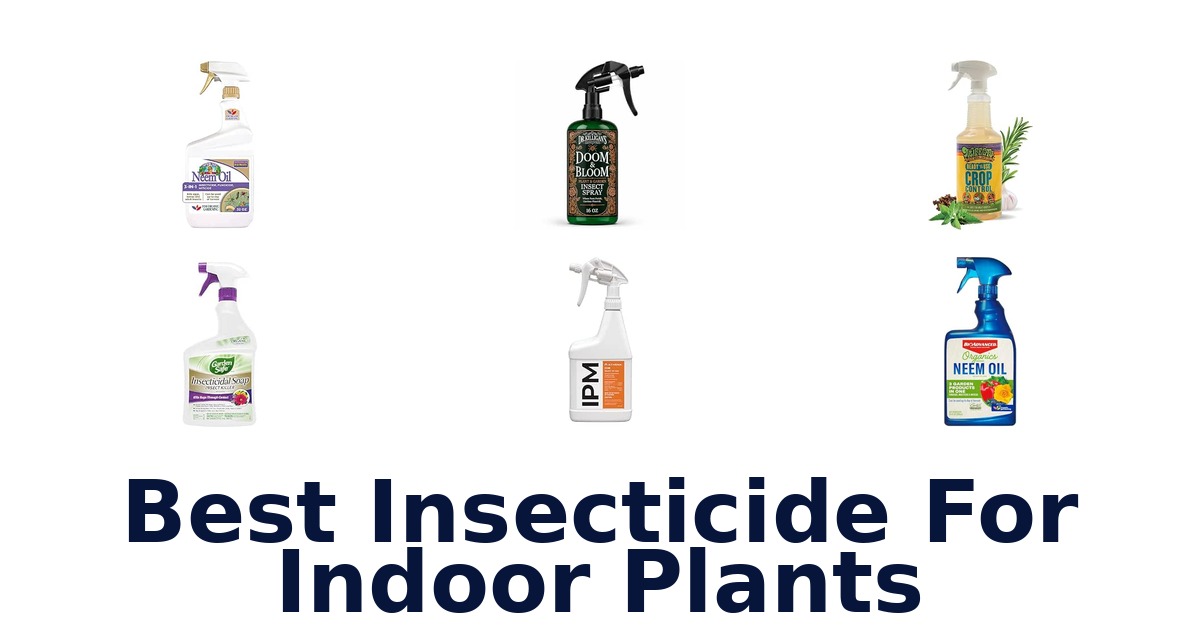
A strong indoor plant insecticide should list the pests you need to control, suit houseplants, and make its application method clear. BioAdvanced Houseplant Insect and Mite Control Spray is the most directly targeted option here: it is made for houseplants and lists insects, mites, and fungal diseases it controls. Other choices include neem oil sprays, ready-to-use insecticidal soaps, a concentrate, and plant-based formulas.
Those differences matter because some products require direct contact with pests, while others combine insect, mite, and disease control. Check the label for plant compatibility and directions before spraying, especially on delicate foliage.
This roundup compares the listed product facts—not independent efficacy tests—so you can narrow the options by intended use, formula, and stated pest coverage.
BioAdvanced Houseplant Insect and Mite Control Spray is the strongest overall match for indoor plants because it is explicitly intended for houseplants and lists control of insects, mites, and fungal diseases. Its listed pests include aphids, fungus gnats, and whiteflies, and pests must be contacted by the spray. For a neem-based alternative, Bonide Captain Jack’s Neem Oil Spray covers insect, mite, and fungal concerns and states that it kills all insect stages.
Our Top Picks
 Best Overall
Made for indoor and outdoor houseplants, it lists control of aphids, fungus gnats, whiteflies, mites, and fungal diseases in one spray.
View on Amazon Best Neem Oil
Bonide Captain Jack's Neem Oil
The ready-to-use neem spray is intended for houseplants and controls insects, mites, and fungal diseases; it states that it kills all insect stages.
View on Amazon Best Contact Soap
This ready-to-use soap is described as suitable for houseplants and kills through contact, with listed coverage including aphids, thrips, and spider mites.
View on Amazon- Best Neem Schedule BioAdvanced Organics Neem Oil
- Best Plant-Based Formula Trifecta Crop Control
Compare these indoor plant insecticide options
| # | Product | Form | Weight | Buy |
|---|---|---|---|---|
| 1 | 1. BioAdvanced Houseplant SprayBest Overall | Spray | 1.5 lb | View on Amazon |
| 2 | 2. Bonide Captain Jack's Neem OilBest Neem Oil | Liquid | 2.3 lb | View on Amazon |
| 3 | 3. Bonide Insecticidal SoapBest Contact Soap | Spray | 2 lb | View on Amazon |
| 4 |  4. Garden Safe Insecticidal SoapReady-to-use contact soap | Spray | — | View on Amazon |
| 5 |  5. BioAdvanced Organics Neem OilBest Neem Schedule | Oil | 1.5 lb | View on Amazon |
| 6 |  6. Trifecta Crop ControlBest Plant-Based Formula | Spray | — | View on Amazon |
| 7 |  7. Dr. Killigan's Plant Bug SprayContact treatment for visible pests | Spray | — | View on Amazon |
| 8 |  8. Earth's Ally 3-in-1 SprayConcentrate for three-in-one control | Liquid | 2.3 lb | View on Amazon |
| 9 |  9. Athena IPM SprayContact spray for mites and mildew | — | — | View on Amazon |
| 10 |  10. Arber Organic InsecticideOrganic concentrate for plant care | Liquid | 1.1 lb | View on Amazon |
Detailed Reviews: Best Insecticide For Indoor Plants
#1 · Best Overall
1. BioAdvanced Houseplant Spray
- Form: Spray
- Weight: 1.5 lb
Best for: Indoor houseplant multi-action spray.
Why it ranks #1: Made for indoor and outdoor houseplants, it lists control of aphids, fungus gnats, whiteflies, mites, and fungal diseases in one spray.
One spray combines insect, mite, and disease control for houseplants, flowers, and herbs indoors or outdoors. BioAdvanced lists targets including aphids, fungus gnats, whiteflies, and powdery mildew, giving indoor plant owners a single bottle for several common pest and fungal concerns.
The 24-fluid-ounce spray is applied directly to plants, and the listed pests must be contacted by the spray to be controlled. That makes coverage part of the treatment routine rather than a set-and-forget step. Its fungicide action also addresses powdery mildew, leaf spot, and rust, while indoor-and-outdoor use gives it flexibility for houseplants moved outside. Shake the bottle before spraying, and keep it out of reach of children.
- Combines insect, mite, and disease control
- Listed for indoor and outdoor houseplants, flowers, and herbs
- Targets fungus gnats, aphids, and whiteflies
- Controls listed diseases including powdery mildew, leaf spot, and rust
- Pests must be contacted by the spray to be controlled.
Skip it if you prefer a plant-derived soap for direct contact treatment; Bonide Insecticidal Soap is another ready-to-use option for houseplants.
This fits plant owners who want one spray for houseplant insects, mites, and listed fungal diseases, including fungus gnats and powdery mildew. Choose it only if you can apply spray directly to affected plants.
Full product details
| Brand | BioAdvanced |
|---|---|
| Included Components | Bottle |
| Item Form | Spray |
| Item Weight | 1.5 pounds |
| Manufacturer | SBM Life Science |
| Model Number | 800100B |
| Warranty Description | Warranty |
Listed on Amazon as: BioAdvanced Houseplant Insect and Mite Control Spray – 24 fl oz Bottle
View on Amazon#2 · Best Neem Oil
2. Bonide Captain Jack's Neem Oil
- Form: Liquid
- Weight: 2.3 lb
Best for: Neem oil, three-in-one care.
Why it ranks #2: The ready-to-use neem spray is intended for houseplants and controls insects, mites, and fungal diseases; it states that it kills all insect stages.
A ready-to-use neem oil spray combines insecticide, miticide, and fungicide action, letting indoor plant owners address pests, mites, and fungal problems with one bottle. Its listed uses include houseplants, and the formula controls insect eggs, larvae, and adults as well as spider mites and several fungal diseases.
The 32-ounce spray format skips mixing, while clarified hydrophobic neem oil gives it a role beyond insect control: the product also targets diseases including powdery mildew, rust, botrytis, and blight. Apply it directly across plant surfaces, including leaf undersides, at the first sign of pests or disease; the directions call for shaking before use and reapplying as needed. Its broad listed plant range includes houseplants, herbs, flowers, vegetables, trees, and shrubs.
- Ready-to-use 32-ounce spray requires no mixing
- Combines insecticide, miticide, and fungicide uses
- Controls insect eggs, larvae, and adults
- Listed for houseplants and multiple garden plant types
- Requires thorough direct coverage, including leaf undersides, and repeat application as needed.
Skip it if you need a concentrate for dilution; Earth's Ally 3-in-1 is also listed as a concentrate, while this bottle is ready to use.
Choose this for houseplants when you want neem oil coverage spanning insects, mites, and fungal disease in one ready-to-use spray. It still calls for shaking, thorough leaf coverage, and repeat applications as needed.
Full product details
| Brand | Bonide |
|---|---|
| Included Components | Bonide Captain Jack's 32 oz Neem Oil Spray |
| Item Form | Liquid |
| Item Weight | 2.3 pounds |
| Manufacturer | Bonide Products LLC |
| Model Number | 0226 |
| Warranty Description | Warranty |
| Additional Information | Important information Safety Information Keep away from children and pets. Directions Shake well before use. Spray directly on plants, covering all surfaces, including undersides of leaves. Use at first sign of pests or diseases. Reapply as needed. Avoid spraying during peak sunlight. |
Listed on Amazon as: Bonide Captain Jack's Neem Oil Spray for Plants, 32 oz Ready-to-Use
View on Amazon#3 · Best Contact Soap
3. Bonide Insecticidal Soap
- Form: Spray
- Weight: 2 lb
Best for: Contact soap for houseplants.
Why it ranks #3: This ready-to-use soap is described as suitable for houseplants and kills through contact, with listed coverage including aphids, thrips, and spider mites.
Plant-derived potassium salts of fatty acids kill insects on contact, making Bonide Insecticidal Soap a direct-treatment option for houseplants and other garden plants. The ready-to-use 32-ounce spray covers a wide listed pest range, including aphids, spider mites, thrips, flies, and caterpillars.
Because the soap works through direct contact and ingestion, the spray suits targeted treatment when pests are present rather than a hands-off approach. Its ready-to-use format avoids mixing, and the product is listed for houseplants, vegetables, flowers, and fruits, as well as outdoor gardens and greenhouses. The supplied information also says it may be used up to the day of harvest, making it relevant to indoor herb growers who use edible plants.
- Ready-to-use 32-ounce spray
- Plant-derived potassium salts of fatty acids
- Listed for houseplants, vegetables, flowers, and fruits
- May be used up to the day of harvest
- Pests must be contacted directly for the soap to kill them.
Skip it if you want a product that also targets fungal disease; Bonide Captain Jack's Neem Oil Spray adds fungicide and miticide action.
Pick this for indoor growers who can spray pests directly and want a ready-to-use soap for houseplants or edible plants. Its contact action makes thorough application important, especially when pests hide on leaves.
Full product details
| Brand | Bonide |
|---|---|
| Included Components | Bonide |
| Item Form | Spray |
| Item Weight | 2 pounds |
| Manufacturer | Bonide Products LLC |
| Model Number | 6526A |
| Warranty Description | DISCLAIMER OF EXPRESSED AND IMPLIED WARRANTIES: Buyer assumes all risks of use, storage and handling of this material not in strict accordance with directions given herewith. |
| Additional Information | Important information Safety Information See Label |
Listed on Amazon as: Bonide Insecticidal Soap, 32 oz Ready-to-Use Spray Multi-Purpose Insect Control for Organic Gardening Indoor and Outdoor
View on Amazon#4
4. Garden Safe Insecticidal Soap
- Form: Spray
Best for: Ready-to-use contact soap.
Why it ranks #4: Its ready-to-use contact spray is labeled for indoor use and lists mealybugs, mites, scale insects, thrips, and whiteflies among its pests.
No mixing is required with Garden Safe Insecticidal Soap, so indoor plant owners can go straight to spraying when pests appear. The 32-ounce contact spray is listed for indoor use and targets pests such as aphids, mealybugs, mites, scale insects, and whiteflies.
The nozzle can be turned to spray or stream, giving users two application patterns, while the directions call for thorough coverage of plant parts and direct contact with pests. Its listed uses extend to vegetables, fruit trees, ornamentals, shrubs, and flowers, including applications up to harvest day on edibles. Application conditions matter: avoid full sun, use calm weather, and avoid spraying when rain is predicted within 24 hours.
- Ready to use with no mixing
- Nozzle adjusts between spray and stream
- Listed for indoor use on ornamentals, flowers, and edibles
- May be applied to edibles through harvest day
- Avoid full sun and application when rain is expected within 24 hours.
Skip it if you need to spray without weather-related timing limits; BioAdvanced Houseplant Insect and Mite Control is listed for indoor use.
Choose this for indoor plants and edible gardens when a ready-to-use contact soap and adjustable spray-or-stream nozzle suit your routine. Avoid full sun, protect delicate listed plant types, and follow the weather guidance.
Full product details
| Brand | Garden Safe |
|---|---|
| Included Components | insect-and-pest-repellent-sprays |
| Item Form | Spray |
| Manufacturer | United Industries |
| Model Number | HG-93216 |
| Warranty Description | Warranty |
Listed on Amazon as: Garden Safe Insecticidal Soap Insect Killer Spray, 32 Oz
View on Amazon#5 · Best Neem Schedule
5. BioAdvanced Organics Neem Oil
- Form: Oil
- Weight: 1.5 lb
Best for: Neem oil for pests and mildew.
Why it ranks #5: This ready-to-use neem oil controls listed insects and mites on contact and includes a stated 7–14-day schedule for disease prevention.
A ready-to-use neem oil spray combines insecticide, miticide, and fungicide action, with listed control for insect eggs, larvae, and adults. BioAdvanced names spider mites, aphids, whiteflies, and mealybugs among its targets, while also addressing fungal diseases such as powdery mildew and rust.
The 24-fluid-ounce trigger spray supports application without a mixing step, and its three-in-one uses let home gardeners treat listed insects, mites, and fungal disease with one product. For disease prevention, the directions call for a 7–14-day application schedule; already present disease calls for a 7-day schedule. For insects or mites, apply at the first sign. This timing makes it useful for routine plant care, but requires following different schedules for prevention and active disease.
- Ready-to-use trigger spray
- Combines insecticide, miticide, and fungicide action
- Kills listed insect stages from eggs through adults
- Targets spider mites and listed fungal diseases
- Disease use requires following a 7–14-day prevention or 7-day active-disease schedule.
Skip it if you want a bottle with a broader listed plant range than this neem oil product; Bonide Captain Jack's Neem Oil Spray lists houseplants and more.
Choose this neem oil spray if you want one ready-to-use product for listed insects, mites, and fungal diseases. It fits gardeners willing to follow the distinct disease schedules and apply at the first sign of pests.
Full product details
| Brand | BioAdvanced |
|---|---|
| Included Components | Neem Oil – 24oz |
| Item Form | Oil |
| Item Weight | 1.5 pounds |
| Manufacturer | SBM Life Science |
| Model Number | 800400B |
| Additional Information | Important information Directions As a disease preventative, apply on a 7-14-day schedule,To control already present disease, apply on a 7-day schedule,Apply at the first sign of insect or mites |
Listed on Amazon as: BioAdvanced Organics Brand Neem Oil Spray – 24 fl oz
View on Amazon#6 · Best Plant-Based Formula
6. Trifecta Crop Control
- Form: Spray
Best for: Plant-based crop and houseplant care.
Why it ranks #6: The ready-to-use plant-based spray targets indoor and outdoor plants and lists spider mites, aphids, whiteflies, and fungus gnats.
Trifecta Crop Control arrives ready to use and uses a plant-based formula to target soft-bodied pests on indoor and outdoor plants. Its listed targets include spider mites, aphids, whiteflies, and fungus gnats, while the product also claims fungicide and miticide uses for crop and houseplant care.
This 32-ounce spray can be applied with an atomizer, misting system, or spraying apparatus, giving growers options for treating individual plants or using existing application equipment. The supplied directions call for thoroughly wetting the plant, supporting coverage of the target area. The formula is described as biodegradable and suitable for edible crops without chemical residues; handling directions nevertheless advise avoiding contact with eyes, skin, and clothing and wearing eye protection and gloves.
- Ready-to-use plant-based spray
- Targets listed soft-bodied pests including fungus gnats and spider mites
- Can be applied with an atomizer, misting system, or spraying apparatus
- Listed for indoor and outdoor plants and edible crops
- Handling directions call for eye protection and gloves.
Skip it if you want a spray whose supplied details do not call for gloves; BioAdvanced Organics Neem Oil Spray is ready to use for listed pests.
This suits growers who want a plant-based ready-to-use spray for houseplants and edible crops, especially when they already use an atomizer or misting system. Follow the stated protective handling directions during application.
Full product details
| Brand | Trifecta |
|---|---|
| Item Form | Spray |
| Manufacturer | Trifecta |
Listed on Amazon as: Trifecta Crop Control Ready to Use Maximum Strength Natural Pesticide, Fungicide, Miticide, Insecticide, Help Defeat Spider Mites, Powdery Mildew, Botrytis and Mold on Plants 32 OZ Size
View on Amazon#7
7. Dr. Killigan's Plant Bug Spray
- Form: Spray
Best for: Contact treatment for visible pests.
Why it ranks #7: This spray is intended for indoor and outdoor plants and uses a mechanical mode of action that breaks down pests' protective outer layer.
Doom & Bloom uses a mechanical mode of action that breaks down pests’ protective outer layer, leading to dehydration and disrupted respiration. Dr. Killigan's 16-ounce spray targets common plant pests on indoor and outdoor plants, making it an option focused primarily on existing infestations.
The product kills common plant pests on contact, so it is suited to treating visible pest problems rather than relying on a systemic or preventive claim. The supplied information says regular use can help deter future infestations, but its primary purpose is treatment. It is described as suitable for most indoor and outdoor plants, with a small-area test recommended first, especially for delicate or sensitive plants. That test is a practical precaution before applying broadly.
- Mechanical mode of action breaks down pests’ protective outer layer
- Kills common plant pests on contact
- Listed for indoor and outdoor plants
- Small-area test is recommended for delicate plants
- Primarily treats existing pest issues rather than serving as a prevention-first product.
Skip it if you need a spray that also lists fungal disease control; BioAdvanced Houseplant Insect and Mite Control combines insect and disease action.
This fits indoor growers treating an existing pest problem who want a contact spray with a mechanical mode of action. Test a small area first, particularly on delicate or sensitive plants, before broader use.
Full product details
| Brand | Dr. Killigan's |
|---|---|
| Included Components | 1 Bottle of Doom & Bloom Insect Spray |
| Item Form | Spray |
| Manufacturer | Dr. Killigan's |
Listed on Amazon as: Dr. Killigan's 16oz Plant Bug Spray for Indoor & Outdoor Plants
View on Amazon#8
8. Earth's Ally 3-in-1 Spray
- Form: Liquid
- Weight: 2.3 lb
Best for: Concentrate for three-in-one control.
Why it ranks #8: The concentrate is described for indoor and outdoor plants and combines insecticide, miticide, and fungicide action against listed soft-bodied pests.
Earth’s Ally combines insecticide, miticide, and fungicide uses in a 32-ounce concentrate, giving indoor and outdoor gardeners one formula for soft-bodied insects and common plant diseases. Its essential-oil blend is listed to kill and repel pests including spider mites, aphids, whiteflies, and mealybugs.
The concentrate format gives growers a larger volume to prepare for use, but it requires a preparation step rather than offering a ready-to-use spray. Its three-in-one role covers insects, mites, and fungal disease, while the listed residual repellent action adds a pest-control benefit beyond killing common soft-bodied insects. The product is described as a copper-fungicide and neem-oil spray alternative, providing a distinct formulation choice for indoor and outdoor organic gardening.
- Combines insecticide, miticide, and fungicide uses
- 32-ounce concentrate format
- Essential-oil blend targets listed soft-bodied insects
- Listed to kill and repel insects
- Concentrate requires preparation before application, unlike ready-to-use sprays.
Skip it if you want to spray directly without preparing a concentrate; Bonide Captain Jack's Neem Oil Spray comes ready to use.
Choose this for indoor or outdoor plant care when a concentrate with insect, mite, and fungal uses fits your routine. Account for the preparation step, and consider whether its essential-oil formulation matches your preference.
Full product details
| Brand | Earth's Ally |
|---|---|
| Included Components | 32 oz Concentrate Bottle |
| Item Form | Liquid |
| Item Weight | 2.3 pounds |
| Manufacturer | Sarasota Green Group |
| Model Number | 10290 |
#9
9. Athena IPM Spray
Best for: Contact spray for mites and mildew.
Why it ranks #9: This ready-to-use spray lists spider mites, aphids, thrips, and powdery mildew, but the supplied details provide less indoor-specific guidance.
Athena IPM kills spider mites, aphids, and thrips on contact while also treating powdery mildew, giving plant owners a two-part pest-and-disease use. Its ready-to-use spray is described as using EPA 25(b) minimum-risk ingredients and is made in the USA.
Contact action makes direct application central to controlling the listed pests and treating powdery mildew, while the broad-spectrum positioning covers plants from start to finish. The supplied information describes the ingredients as eco-friendly and says the spray is safe around pets, people, and children when used as directed. Its directions still caution users to keep it out of reach, avoid contact with eyes, skin, and clothing, and store it in a cool, dry place away from heat and open flames.
- Kills listed spider mites, aphids, and thrips on contact
- Treats powdery mildew
- Uses EPA 25(b) minimum-risk ingredients
- Made in the USA
- Directions require careful storage away from heat and open flames.
Skip it if you need a spray with a stated bottle volume or plant-specific schedule; BioAdvanced Organics Neem Oil Spray lists a 24-ounce size and disease schedules.
Athena IPM suits plant owners seeking contact treatment for listed pests plus powdery mildew and who value the stated minimum-risk ingredient category. Follow handling and storage directions, especially around children and pets.
Full product details
| Brand | Athena |
|---|
Listed on Amazon as: Athena IPM Insecticide & Fungicide Pest Control Ready to Use Spray
View on Amazon#10
10. Arber Organic Insecticide
- Form: Liquid
- Weight: 1.1 lb
Best for: Organic concentrate for plant care.
Why it ranks #10: It is described as an indoor and outdoor plant concentrate, but the supplied product details do not specify target pests or application directions.
A 16-fluid-ounce organic concentrate gives indoor and outdoor plant owners a concentrated format rather than a ready-to-use spray. ARBER identifies it as an insecticide, but the supplied product details provide limited application and target-pest information, so buyers should weigh that sparse guidance when choosing it.
The liquid concentrate is listed for indoor and outdoor plants, and its organic material feature may appeal to growers seeking an organic product format. Unlike ready-to-use options, a concentrate is intended to be prepared for use, so it adds a preparation step before spraying; however, the supplied information does not specify dilution amounts or name target insects. Directions state garden use only and advise avoiding inhalation or contact, then washing hands after use.
- Organic material feature is listed
- Concentrated liquid format
- Listed for indoor and outdoor plants
- 16-fluid-ounce bottle
- Supplied details do not identify target pests or provide dilution instructions.
Skip it if you need named indoor pests and clear application guidance; BioAdvanced Houseplant Insect and Mite Control lists targets and spray directions.
Consider this if an organic concentrate is your priority and you are prepared to consult its full directions before application. The supplied details do not name target pests or explain dilution, limiting how specifically its fit can be assessed.
Full product details
| Brand | ARBER |
|---|---|
| Included Components | bottle |
| Item Form | Liquid |
| Item Volume | 16 fluid ounces |
| Item Weight | 1.1 pounds |
| Manufacturer | Arber |
| Part Number | 1-341712-1 |
| Material Features | Organic |
| Model Number | 1-341712-1 |
| Size | 16 Fl Oz (Pack of 1) |
Listed on Amazon as: Arber Organic Insecticide Concentrate for Indoor & Outdoor Plants, 16 oz
View on AmazonWhy contact coverage can make or break treatment
A contact spray can miss pests if it does not reach where they are hiding. BioAdvanced Houseplant Insect and Mite Control says pests need to be contacted by the spray, and both Bonide Insecticidal Soap and Garden Safe Insecticidal Soap also rely on direct contact. Garden Safe specifically instructs users to cover plant parts, including leaf undersides.
This makes application coverage a practical failure point, not a minor label detail. Before choosing a contact product, inspect both sides of leaves and stems, then follow the product label for thorough application.
A spray that lists your pest may still disappoint if the pest is shielded or the plant is not fully covered. The alternative is not automatically systemic control: the supplied product details do not establish systemic action for these sprays. Compare stated application requirements rather than assuming a broad pest list means pests are reached without direct spraying.
Ready-to-use sprays and concentrates are not interchangeable
A ready-to-use bottle avoids measuring and mixing, while a concentrate requires attention to its directions. Bonide Captain Jack’s Neem Oil, BioAdvanced Houseplant Spray, and both insecticidal soaps are described as ready-to-use sprays. Earth’s Ally is explicitly a 32-ounce concentrate, and Arber is a 16-ounce concentrate; the supplied details do not give a dilution rate for either.
That missing information is a compatibility trap: do not guess a mixing ratio or treat concentrate volume as ready-to-spray volume. Check the product label for dilution, permitted plants, and application instructions before use.
A ready-to-use format may suit someone treating a few houseplants, while a concentrate may suit a buyer who prefers a liquid that must be prepared for application. Product form alone does not establish how much area a container will treat, so avoid estimating coverage from bottle size without label directions.
How to Choose an Indoor Plant Insecticide
Match the listed pests to the problem
Look for the pest you have named on the product’s stated coverage list, rather than relying on a general claim of insect control. BioAdvanced Houseplant Spray lists aphids, fungus gnats, and whiteflies; Bonide Captain Jack’s Neem Oil lists more than 15 insect pests and identifies spider mites as a target. Bonide Insecticidal Soap lists aphids, spider mites, thrips, and other pests, while Garden Safe lists mealybugs, scale insects, and whiteflies.
These are useful distinctions when you have identified a particular infestation. If you are unsure which pest is present, choose a product with broader listed coverage, but confirm the label includes the suspected pest.
For a specific, listed pest, a narrower match can be more useful than a long list that does not name it.
Decide whether you need disease or mite coverage too
Choose a multi-purpose formula if you also want the product to address listed mites or fungal diseases. BioAdvanced Houseplant Spray combines insect, mite, and disease control, listing powdery mildew, leaf spot, and rust. Bonide Captain Jack’s Neem Oil also combines insecticide, miticide, and fungicide action, while BioAdvanced Organics Neem Oil lists insect, mite, and fungal disease control.
By contrast, the supplied descriptions for the two insecticidal soaps emphasize insect control rather than a three-in-one use. If the problem is a named insect alone, an insect-focused soap may be enough.
If spider mites or a listed fungal issue are also a concern, the neem and multi-purpose options provide broader stated functions; confirm that the label covers your specific plant and problem.
Choose a format you can apply as directed
Check whether the product is ready to use or requires preparation, and whether direct contact is part of its directions. Bonide Captain Jack’s Neem Oil, Bonide Insecticidal Soap, Garden Safe Insecticidal Soap, and BioAdvanced Houseplant Spray are ready-to-use formats. Earth’s Ally is a 32-ounce concentrate, and Arber is a 16-ounce concentrate; the supplied facts do not provide their mixing ratios.
Contact-dependent products require careful coverage: BioAdvanced Houseplant Spray says pests must be contacted, and Garden Safe directs users to spray plant parts, including leaf undersides. A ready-to-use bottle suits someone who wants to apply without mixing.
A concentrate may appeal to someone willing to follow dilution directions, but only use the rate on its label. Never infer a concentrate’s application strength from its bottle size.
Which Indoor Plant Insecticide Should You Choose?
For a broad indoor houseplant match, choose BioAdvanced Houseplant Spray: it is explicitly intended for houseplants and lists insects, mites, and fungal diseases. If you prefer neem oil with stated control across insect life stages, choose Bonide Captain Jack’s Neem Oil. For a contact soap aimed at listed insects such as aphids and spider mites, Bonide Insecticidal Soap is a ready-to-use option; choose Garden Safe Insecticidal Soap if its listed pests, including mealybugs and scale, better match your problem.
BioAdvanced Organics Neem Oil is another ready-to-use choice when its disease-prevention schedule is useful. Consider Trifecta Crop Control for its plant-based formula and listed fungus gnats.
For Earth’s Ally or Arber, check the label for dilution directions before use. Match the product to the pest, plant, and application instructions.
Related Buying Guides
- Best Plant Food For Indoor Plants
- Best Pots For Indoor Plants
- Best Trellis For Indoor Plants
- Best Lamp For Plants Indoors
- Best Grow Lights For Indoor Plants
- Best Liquid Fertilizer For Indoor Plants
Frequently Asked Questions
How do I apply insecticide to houseplants without damaging leaves?
Follow the product label’s application directions and check whether it calls for dilution or a ready-to-use spray. Apply only as directed for the plant and pest, and avoid assuming that products are interchangeable. BioAdvanced Houseplant Spray requires pests to be contacted, so direct application to the listed pests matters.
Should I isolate an infested houseplant from other plants?
Yes, separating an infested plant can help keep the problem contained while you identify the pest and choose an appropriate treatment. Check nearby plants for signs of infestation, too. Follow the insecticide label’s directions, and keep the affected plant separate until you have a practical plan for managing the problem.
How can I tell whether my houseplant has pests or a fungal disease?
Inspect the plant for visible insects or mites and compare the symptoms with the product’s listed targets. Some options in this roundup list both pests and fungal diseases, but a spray’s broad claims do not identify the cause. If you are unsure, confirm the problem before choosing a treatment.
How should I match a product to a houseplant pest?
Start with the pest you have identified, then check whether it appears among the product’s listed targets and whether the product is intended for houseplants. For example, the listed targets for BioAdvanced Houseplant Spray include aphids, fungus gnats, and whiteflies. Match the plant and application directions to the label.
What should I check before using a concentrate?
Check the label for dilution and application directions before using a concentrate. Arber and Earth’s Ally are identified as concentrates in their titles, so do not assume they are ready to use. Follow the product instructions for the plant and intended pest, and avoid applying a concentrate without confirming how it should be prepared.
Final Words
For the broadest indoor-houseplant match, choose BioAdvanced Houseplant Insect and Mite Control Spray: it is explicitly intended for houseplants and lists insects, mites, and fungal diseases, though pests must be contacted by the spray. Choose Bonide Captain Jack’s Neem Oil if you prefer neem oil and stated control across insect life stages. For other options, match listed pests to your problem and check the label, especially for concentrates.