
Best Septic Tank Root Killer: 10 Granule and Foam Options
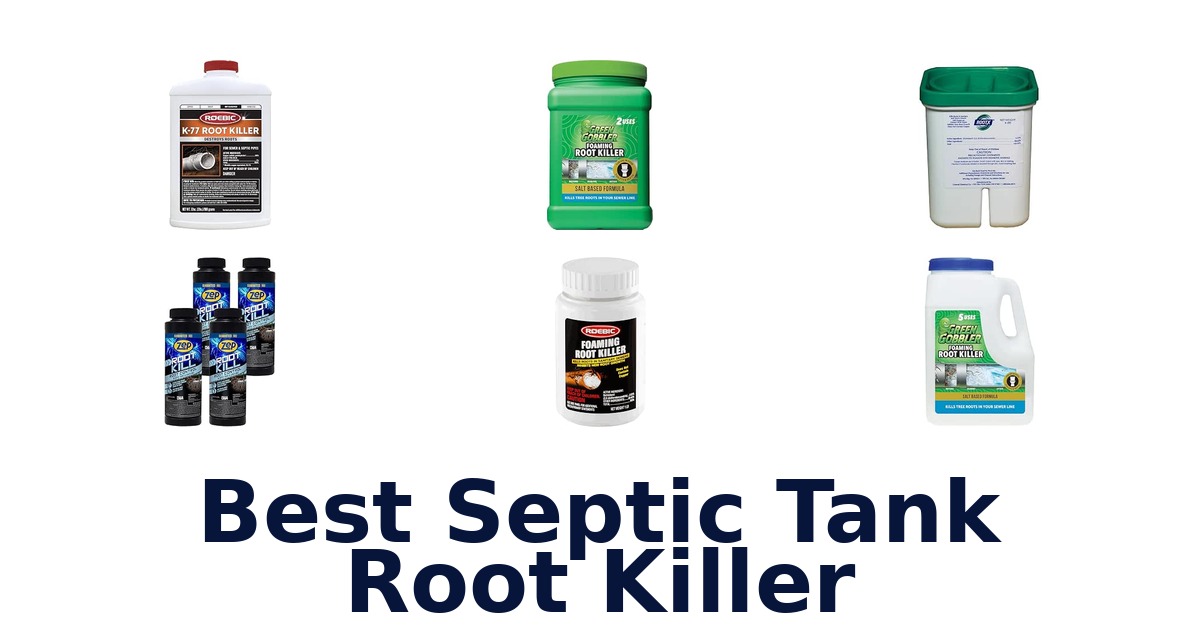
A strong septic tank root killer should target roots in the pipes or leach lines while matching your application setup and treatment needs. Roebic K-77 Granular Tree Root Killer is a leading fit for homeowners who want a granular copper formula explicitly described for sewer and septic pipes. The options here include copper sulfate granules, foaming formulas, and products with stated pipe coverage or application requirements.
Those differences matter: RootX jars, for example, require a reusable funnel/applicator that is not included, while several products give no comparable coverage figure. Use the product label as the final authority for where and how to apply any treatment.
This guide compares the listed claims and specifications rather than assuming every formula suits every septic configuration.
Roebic K-77 Granular Tree Root Killer is the best overall choice in this group because its listed use explicitly includes sewer and septic pipes, and its copper formula is described as killing existing roots and preventing regrowth. It is a 32-ounce granule, and the product claims compatibility with all types of plumbing. Buyers who prefer foam, need a stated pipe-coverage figure, or want a formula without copper sulfate may find a better match among the alternatives below.
Our Top Picks
 Best Overall
Its listed use covers sewer and septic pipes, and the 32-ounce copper granule is described as killing existing roots and preventing regrowth.
View on Amazon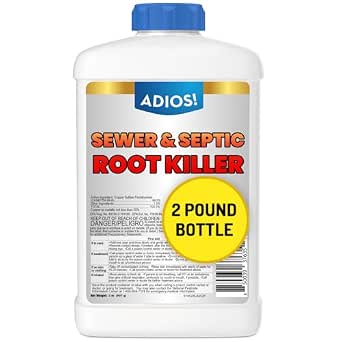 Leach Field Fit
ADIOS! Copper Sulfate Root Killer
The two-pound copper sulfate granule is specifically listed for sewer, septic, drain, and leach-field lines, with biannual use noted.
View on Amazon Larger Granule Pack
Its five-pound copper sulfate granule is listed for sewer, pipe, drain, septic tanks, and septic systems; directions allow up to two pounds per treatment.
View on Amazon- Foaming Formula Roebic FRK Foaming Root Killer
- No-Copper Formula Green Gobbler Foaming Root Killer 4 lb
Compare root treatments by formula and intended use
| # | Product | Weight | Form | Buy |
|---|---|---|---|---|
| 1 | 1. Roebic K-77 Root KillerBest Overall | 2 lb | Granule | View on Amazon |
| 2 | 2. ADIOS! Copper Sulfate Root KillerLeach Field Fit | 2 lb | Granule | View on Amazon |
| 3 | 3. Sanco Root DestroyerLarger Granule Pack | 2 lb | Granules | View on Amazon |
| 4 |  4. Roebic FRK Foaming Root KillerFoaming Formula | 16 oz | Granule | View on Amazon |
| 5 |  5. Green Gobbler Foaming Root Killer 4 lbNo-Copper Formula | 4 lb | Powder | View on Amazon |
| 6 |  6. Zep Root KillLeach-line root control case | 9 lb | Granules | View on Amazon |
| 7 |  7. RootX 2 lb JarMeasured four-inch pipe treatment | 2 lb | Powder | View on Amazon |
| 8 |  8. Green Gobbler Foaming Root Killer 10 lbMulti-treatment copper-free foam | 10 lb | Powder | View on Amazon |
| 9 |  9. RootX 4 lb JarLonger-run foaming pipe coverage | 4 lb | Powder | View on Amazon |
| 10 |  10. Thalictrum Root DestroyerTwo-pound copper sulfate granules | 2 lb | Granule | View on Amazon |
Detailed Reviews: Best Septic Tank Root Killer
#1 · Best Overall
1. Roebic K-77 Root Killer
- Weight: 2 lb
- Form: Granule
Best for: Copper treatment for mixed plumbing.
Why it ranks #1: Its listed use covers sewer and septic pipes, and the 32-ounce copper granule is described as killing existing roots and preventing regrowth.
Roebic K-77 uses a copper formula to kill roots where they enter sewer and septic pipes, helping stop regrowth at the intrusion point. Its stated compatibility with all types of plumbing makes it an option for households seeking root control without a corrosive treatment for their pipes.
The granular formula targets roots already in sewer and septic pipes and is also described as stopping new growth, connecting treatment with ongoing flow maintenance. Roebic says the product is non-corrosive and safe for all types of plumbing, a useful fit when pipe compatibility matters. The 32-ounce container gives buyers a defined package size, while the label cautions users to follow application directions and avoid contact with skin and eyes.
- Copper formula kills roots at their point of entry
- Targets sewer and septic pipes
- Described as non-corrosive and safe for all plumbing types
- Granular form in a 32-ounce container
- Application directions are not fully specified in the supplied product details.
Skip it if you need a stated treatment length or a detailed application schedule; Sanco Industries Root Destroyer lists treatment timing and dose guidance.
A practical pick for homeowners addressing roots in sewer or septic piping who value a non-corrosive formula for different plumbing types. Check the package directions before application, since the supplied listing does not spell out the full treatment procedure.
Full product details
| Brand | Roebic |
|---|---|
| Included Components | Roebic – 33051001771 |
| Item Form | Granule |
| Item Volume | 32 fluid ounces |
| Item Weight | 2 pounds |
| Manufacturer | Roebic Store |
| Material Feature | Non-Toxic, Unscented |
| Material Features | Non-Toxic, Unscented |
| Model Number | K-77-2LB |
| Package Size Name | 32 Ounce |
| Size | 32 Ounce (Pack of 1) |
| Special Features | Clears Clogs, Keeps System Running Smoothly |
| Warranty Description | Warranty |
Listed on Amazon as: Roebic K-77 Granular Tree Root Killer for Sewer Lines, 32 oz
View on Amazon#2 · Leach Field Fit
2. ADIOS! Copper Sulfate Root Killer
- Weight: 2 lb
- Form: Granule
Best for: Copper formula for septic lines.
Why it ranks #2: The two-pound copper sulfate granule is specifically listed for sewer, septic, drain, and leach-field lines, with biannual use noted.
ADIOS! uses an EPA-approved copper sulfate formula specified for tree and shrub roots, including roots in main lines, sewer and septic lines, drains, and leach fields. Its broad listed system coverage makes it relevant to homeowners managing more than one root-prone wastewater area.
The product is described as preventing regrowth as well as killing existing roots, supporting both corrective treatment and continued root control. Its two-pound granular format offers a defined quantity for household use, and the listing names maple, pine, and oak among the tree types covered. ADIOS! also identifies the formula as high-purity copper sulfate and says products are manufactured in its own American facilities. Use as directed; the supplied facts do not state a dosing schedule.
- EPA-approved copper sulfate formula
- Listed for sewer, septic, drain, and leach-field lines
- Targets roots from maple, pine, oak, and other trees
- Two-pound granular format
- The supplied product details do not give a treatment dose or schedule.
Skip it if you want explicit timing and dose guidance; Sanco Industries Root Destroyer lists half-pound increments and treatment timing for reduced flow.
ADIOS! is a fit for homeowners seeking copper sulfate root control across sewer, septic, drain, or leach-field lines. Buyers who need a published application schedule should consult the label, as the supplied listing does not provide one.
Full product details
| Brand | ADIOS! |
|---|---|
| Included Components | Copper Sulfate |
| Item Form | Granule |
| Item Weight | 2 pounds |
| Manufacturer | Compare Brands |
| Model Number | 41CADI |
| Additional Information | Important information Safety Information Use as directed. Ingredients Copper Sulfate |
Listed on Amazon as: Copper Sulfate Tree Root Killer for Sewer Line and Pipes (2 Pounds)
View on Amazon#3 · Larger Granule Pack
3. Sanco Root Destroyer
- Weight: 2 lb
- Form: Granules
Best for: Dose-guided copper crystal treatment.
Why it ranks #3: Its five-pound copper sulfate granule is listed for sewer, pipe, drain, septic tanks, and septic systems; directions allow up to two pounds per treatment.
Sanco Industries Root Destroyer provides copper sulfate crystals with a treatment schedule tied to reduced water flow: apply when flow first drops, while some flow remains. That timing gives homeowners a practical cue for treating suspected root growth before a line reaches complete stoppage.
The listing identifies copper sulfate pentahydrate and granular form, while the directions call for applications up to two pounds twice yearly or when reduced flow suggests roots. Applying in half-pound increments makes the dose adjustable, and treatment should not wait until a complete blockage because some water flow is needed to carry product to the roots. The five-pound package suits buyers planning repeat treatments, though it is also available in smaller sizes.
- Copper sulfate pentahydrate in granular form
- Directions specify treatment when reduced flow is first noticed
- Application can use half-pound increments
- Available in 1-, 2-, and 5-pound sizes
- Some water flow is required to carry the product to root growth.
Skip it if you need a foaming formula rather than crystals; Roebic FRK uses a foaming-on-contact approach to fill the pipe line.
This fits homeowners who can recognize reduced flow and follow a dose-based copper treatment schedule for sewer, pipe, drain, or septic lines. It is not the right choice for a line with no remaining flow to carry the granules toward roots.
Full product details
| Brand | Sanco Industries |
|---|---|
| Item Form | Granules |
| Item Weight | 2 pounds |
| Manufacturer | Sanco Industries |
| Model Number | 667 |
| Package Size Name | 5lbs |
Listed on Amazon as: Root Destroyer – 5lbs – Root Killer for Sewer, Pipe & Drain Lines, Septic Tanks and Septic Systems – Stops New Growth & Safe for All Plumbing – Pure Copper Sulfate Crystals
View on Amazon#4 · Foaming Formula
4. Roebic FRK Foaming Root Killer
- Weight: 16 oz
- Form: Granule
Best for: Foaming whole-line root treatment.
Why it ranks #4: This one-pound formula foams through the pipe line and is described for root control while leaving surrounding trees unharmed.
Roebic FRK foams on contact to fill pipes, which helps its dichlobenil formula reach root problems along the pipe line rather than treating only a single point. The product is intended to remove clogs and inhibit new root growth while leaving surrounding trees unharmed.
The foaming action is paired with a root-growth inhibitor, offering a two-part purpose: address existing clogs and reduce new growth along the line. Roebic lists a one-pound container, and the directions specify pouring the entire contents into the toilet, giving the application a defined single-container workflow. The product is described as not harming surrounding trees, a relevant consideration where sewer lines run near established landscaping. Follow the label directions for application.
- Foams on contact to fill pipes
- Dichlobenil inhibits new root growth along the pipe line
- Formula is described as removing clogs and preventing backups
- Listed as not harming surrounding trees
- The one-pound directions call for using the entire container in one application.
Skip it if you want a copper-free formula; Green Gobbler Foaming Root Killer explicitly states it contains no copper sulfate.
Roebic FRK fits homeowners seeking a foaming treatment for roots and clogs across a pipe line, especially near trees they want to protect. Its one-pound application is a poor fit if you need to divide the container between treatments.
Full product details
| Brand | Roebic |
|---|---|
| Included Components | Roebic FRK Foaming Tree Root Killer, Chemical Septic System, Drain Field and Sew |
| Item Form | Granule |
| Item Weight | 16 ounces |
| Manufacturer | Roebic |
| Model Number | FRK-1LB |
| Warranty Description | Warranty |
Listed on Amazon as: Roebic FRK Foaming Tree Root Killer for Sewer Lines, 1 lb
View on Amazon#5 · No-Copper Formula
5. Green Gobbler Foaming Root Killer 4 lb
- Weight: 4 lb
- Form: Powder
Best for: Copper-free foaming septic option.
Why it ranks #5: The four-pound product provides two uses and is described as copper-sulfate-free and safe for pipes, septic, soil, and trees when used properly.
Green Gobbler’s foaming root killer contains no copper sulfate, a defining choice for buyers seeking a different active-formula approach to roots in pipes and sewer lines. The listing describes it as safe for pipes, septic systems, soil, and trees when used properly.
The powder is applied through a toilet or sewer cleanout, and the directions emphasize getting the correct amount to the tree roots. That application route gives buyers two listed access points, while the foaming action is intended to dissolve roots and help prevent regrowth. The four-pound package is described as two uses, which helps organize treatment planning. Maintenance directions are part of the product guidance, so use and repeat treatment should follow the label rather than guesswork.
- Contains no copper sulfate
- Foaming formula targets roots in pipes and sewer lines
- Described as safe for pipes, septic, soil, and trees when used properly
- Four pounds listed for two uses
- The supplied details do not specify a pipe-length treatment coverage.
Skip it if you need a stated treatment length for a measured pipe run; RootX 2 lb Jar specifies coverage for 50 feet of four-inch pipe.
This suits buyers who want a copper-sulfate-free foaming formula for pipes or septic systems and can apply it through a toilet or sewer cleanout. Follow the maintenance directions, since the listing does not provide treatment coverage by pipe length.
Full product details
| Brand | Green Gobbler |
|---|---|
| Included Components | Foaming Root Killer |
| Item Form | Powder |
| Item Weight | 4 pounds |
| Manufacturer | Green Gobbler |
| Model Number | G8079 |
Listed on Amazon as: Green Gobbler, FOAMING Root Killer | Kills Tree Roots in Pipes & Sewer Lines | Contains No Copper Sulfate | Safe for Pipes and Septic – 2 USES, 4 LBS
View on Amazon#6
6. Zep Root Kill
- Weight: 9 lb
- Form: Granules
Best for: Leach-line root control case.
Why it ranks #6: The granular formula is specifically listed for septic tanks and leach lines, but its directions warn against sink or tub drains and note temporary bacterial reduction.
Zep Root Kill is explicitly listed for septic tank leach lines and municipal sewer systems, making its stated application range a useful guide for buyers focused on those locations. The case contains four two-pound units for planned treatment across multiple applications or sites.
The granular copper sulfate treatment is described as working on roots penetrating pipe cracks and poorly sealed joints, helping address intrusion at those entry points. Zep says roots typically die and begin to decay within three to four weeks after accumulating sufficient copper sulfate, so buyers should allow time for flow to improve. The listing also warns against sink or tub drains because the product can corrode metal drains, and says bacterial action may take about 15 days to return to normal.
- Listed for septic tank leach lines and municipal sewer systems
- Targets roots entering through cracks and poorly sealed joints
- Granular formula works on contact
- Four two-pound units in the case
- Do not apply through sink or tub drains; it can corrode metal drains.
Skip it if you need a treatment specifically described as non-corrosive across plumbing; Roebic K-77 states compatibility with all plumbing types.
Zep suits buyers treating sewer systems or septic leach lines who can keep application away from sink and tub drains. Its stated three-to-four-week root response also calls for patience rather than expecting immediate flow restoration.
Full product details
| Brand | Zep |
|---|---|
| Item Form | Granules |
| Item Weight | 9 pounds |
| Manufacturer | Zep |
Listed on Amazon as: Zep Root Kill – 2 Lbs (Case of 4) ZROOT24 – Root Control in Septic Tanks and Leach Lines
View on Amazon#7
7. RootX 2 lb Jar
- Weight: 2 lb
- Form: Powder
Best for: Measured four-inch pipe treatment.
Why it ranks #7: It is listed for sewer lines and septic systems and treats 50 feet of four-inch pipe, but a reusable funnel/applicator is required and not included.
RootX’s two-pound jar is specified to treat 50 feet of four-inch pipe, giving buyers a concrete coverage target for a known sewer-line run. Its foaming root control is intended to eliminate tree-root blockages, but the listed jar is supplied without its required funnel or applicator.
The product calls for five to ten gallons of water for the stated 50-foot treatment, helping buyers plan the application around both line length and water volume. RootX says the jar is designed for a single-use application and will not immediately open a blocked sewer line, so it is not an instant-clearance option. A reusable RootX funnel/applicator is required but not included, making access to that accessory part of the setup workflow.
- Treats 50 feet of four-inch pipe per two-pound jar
- Foaming root control targets sewer-line root blockages
- Specifies five to ten gallons of water for application
- Single-use jar application
- Reusable RootX funnel/applicator is required and not included.
Skip it if you need coverage for a longer run or six-inch pipe; RootX 4 lb Jar specifies 100 feet of four-inch or 75 feet of six-inch pipe.
RootX 2 lb Jar suits buyers treating a measured 50-foot section of four-inch pipe who can obtain the required reusable applicator. Do not expect immediate opening of a blocked sewer line, and plan the specified water volume.
Full product details
| Brand | RootX |
|---|---|
| Item Form | Powder |
| Item Weight | 2 pounds |
| Manufacturer | RootX |
| Model Number | RootX-2LB-Jar-Only |
Listed on Amazon as: RootX – 2 LB. JAR (No Funnel/Applicator) Foaming root control for sewer lines and septic systems
View on Amazon#8
8. Green Gobbler Foaming Root Killer 10 lb
- Weight: 10 lb
- Form: Powder
Best for: Multi-treatment copper-free foam.
Why it ranks #8: The ten-pound no-copper foaming product is described for pipes, sewer lines, and septic use, with four uses stated in its title.
Green Gobbler’s ten-pound foaming root killer is listed for four uses and contains no copper sulfate, combining a larger supply with a clearly stated formula distinction. It targets tree roots in pipes and sewer lines and is described as safe for septic systems when used properly.
The powder is applied by flushing one pound of product, according to the supplied directions, while the four-use listing gives a repeat-treatment plan for buyers maintaining a system. The foaming formula is intended to kill roots in pipes and sewer lines without copper sulfate. Product packaging contains the specific safety warnings, and the listing directs users to follow standard handling, application, storage, and disposal precautions for a weed and moss control agent.
- Ten-pound package listed for four uses
- Contains no copper sulfate
- Foaming root killer targets pipes and sewer lines
- Described as safe for septic when used properly
- The listed direction uses one pound per application, requiring multiple portions for the four-use supply.
Skip it if you want a smaller two-use supply; Green Gobbler 4 lb Foaming Root Killer is listed for two uses.
This fits homeowners planning repeated copper-sulfate-free foaming treatments for pipes or sewer lines and who can follow the package safety directions. The ten-pound supply is a larger treatment quantity, so consider whether four listed uses match your maintenance needs.
Full product details
| Brand | Green Gobbler |
|---|---|
| Item Form | Powder |
| Item Weight | 10 pounds |
| Manufacturer | Green Gobbler |
| Model Number | G6062Z |
| Package Size Name | 10 lbs |
Listed on Amazon as: Green Gobbler, FOAMING Root Killer | Kills Tree Roots in Pipes & Sewer Lines | Contains No Copper Sulfate | Safe for Pipes and Septic – 4 USES, 10LBS
View on Amazon#9
9. RootX 4 lb Jar
- Weight: 4 lb
- Form: Powder
Best for: Longer-run foaming pipe coverage.
Why it ranks #9: Its listed treatment covers 100 feet of four-inch or 75 feet of six-inch pipe, but the required reusable funnel/applicator is not included.
RootX’s four-pound jar specifies coverage for 100 feet of four-inch pipe or 75 feet of six-inch pipe, making it the clearest fit here for a longer measured run. Its foaming root control targets sewer and septic-system lines, with water quantities listed for application.
The directions pair the 100-foot four-inch treatment with 15 to 20 gallons of water, helping buyers plan a larger-volume application. A reusable RootX funnel/applicator is required, though this jar-only listing does not include one. The formula is mixed before use, and the listing warns against storing a leftover portion after mixing because the reaction of its two components eliminates that option. It also cautions not to flush the full four pounds down a toilet.
- Treats 100 feet of four-inch or 75 feet of six-inch pipe
- Specifies 15 to 20 gallons of water for application
- Foaming root control for sewer and septic lines
- Coverage supports longer pipe runs
- A reusable funnel/applicator is required but not included.
Skip it if you need a smaller treatment for a 50-foot four-inch run; RootX 2 lb Jar is specified for that coverage.
RootX 4 lb Jar fits buyers treating longer four- or six-inch pipe runs who can supply the required applicator and water volume. Prepare to use the mixed product as directed rather than saving a leftover portion.
Full product details
| Brand | RootX |
|---|---|
| Item Form | Powder |
| Item Weight | 4 pounds |
| Manufacturer | RootX |
| Model Number | RootX-4LB-Jar-Only |
Listed on Amazon as: RootX – 4 LB. Jar (No. Funnel/Applicator) Foaming Root Control for Sewer Lines and Septic System
View on Amazon#10
10. Thalictrum Root Destroyer
- Weight: 2 lb
- Form: Granule
Best for: Two-pound copper sulfate granules.
Why it ranks #10: The title identifies a two-pound copper sulfate root killer for sewer pipes and septic systems, but the supplied listing provides few further use details.
Thalictrum Root Destroyer is a two-pound copper sulfate root killer labeled for sewer pipes and septic systems, with the title also identifying tree and shrub friendliness. That combination gives buyers a defined package size and a stated focus on stopping new root growth.
The listing describes copper sulfate granules for sewer pipes and septic systems and says the product stops new growth, linking the formula to ongoing root control rather than a single blockage claim. Its two-pound weight offers a clear quantity for planning, but the supplied product information does not provide a dose, application route, or treatment coverage. Buyers should therefore rely on the product label for how to apply it safely and appropriately to their system.
- Copper sulfate root-killer formula
- Listed for sewer pipes and septic systems
- Title states it stops new growth
- Two-pound granular product
- The supplied details give no dose, application route, or pipe-coverage figure.
Skip it if you need measured pipe coverage and a stated applicator requirement; RootX 2 lb Jar specifies 50 feet of four-inch pipe and its required tool.
Thalictrum suits buyers seeking a two-pound copper sulfate granule for sewer or septic root control who can consult the package for application details. The listing does not establish treatment coverage or a specific dosing workflow.
Full product details
| Brand | Thalictrum |
|---|---|
| Included Components | Root Destroyer |
| Item Form | Granule |
| Item Weight | 2 pounds |
| Manufacturer | Thalictrum |
| Model Number | RE-2-XJ |
Listed on Amazon as: Root Destroyer – 2LBs Copper Sulfate Root Killer for Sewer Pipes & Septic Systems – Stops New Growth – Safe for All Plumbing – Tree & Shrub Friendly
View on AmazonWhy a root treatment may not clear a backup
A root killer should not be treated as an instant way to open a fully blocked line. RootX states that it will not immediately open a blocked sewer line, and its directions require some water to carry the product to the roots. Sanco likewise advises treating when reduced flow first appears and not waiting for a complete stoppage.
Zep says roots usually die and begin to decay within three to four weeks after sufficient copper sulfate accumulates, so its expected effect is gradual rather than immediate. If wastewater is backing up or flow has stopped, applying more product may not solve the underlying blockage.
The supplied product information does not establish when a particular backup is caused by roots, nor whether a line needs mechanical clearing or repair. Treat the reduced-flow guidance as a timing cue, not a diagnosis; persistent or severe symptoms warrant professional assessment.
Check the applicator and treatment coverage first
A listed pipe-coverage figure is useful only if the required application equipment and water volume are available. RootX 2 lb Jar is designed for 50 feet of four-inch pipe and calls for five to ten gallons of water; RootX 4 lb Jar is designed for 100 feet of four-inch pipe or 75 feet of six-inch pipe and calls for 15 to 20 gallons. Both listings say a reusable funnel/applicator is required, but neither jar includes it.
Green Gobbler’s ten-pound listing describes four uses, while its four-pound listing states two uses; neither supplied description gives a comparable pipe-length figure. Do not infer that a package’s total weight determines the amount needed for your line.
Confirm the pipe route, diameter, access point, label directions, and included application equipment before selecting a product. Coverage and application instructions are not interchangeable across formulas.
How to Choose a Septic Root Killer
Match the formula to your preferred application
Choose between granules and foaming products based on the listed formula and the application instructions you can follow. Granules include Roebic K-77 at 32 fluid ounces, ADIOS! at two pounds, and Sanco Root Destroyer at five pounds.
Foaming options include Roebic FRK at one pound, Green Gobbler at four or ten pounds, and RootX jars at two or four pounds. The listed form is granule for the first group and powder for several foaming products, so check the label rather than assuming the word powder explains the mixing method.
Buyers wanting a straightforward granular option can compare K-77 or ADIOS!; buyers specifically seeking foam can consider FRK or Green Gobbler. RootX may suit those with its required applicator already available.
Use coverage figures only where they are stated
Look for a stated pipe length and diameter when you need to match treatment to a known line. RootX 2 lb Jar lists 50 feet of four-inch pipe, while RootX 4 lb Jar lists 100 feet of four-inch pipe or 75 feet of six-inch pipe. The two RootX listings also specify different water volumes and require a reusable funnel/applicator not included with either jar.
Green Gobbler lists two uses in its four-pound title and four uses in its ten-pound title, but the supplied details do not state comparable footage. Other products also lack a pipe-length figure in the provided information.
Buyers with known pipe dimensions may value RootX’s explicit coverage; those without them should avoid estimating treatment quantity from package weight alone.
Check the septic and plumbing limitations
Choose a product whose stated use and warnings fit your actual plumbing route. Roebic K-77 is described for sewer and septic pipes and claims safety for all types of plumbing. ADIOS!
lists septic lines, drain fields, and leach fields, while Zep names septic tank leach lines but warns not to apply it through sink or tub drains and notes bacterial action is temporarily reduced. Green Gobbler says its no-copper formula is safe for pipes, septic, soil, and trees when used properly.
Buyers prioritizing explicit septic and leach-field references can compare ADIOS! and Zep; those wanting a no-copper option can consider Green Gobbler. In every case, follow the product label and verify compatibility with the system before applying treatment.
Which Septic Root Killer Should You Choose?
For a broadly applicable granular option explicitly described for septic and sewer pipes, choose Roebic K-77 Root Killer. If leach-field use is central to your situation, ADIOS! Copper Sulfate Root Killer specifically lists drain and leach fields, while Zep Root Kill names septic leach lines but carries a warning about sink and tub drains and temporary bacterial reduction.
For a foaming formula, Roebic FRK Foaming Root Killer is a one-pound option; choose Green Gobbler Foaming Root Killer 4 lb if avoiding copper sulfate is important. If you know your pipe dimensions and already have the required applicator, RootX 2 lb Jar or RootX 4 lb Jar provides stated coverage.
Sanco Root Destroyer offers a five-pound granule package. Thalictrum Root Destroyer has the least supplied detail, so confirm its directions before choosing it.
Related Buying Guides
Frequently Asked Questions
How can I tell whether roots are causing a septic drain-field or sewer-line blockage?
Recurring slow drains, gurgling, or backups can indicate a blockage, but they do not confirm roots are the cause. Sewage odors or unusually wet areas near a line or drain field also warrant attention. A septic professional can inspect the system and distinguish root intrusion from other problems.
Can a root killer damage the bacteria or plants around my septic system?
It can affect them, depending on the formula and where it is used. Zep warns of temporary bacterial reduction, while Green Gobbler’s listed formula contains no copper sulfate. Follow the product directions, check any warnings about septic use, and avoid treating areas beyond the stated application site.
When should I call a septic professional instead of applying a root treatment?
Call a septic professional for sewage backups, persistent or worsening symptoms, suspected drain-field trouble, or uncertainty about the blockage or system condition. A treatment is not a substitute for diagnosing damage or a full blockage. Stop using affected fixtures if wastewater is backing up, and seek prompt help.
Which options specifically name septic leach lines or drain fields?
ADIOS! Copper Sulfate Root Killer specifically lists drain and leach fields, while Zep Root Kill names septic leach lines. Roebic K-77 is explicitly listed for sewer and septic pipes.
Check each label for the exact application site; these descriptions do not establish suitability for every drain-field problem.
Do I need a separate applicator for RootX?
The listed RootX 2-pound and 4-pound jars do not include a funnel or applicator. Check the product directions and your pipe dimensions before choosing one, since the article’s supplied information does not provide a coverage figure. If you lack the required application equipment, consider another format.
Final Words
For a broadly applicable granular treatment explicitly listed for sewer and septic pipes, Roebic K-77 is the clearest overall fit. Choose ADIOS! when drain- or leach-field use is central, and consider a foaming option if that format suits your setup.
Green Gobbler is the listed copper-sulfate-free choice; RootX provides stated coverage, but its jars omit the applicator. Confirm label directions, especially for Thalictrum, and call a professional for persistent or serious symptoms.