Best Brake Fluid For Harley Davidson: DOT 4 and DOT 5 Options
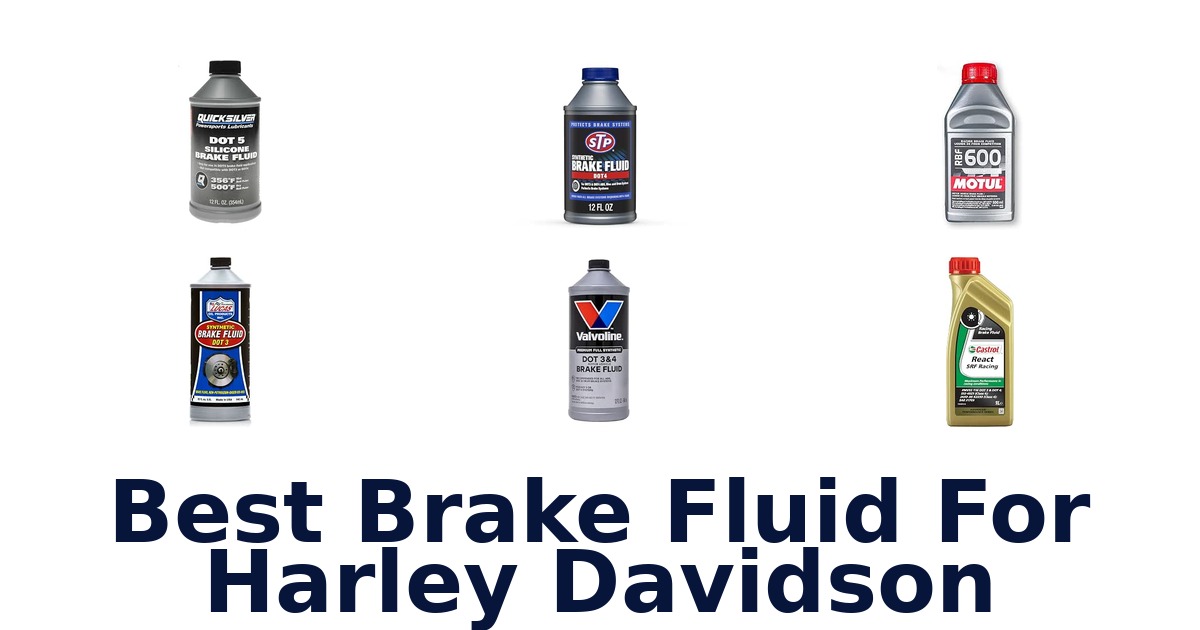
A strong brake-fluid choice for a Harley Davidson is one that matches the DOT specification required by the exact motorcycle and offers the right fluid type for its brake system. Maxima DOT 4 Standard Brake Fluid is the most directly motorcycle-focused pick here: its listing describes brake and clutch use and compatibility with SBR, EPDM, and natural rubbers. That does not make it a fit for every Harley.
The products span glycol-based DOT 3 and DOT 4 options as well as silicone DOT 5 fluids, which are not interchangeable. Check the owner’s manual or reservoir marking before buying, and do not choose by brand or boiling point alone.
This roundup compares motorcycle relevance, stated compatibility, and useful listed specifications across all 10 options.
Maxima DOT 4 Standard Brake Fluid leads because its listed use explicitly covers brake and clutch systems, and its specification names SBR, EPDM, and natural rubber compatibility. It is the most motorcycle-oriented general choice in this set, but it is not automatically right for every Harley Davidson. Confirm that your motorcycle calls for DOT 4 before using it.
If your manual specifies DOT 5, select a DOT 5 product instead; DOT 5 is not compatible with DOT 3 or DOT 4 fluids.
Our Top Picks
 Best Overall
Its listing explicitly identifies brake and clutch use, motorcycle-oriented performance, and compatibility with SBR, EPDM, and natural rubbers.
View on Amazon High-Heat DOT 4
This DOT 4 synthetic fluid is listed for cars and motorcycles and gives a wet boiling point of 399°F for demanding use.
View on Amazon High Dry Boiling
The listing recommends it for motorcycles and reports a 594°F dry boiling point, though buyers must confirm their system requires DOT 4.
View on Amazon- Powersport DOT 5 Quicksilver DOT 5
Compare brake fluid options by type and intended use
| # | Product | Weight | Material | Container Type | Buy |
|---|---|---|---|---|---|
| 1 | 1. Maxima DOT 4 StandardBest Overall | 0.42 kg | Sbr, Epdm and Natural Rubbers | Bottle | View on Amazon |
| 2 | 2. Motul RBF 600High-Heat DOT 4 | 9.92 oz | Plastic | Bottle | View on Amazon |
| 3 | 3. Motul RBF 600 Factory LineHigh Dry Boiling | 1.6 lb | Synthetic | Bottle | View on Amazon |
| 4 |  4. Quicksilver DOT 5Powersport DOT 5 4. Quicksilver DOT 5Powersport DOT 5 | 12 oz | — | Bottle | View on Amazon |
| 5 |  5. Johnsen's Silicone DOT 5DOT 5 Non-ABS Systems 5. Johnsen's Silicone DOT 5DOT 5 Non-ABS Systems | 12 oz | Silicone,Abs | Bottle | View on Amazon |
| 6 |  6. Valvoline DOT 3 & 4DOT 3 and DOT 4 Maintenance 6. Valvoline DOT 3 & 4DOT 3 and DOT 4 Maintenance | 0.9 kg | Abs | Bottle | View on Amazon |
| 7 |  7. STP Synthetic DOT 4DOT 4 ABS and Drum Service 7. STP Synthetic DOT 4DOT 4 ABS and Drum Service | 14.4 oz | Abs | Bottle | View on Amazon |
| 8 |  8. Lucas Oil Brake FluidRubber Component Protection 8. Lucas Oil Brake FluidRubber Component Protection | 2.2 lb | Plastic | Bottle | View on Amazon |
| 9 |  9. Castrol SRF RacingArduous Racing Conditions 9. Castrol SRF RacingArduous Racing Conditions | 0.92 kg | Silicone | Bottle | View on Amazon |
| 10 |  10. Wilwood EXP 600 PlusSpec-Verified Fluid Selection 10. Wilwood EXP 600 PlusSpec-Verified Fluid Selection | 1.3 lb | Silicone | Bottle | View on Amazon |
Detailed Reviews: Best Brake Fluid For Harley Davidson
#1 · Best Overall
1. Maxima DOT 4 Standard
- Weight: 0.42 kg
- Material: Sbr, Epdm and Natural Rubbers
- Container Type: Bottle
Best for: Brake and Clutch Protection.
Why it ranks #1: Its listing explicitly identifies brake and clutch use, motorcycle-oriented performance, and compatibility with SBR, EPDM, and natural rubbers.
Its anti-vapor-lock formulation fights water contamination and vaporization, enabling riders to prioritize responsiveness in brake and clutch systems. Maxima also lists corrosion and oxidation resistance and compatibility with SBR, EPDM, and natural rubbers, giving buyers specific material and maintenance considerations.
Maxima identifies this as a high-performance brake and clutch fluid, so it can serve systems using either listed hydraulic application. Its resistance to corrosion and oxidation addresses component protection, while compatibility with SBR, EPDM, and natural rubbers provides concrete material information for service decisions. The anti-vapor-lock formulation is described as fighting both water contamination and vaporization to maintain responsiveness. The listing calls it vehicle-specific but does not give a DOT class in the supplied details.
- For brake and clutch systems
- Resists corrosion and oxidation
- Compatible with SBR, EPDM, and natural rubbers
- Anti-vapor-lock formulation fights water contamination and vaporization
- The supplied listing does not identify a DOT class.
Skip it if you require a listed DOT 4 specification; STP Synthetic DOT 4 explicitly identifies its class and ABS, disc, and drum applications.
Maxima suits buyers prioritizing brake and clutch component protection, rubber compatibility, and resistance to water contamination and vaporization. The supplied details do not name a DOT class, so select it only when its specification matches the system requirement.
Full product details
| Brand | Maxima |
|---|---|
| Compatible Material | Sbr, Epdm and Natural Rubbers |
| Container Type | Bottle |
| Included Components | Maxima Racing USA 80-86916 |
| Item Form | Liquid |
| Item Weight | 0.42 kg |
| Manufacturer | Maxima Racing USA |
| Model Number | 80-86916 |
| Recommended Uses | Vehicle |
| Warranty Description | Manufacturer |
| Additional Information | Important Information Proposition 65 Warning for California Consumers WARNING: Cancer and Reproductive Harm – www.P65Warnings.ca.gov |
Listed on Amazon as: DOT 4 Standard Brake Fluid
View on Amazon#2 · High-Heat DOT 4
2. Motul RBF 600
- Weight: 9.92 oz
- Material: Plastic
- Container Type: Bottle
Best for: High-Heat Track and Street Use.
Why it ranks #2: This DOT 4 synthetic fluid is listed for cars and motorcycles and gives a wet boiling point of 399°F for demanding use.
Its wet boiling point of 399°F (204°C) and extreme thermal resistance target demanding brake use, enabling buyers to consider it for track days, street performance, and motorcycle applications. Motul identifies this non-silicone synthetic DOT 4 fluid for hydraulic brake and clutch systems.
The 399°F wet boiling point is presented alongside thermal stability, while Motul says the fluid helps reduce vapor lock and brake fade. Those features are relevant for track-day or performance use where heat is a concern. Its stated application includes hydraulic brake and clutch systems, extending use beyond brakes alone when the system calls for DOT 4. The 500 ml bottle is a defined quantity for service planning; the listing identifies it as non-silicone synthetic fluid.
- DOT 4 non-silicone synthetic fluid
- 399°F (204°C) wet boiling point
- For hydraulic brake and clutch systems
- Helps reduce vapor lock and brake fade
- The 500 ml bottle is a limited quantity for extensive maintenance.
Skip it if you need silicone DOT 5; Johnsen’s 7012-6 is explicitly DOT 5, while this Motul is non-silicone DOT 4.
Motul RBF 600 fits riders and drivers seeking DOT 4 fluid for hydraulic brakes or clutches in track, street-performance, or motorcycle use. Its 500 ml bottle is a finite service quantity, and the system must call for DOT 4.
Full product details
| Brand | Motul |
|---|---|
| Compatible Material | Metal |
| Container Type | Bottle |
| Included Components | Motul MTL100949 8068HL RBF 600 Factory Line Dot-4 100 Percent Synthetic Racing Brake Fluid – 500 ml |
| Item Form | Liquid |
| Item Weight | 9.92 ounces |
| Manufacturer | Motul |
| Material | Plastic |
| Model Number | MTL100949 |
| Recommended Uses | Automotive |
| Warranty Description | Check with Motul |
| Additional Information | Important Information Proposition 65 Warning for California Consumers WARNING: Cancer and Reproductive Harm – www.P65Warnings.ca.gov |
Listed on Amazon as: Motul RBF 600 Brake Fluid DOT 4 – Racing & High Performance 100% Synthetic Brake Fluid for Cars & Motorcycles, Track Day, Street & Performance Applications 500ml
View on Amazon#3 · High Dry Boiling
3. Motul RBF 600 Factory Line
- Weight: 1.6 lb
- Material: Synthetic
- Container Type: Bottle
Best for: Sealed DOT 4 Motorcycle Fluid.
Why it ranks #3: The listing recommends it for motorcycles and reports a 594°F dry boiling point, though buyers must confirm their system requires DOT 4.
Its stated 594°F (312°C) dry boiling point and nitrogen-filled, factory-sealed bottle target hard-use braking, enabling a buyer to weigh both heat performance and sealed storage. Motul identifies this synthetic RBF 600 as DOT 4 and lists motorcycle use.
Motul describes the polyglycol fluid as far exceeding DOT 4 standards and gives a 594°F (312°C) dry boiling point to help prevent vapor lock and brake fade during hard use. Nitrogen filling and factory sealing are stated to increase shelf life and eliminate contamination, supporting storage before service. Its motorcycle-use listing makes the application clear, while the 0.5-liter quantity gives a defined amount for planning a brake-fluid service rather than implying unlimited supply.
- DOT 4 synthetic fluid
- 594°F (312°C) dry boiling point
- Nitrogen-filled and factory sealed
- Listed for motorcycle use
- The 0.5-liter bottle is a limited quantity for extensive service.
Skip it if you need silicone DOT 5; Quicksilver 8M0128419 is explicitly DOT 5, while this Motul is DOT 4.
Motul’s sealed RBF 600 suits motorcycle owners seeking DOT 4 fluid for hard use and valuing a stated dry boiling point and contamination-conscious storage. The 0.5-liter bottle is a finite quantity, and the system must specify DOT 4.
Full product details
| Brand | Motul |
|---|---|
| Container Type | Bottle |
| Item Form | Liquid |
| Item Weight | 1.6 pounds |
| Manufacturer | Motul Powersports |
| Material | Synthetic |
| Recommended Uses | Motorcycle |
| Additional Information | Important Information Proposition 65 Warning for California Consumers WARNING: Cancer – www.P65Warnings.ca.gov |
Listed on Amazon as: Motul (1 Pack) 100949 RBF 600 DOT 4 100% Synthetic Factory Line Racing Brake Fluid
View on Amazon#4 · Powersport DOT 5
4. Quicksilver DOT 5
- Weight: 12 oz
- Container Type: Bottle
Best for: Powersport DOT 5 Systems.
Why it ranks #4: It is designed for powersport applications requiring DOT 5, with stated 356°F wet and 500°F dry boiling points.
Its 356°F wet and 500°F dry boiling points, together with low compressibility, enable buyers to evaluate a DOT 5 fluid for consistent braking and heat-related needs. Quicksilver states that it is for powersport applications requiring DOT 5 and explicitly excludes DOT 3 and DOT 4 systems.
The listed wet and dry boiling points provide two concrete figures for assessing operating requirements, while low compressibility is stated to support consistent braking. Quicksilver also specifies corrosion protection in brake components. Its intended use is powersport systems requiring DOT 5, a crucial compatibility boundary because the product is explicitly incompatible with DOT 3 and DOT 4 fluids. The 12-ounce bottle gives a defined quantity for service planning; do not treat DOT 5 labeling as interchangeable with other fluid classes.
- DOT 5 brake fluid for powersport applications
- 356°F wet and 500°F dry boiling points
- Low compressibility for consistent braking
- Provides corrosion protection
- Not compatible with DOT 3 or DOT 4 fluids.
Skip it if you need DOT 4; Motul 100949 RBF 600 is explicitly DOT 4 and lists motorcycle use.
Quicksilver suits powersport owners whose systems specifically require DOT 5, with stated boiling points, low compressibility, and corrosion protection. Its incompatibility with DOT 3 and DOT 4 makes matching the required fluid class essential.
Full product details
| Brand | Quicksilver |
|---|---|
| Compatible with Vehicle Type | Powersport |
| Container Type | Bottle |
| Included Components | 12 Oz Bottle of Brake Fluid |
| Item Weight | 12 ounces |
| Manufacturer | Quicksilver |
| Part Number | 8M0128419 |
| Model Number | 8M0128419 |
| Size | Pack of 1 |
| Additional Information | Important Information Proposition 65 Warning for California Consumers WARNING: Cancer – www.P65Warnings.ca.gov |
Listed on Amazon as: Quicksilver 8M0128419 DOT 5 Brake Fluid, 12oz
View on Amazon#5
5. Johnsen's Silicone DOT 5
- Weight: 12 oz
- Material: Silicone,Abs
- Container Type: Bottle
Best for: DOT 5 Non-ABS Systems.
Why it ranks #5: Its silicone DOT 5 formula absorbs less than one percent water by weight, but the listing warns not to use it in ABS systems.
Its silicone DOT 5 formula absorbs less than one percent water by weight, a feature that helps buyers seeking a fluid with low water uptake. Johnsen’s specifies it for drum and disc brakes, while clearly excluding ABS systems, making system type a central selection check.
The silicone DOT 5 formulation is described as essentially non-hygroscopic compared with conventional DOT 3 or DOT 4 fluids, absorbing less than one percent water by weight. That distinction may suit owners selecting fluid for a compatible non-ABS system. Its listed use covers both drum and disc brakes, so it is not limited to one of those brake types. The 12-ounce bottle is a modest quantity for planned maintenance; the listing explicitly says not to use it in ABS systems.
- Silicone DOT 5 formulation
- Absorbs less than one percent water by weight
- Specified for drum and disc brakes
- 12-ounce bottle
- Not for ABS systems.
Skip it if you have ABS brakes or your system calls for DOT 3 or DOT 4; this fluid is DOT 5.
Choose Johnsen’s for a compatible non-ABS motorcycle system that specifies silicone DOT 5, including drum or disc brakes. Its system restriction is decisive: do not use it in ABS systems or substitute it for another specified fluid.
Full product details
| Brand | Johnsen's |
|---|---|
| Container Type | Bottle |
| Included Components | Silicone DOT 5 Brake Fluid |
| Item Form | Liquid |
| Item Weight | 12 ounces |
| Manufacturer | Johnsen's |
| Material | Silicone,Abs |
| Model Number | 7012-6 |
| Recommended Uses | Brake oil |
| Warranty Description | Check with manufacturer regarding warranty and support issues. |
Listed on Amazon as: Johnsen's 7012-6 Silicone DOT-5 Brake Fluid – 12 oz.
View on Amazon#6
6. Valvoline DOT 3 & 4
- Weight: 0.9 kg
- Material: Abs
- Container Type: Bottle
Best for: DOT 3 and DOT 4 Maintenance.
Why it ranks #6: The low-moisture DOT 3 and DOT 4 formula mixes with conventional fluids and suits hydraulic and disc brakes when those specifications are required.
Its DOT 3 and DOT 4 formula mixes with conventional fluids, enabling a buyer maintaining a system that uses either specification to work alongside conventional fluid. Valvoline also highlights a low-moisture formula for vapor-lock protection and identifies hydraulic and disc brakes as intended applications.
Compatibility with conventional fluids can simplify a top-up or service workflow when the existing fluid is compatible, while the DOT 3 and DOT 4 designation gives a clear specification range. Valvoline’s low-moisture formula is stated to provide vapor-lock protection, a relevant feature for brake-fluid operation. The listing names hydraulic and disc brakes, and the 32-ounce bottle supplies more fluid than a small-format bottle for planned maintenance. It does not identify DOT 5 use.
- DOT 3 and DOT 4 formula
- Mixes with conventional fluids
- Low-moisture formula
- 32-ounce bottle
- Not specified for DOT 5 systems.
Skip it if you need silicone DOT 5; Johnsen’s 7012-6 is explicitly DOT 5, whereas this Valvoline is DOT 3 and DOT 4.
Valvoline suits owners servicing hydraulic or disc brakes that call for DOT 3 or DOT 4, especially when conventional-fluid compatibility matters. Keep the specification boundary in view: this listing does not identify it for DOT 5 systems.
Full product details
| Brand | Valvoline |
|---|---|
| Compatible Material | Brake Fluid Systems |
| Container Type | Bottle |
| Included Components | Bottle |
| Item Form | Liquid |
| Item Weight | 0.9 kg |
| Manufacturer | Valvoline |
| Material | Abs |
| Model Number | 601458 |
| Recommended Uses | Automotive |
Listed on Amazon as: Valvoline DOT 3 & 4 Synthetic Brake Fluid, 32 oz
View on Amazon#7
7. STP Synthetic DOT 4
- Weight: 14.4 oz
- Material: Abs
- Container Type: Bottle
Best for: DOT 4 ABS and Drum Service.
Why it ranks #7: Its DOT 4 fluid supports ABS, disc, and drum systems and is also listed as suitable for vehicles requiring DOT 3.
Its DOT 4 formula is listed for ABS, disc, and drum systems, enabling one fluid choice across those named brake configurations when DOT 3 or DOT 4 is required. STP also describes high-temperature protection and consistent braking support for varied driving conditions.
The stated compatibility with ABS, disc, and drum systems gives buyers a broad set of named applications, while the DOT 4 specification is also suitable for vehicles requiring DOT 3 or DOT 4. STP describes the formula as helping resist brake failure at high temperatures and supporting consistent performance. Its 12-ounce bottle suits topping off or refilling during routine maintenance, which the product description specifically identifies as a use as fluid levels fall with pad wear.
- DOT 4 synthetic fluid
- Compatible with ABS, disc, and drum systems
- Suitable where DOT 3 or DOT 4 is required
- Identified for topping off or refilling
- The 12-ounce bottle is a limited quantity for larger service jobs.
Skip it if you need silicone DOT 5; Johnsen’s 7012-6 is explicitly labeled DOT 5, unlike this STP DOT 4 fluid.
STP is a practical option for routine topping off or refilling in a system specifying DOT 3 or DOT 4, including ABS, disc, and drum setups. The 12-ounce bottle may not cover a larger service job.
Full product details
| Brand | STP |
|---|---|
| Container Type | Bottle |
| Included Components | STP Auto Performance Aid |
| Item Form | Liquid |
| Item Weight | 14.4 ounces |
| Manufacturer | STP |
| Material | Abs |
| Model Number | 18670 |
| Recommended Uses | Vehicle |
Listed on Amazon as: STP Synthetic DOT 4 Brake Fluid, 12 oz, For ABS Disc Drum Systems
View on Amazon#8
8. Lucas Oil Brake Fluid
- Weight: 2.2 lb
- Material: Plastic
- Container Type: Bottle
Best for: Rubber Component Protection.
Why it ranks #8: The listing describes compatibility with other brake fluids and brake-system rubber components, plus protection against rust and corrosion.
Its blend of polyethylene glycol ethers and additives is compatible with brake-system rubber components and other brake fluids, enabling service where material compatibility is a priority. Lucas Oil also says it helps prevent seal hardening or softening and protects against rust and corrosion.
Compatibility with rubber components and other brake fluids can support routine system service where those materials and fluids are present. Lucas Oil’s stated protection against seal hardening or softening connects directly to maintaining seal condition, while rust and corrosion protection addresses metal components. The blend also provides lubricity, a useful property within a hydraulic brake system. Supplied in a one-quart bottle, it offers a larger quantity for planned maintenance than the smaller bottles listed elsewhere in this roundup.
- Polyethylene glycol ethers and additives blend
- Compatible with brake-system rubber components
- Helps prevent seal hardening or softening
- Protects against rust and corrosion
- The listing does not identify a DOT class or boiling-point figures for specification-based selection.
Skip it if you need a clearly identified DOT 3, DOT 4, or DOT 5 fluid; STP Synthetic DOT 4 states its class and applications.
Consider Lucas Oil when rubber-component compatibility, seal protection, and corrosion protection are the priorities for brake-system maintenance. Its listing does not state a DOT class or boiling-point figures, so those seeking those specifications should choose accordingly.
Full product details
| Brand | Lucas Oil |
|---|---|
| Compatible Material | Rubber |
| Container Type | Bottle |
| Included Components | Lucas Oil 10826 Brake Fluid – 1 Quart (12) |
| Item Form | Oil |
| Item Weight | 2.2 pounds |
| Manufacturer | Lucas Oil Products |
| Material | Plastic |
| Model Number | 10826 |
| Recommended Uses | Vehicle |
| Warranty Description | Warranty |
| Additional Information | Important information |
Listed on Amazon as: Lucas Oil 10826 Brake Fluid – 1 Quart
View on Amazon#9
9. Castrol SRF Racing
- Weight: 0.92 kg
- Material: Silicone
- Container Type: Bottle
Best for: Arduous Racing Conditions.
Why it ranks #9: Its 270°C typical wet boiling point targets arduous racing conditions, but the listing does not establish a specific Harley or DOT fit.
Its typical wet boiling point of 270°C (518°F) is paired with anti-vapor-lock characteristics, enabling consideration for braking under arduous racing and rallying conditions. Castrol describes SRF as an exclusive European formula and positions superior braking performance for demanding use.
Castrol’s stated 270°C typical wet boiling point gives buyers a concrete specification for evaluating high-heat use. Its anti-vapor-lock characteristics are described alongside superior braking during arduous conditions such as racing and rallying, connecting the formulation to those demanding applications. The one-liter bottle provides a defined quantity for service planning. The listing identifies the material as silicone but does not specify a DOT class or state compatibility with particular motorcycle systems, so those details remain important boundaries.
- Typical wet boiling point of 270°C
- Anti-vapor-lock characteristics
- Positioned for racing and rallying
- One-liter bottle
- The supplied listing does not identify a DOT class.
Skip it if you need a clearly listed DOT 4 motorcycle fluid; Motul 100949 RBF 600 is identified as DOT 4 and for motorcycle use.
Castrol SRF is aimed at buyers considering fluid for arduous racing or rallying, with a stated wet boiling point and anti-vapor-lock characteristics. Check the required system specification carefully because the supplied listing does not name a DOT class.
Full product details
| Brand | Castrol |
|---|---|
| Container Type | Bottle |
| Included Components | Castrol SRF Racing Brake Fluid – 1 Liter 12512 |
| Item Form | Liquid |
| Item Weight | 0.92 kg |
| Manufacturer | Castrol |
| Material | Silicone |
| Model Number | 12512 / 15AFA4 |
| Recommended Uses | Brake oil |
| Warranty Description | Limited Manufacturer |
| Additional Information | Important Information Proposition 65 Warning for California Consumers WARNING: Cancer and Reproductive Harm – www.P65Warnings.ca.gov |
Listed on Amazon as: Castrol SRF Racing Brake Fluid – 1 Liter 12512
View on Amazon#10
10. Wilwood EXP 600 Plus
- Weight: 1.3 lb
- Material: Silicone
- Container Type: Bottle
Best for: Spec-Verified Fluid Selection.
Why it ranks #10: The supplied listing gives package details but no DOT specification, motorcycle application, or compatibility guidance to verify a Harley fit.
Its supplied product information identifies Wilwood EXP 600 Plus as a brake-fluid auto part in a bottle, enabling buyers to identify the product and manufacturer before researching a system-specific application. The listing provides a single package and U.S. country of origin, but few performance details.
Wilwood’s description establishes the product as brake fluid, and the manufacturer context identifies Wilwood as a maker of high-performance disc brake systems. That can help a buyer researching fluid alongside Wilwood components, but the supplied product details do not state a DOT class, boiling point, or motorcycle application. The bottle is a single package, so quantity planning also requires information beyond the listed specifications. Treat this listing as a starting point, not a substitute for matching the required fluid specification.
- Identified as Wilwood EXP 600 Plus brake fluid
- Wilwood manufactures high-performance disc brake systems
- Single package
- Country of origin listed as United States
- The supplied listing gives no DOT class or boiling-point specification.
Skip it if you need published motorcycle compatibility and a stated DOT class; Motul 100949 RBF 600 lists both motorcycle use and DOT 4.
Wilwood EXP 600 Plus may interest buyers already researching Wilwood brake components, but the supplied listing gives little application guidance. Select it only after establishing that its required fluid specification matches the motorcycle system.
Full product details
| Brand | Wilwood |
|---|---|
| Container Type | Bottle |
| Included Components | auto part |
| Item Form | Liquid |
| Item Weight | 1.3 pounds |
| Manufacturer | Wilwood |
| Material | Silicone |
| Model Number | 290-6209 |
| Recommended Uses | Wood,Auto |
| Warranty Description | 1 year |
Listed on Amazon as: Wilwood 290-6209 EXP 600 Plus Brake Fluid
View on AmazonThe DOT 5 compatibility trap
DOT 5 and DOT 3 or DOT 4 must not be treated as interchangeable choices. Quicksilver explicitly says its DOT 5 fluid is not compatible with DOT 3 or DOT 4, and Johnsen’s identifies its product as silicone DOT A Harley’s required fluid is model-specific, so check its manual or reservoir marking before selecting either family.
Do not top off a system with a different DOT type just because both products are brake fluids. The listings also show why the word synthetic is not enough to identify compatibility: products such as Valvoline and Motul are DOT 3/4 or DOT 4, while the two named DOT 5 choices are silicone.
The risk in choosing by a broad label is ending up with a fluid that does not match the existing system. If the required type is unclear or the system’s history is unknown, verify the correct service procedure before adding fluid.
Boiling-point figures need context
A higher listed boiling-point figure is useful only when it is compared on the same basis and the fluid type matches the motorcycle. The supplied figures use different measures: Motul RBF 600 reports a 399°F wet boiling point, Motul RBF 600 Factory Line reports a 594°F dry boiling point, and Quicksilver DOT 5 gives both 356°F wet and 500°F dry. Castrol SRF gives a typical wet boiling point of 270°C.
Wet and dry values describe different conditions, so they are not direct apples-to-apples rankings. High-temperature claims also do not resolve whether a fluid is suitable for a particular Harley.
First match the required DOT specification; then use wet or dry boiling information as a secondary consideration if your riding conditions make it relevant. The listings provide no uniform test comparison across all 10 products, so avoid treating their figures as a controlled performance test.
How to Choose Harley Davidson Brake Fluid
Required DOT specification
Look first for the DOT type specified for your exact Harley Davidson, rather than choosing by brand or performance language. This group includes DOT 3 and 4 fluids, such as Valvoline DOT 3 & 4, STP Synthetic DOT 4, and Maxima DOT 4 Standard, as well as silicone DOT 5 options from Quicksilver and Johnsen’s. Quicksilver specifically states that its DOT 5 fluid is not compatible with DOT 3 or DOT 4.
The right choice depends on the motorcycle’s stated requirement, not a general preference for one DOT number. Buyers whose manual calls for DOT 4 can compare the DOT 4 products; those whose manual calls for DOT 5 should consider the listed DOT 5 products and check their other system requirements.
Motorcycle and component compatibility
Look for an explicit motorcycle or brake-and-clutch application and any stated material compatibility. Maxima identifies brake and clutch use and lists SBR, EPDM, and natural rubber compatibility; Motul RBF 600 is described for cars and motorcycles; Quicksilver is listed for powersport vehicles requiring DOT By comparison, Lucas Oil describes compatibility with brake-system rubber components and other brake fluids but does not name a motorcycle application.
Buyers who want the clearest motorcycle-use indication should favor Maxima or the Motul motorcycle listing, provided the DOT type matches. If your Harley has ABS or a particular system configuration, verify that the selected fluid is suitable: Johnsen’s explicitly says not to use its silicone DOT 5 product in ABS systems.
Boiling-point information
Use boiling-point figures as a secondary comparison, and distinguish wet figures from dry ones. Motul RBF 600 lists a 399°F wet boiling point, while Motul RBF 600 Factory Line lists a 594°F dry point. Quicksilver DOT 5 provides both: 356°F wet and 500°F dry.
Castrol SRF reports a typical wet point of 270°C, a different unit from the Fahrenheit figures. These claims do not create a uniform comparison because products report different measures and not every listing supplies a number.
Riders seeking a listed wet figure can compare Motul RBF 600 or Quicksilver; buyers considering hard-use DOT 4 can note the Motul Factory Line dry figure. In either case, the motorcycle’s required fluid type comes first.
Which brake fluid should I choose for my Harley?
Start with the DOT specification in your Harley Davidson owner’s manual or on the reservoir. If it calls for DOT 4, Maxima DOT 4 Standard is the strongest fit in this roundup because it names brake and clutch use and lists motorcycle-relevant rubber compatibility; Motul RBF 600 is another motorcycle-suitable DOT 4 option with a stated 399°F wet boiling point. For a DOT 5 system, Quicksilver DOT 5 is explicitly aimed at powersport applications and provides wet and dry figures, while Johnsen’s Silicone DOT 5 warns against ABS use.
Do not substitute DOT 5 for DOT 3 or DOT If you cannot establish the required fluid or the system’s existing fluid, confirm compatibility and service needs before topping up or changing fluid.
Frequently Asked Questions
How can I tell whether my Harley Davidson requires DOT 4 or DOT 5 brake fluid?
Check the brake-fluid specification in your Harley Davidson owner’s manual or on the reservoir. Use the specified DOT type rather than choosing by product claims alone. If the marking is unclear or you cannot confirm what fluid is already in the system, verify the requirement and compatibility before topping up or changing fluid.
Can I switch a Harley Davidson from DOT 4 to DOT 5 without flushing the system?
No; do not substitute DOT 5 for DOT 4 or mix them. The supplied guidance states that DOT 5 is incompatible with DOT 3 and DOT Before changing fluid type, confirm what the motorcycle requires and what is already in the system, and establish the appropriate service procedure rather than simply topping up.
How often should brake fluid be replaced on a Harley Davidson?
Follow the replacement schedule in your Harley Davidson owner’s manual; the product information provided here does not establish a service interval. Check the manual for your motorcycle and have the fluid serviced as specified. If you are unsure about the system’s existing fluid or service needs, confirm them before topping up or changing fluid.
Can DOT 5 brake fluid be used in an ABS system?
Check the specific product’s instructions and your motorcycle’s requirements before use. Johnsen’s Silicone DOT 5 listing warns against ABS use, so it should not be selected for an ABS system based on its DOT 5 designation alone. Confirm compatibility for both the fluid and the motorcycle before filling or servicing the system.
What should I do if I cannot identify the fluid already in the system?
Do not guess or top up with a different DOT type. First check the owner’s manual and reservoir marking; if the existing fluid remains uncertain, confirm compatibility and service needs before adding fluid or changing it. This is especially important because DOT 5 is not compatible with DOT 3 or DOT 4.
Final Words
Start with the DOT specification in your Harley Davidson manual or on the reservoir. For a confirmed DOT 4 system, Maxima DOT 4 Standard is the strongest fit here because its listed use covers brake and clutch systems and names relevant rubber compatibility; Motul RBF 600 is another motorcycle-suitable DOT 4 option. For a DOT 5 system, consider Quicksilver, and never substitute DOT 5 for DOT 3 or DOT 4.